
Offshore IRA Fees

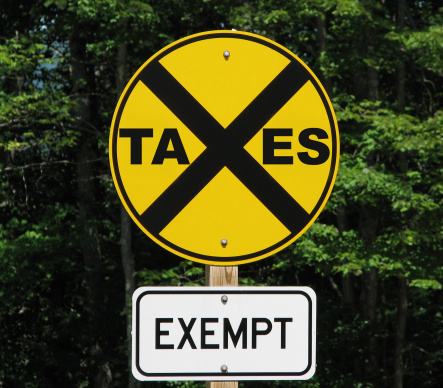
Tax Benefits of Going Offshore

The United States tax code is a hopelessly complex mess with as many loopholes for the wealthy as there are stars in the sky. There are many tax benefits of going offshore, and some of them can great for the “regular guy.”

Multinational corporations and billionaires spend big money on political campaigns and on lobbyists to ensure their interests are protected, and they expect a strong return on these “investments.” For example, a 2009 study found that each dollar put toward lobbying translated into $6 to $20 of tax benefits. Searching through these negotiated tax breaks leads you to a list of tax benefits of going offshore.

Just how ridiculous has the US tax code gotten? According to the IRS, taxpayers spent more than six billion hours in 2011 complying with the tax code – that’s enough to create an annual workforce of 3.4 million people. If that workforce was a city, it would be the third largest city in the United States. If that workforce was a company, it would employ more individuals than Walmart, IBM, and McDonalds, combined.

Even the mighty IRS seems overwhelmed by the complexity of the current tax laws. According to the National Taxpayer Advocate – part of the Internal Revenue Service – the Service cannot meet the needs of taxpayers.

Of the 115 million phone calls the IRS received in fiscal year 2012, it was only able to answer (actually pick-up) 68 percent of the calls. The IRS also failed to respond to almost half of all taxpayer letters within the agency’s own established time frame. And in 2011, the U.S.  Treasury Inspector General’s reported to Congress that most taxpayers who contact the IRS do not receive helpful responses.

Such complexity means that the well informed and well represented have a major advantage over the average citizen. While billionaires can afford hundreds of thousands of dollars a year in legal fees to structure their affairs to minimize tax, diversify their investments, and protect their assets, the average citizen is at a major disadvantage.

With this in mind, I spend my time researching and writing on the various ways the average person might utilize the tools designed for the Googles and Mitt Romneys of the world for their benefit. It is my hope that my website and articles will level the playing field just a bit.

Tax Benefits of Going Offshore

In the world of international tax planning, there are many regulations that can be utilized by anyone living, working, or investing abroad, to reduce your US tax bill. Some will eliminate tax on your salary, or allow you to opt out of the Social Security and Medicare taxes, while others, such as those that apply to IRA LLCs, can allow you to invest in just about anything offshore, with leverage, tax free.

The information provided below on the tax benefits of going offshore is a brief summary of a variety of complex tax rules. It is not meant as a complete analysis of these laws, nor is it tax or legal advice specific to your situation. Please contact me at info@premieroffshore.com or at (619) 483-1708 to discuss your situation in detail.

Foreign Earned Income Exclusion

The key to many of the offshore tax benefits of going offshore is the Foreign Earned Income Exclusion. This section of the tax code allows you to earn up to $97,600 from work, either as a self-employed person or as an employee. To qualify, you must be out of the US for 330 out of 365 days or a qualified resident of another country.

Anyone living and working abroad can qualify for this exclusion, so long as you meet the requirements of the 330 day test or the residency test, you are golden. The exclusion applies to Federal Income Tax, and not Self Employment tax, so additional planning may be required if you are running your own show.

I note that only those living in low tax countries will get much play from this exclusion. If you are based in a place with a tax rate that is about the same, or even higher, than the United States, then the Foreign Tax Credit will step in and prevent double taxation, without the need for the FEIE.

In other words, if your US Federal tax rate is 35%, and your rate in France is 40%, you have no need of the FEIE because you are already paying more in tax than you would in the United States. You can deduct your French tax on your US tax return without concerning yourself with qualifying for the FEIE.

Conversely, if you are living tax fee in Panama, drawing a salary of $100,000, and fail to qualify for the FEIE, then 100% of your income is taxable in the United States. Without the FEIE, there is no benefit to working abroad in a low tax country!

Take Your Retirement Account Offshore

By moving your IRA or other retirement account in to an offshore LLC, you can take control over your savings, invest in foreign real estate or projects, and hold cash outside of the United States in any currency you like. Even better, you can do all of this while maintaining the tax free or tax deferred status these accounts enjoy.

For the sophisticated investor, the tax benefits of going offshore can be enormous! I will list the in order of importance.

First, if your IRA invests in certain hedge funds (typically, the most profitable ones), the income generated is probably taxable to your IRA at the prevailing corporate tax rate, which is currently 15% to 39%. Most investors will pay about 34% on taxable income earned in their retirement account. In addition, you must file IRS Form 990-T to report that income and pay the tax.

–        Note that only very specific types of income, known as Unrelated Business Income (UBI), is taxable in a retirement account. This tax is called UBIT.

By moving your IRA in to an offshore LLC, and investing through a UBIT Blocker Corporation, you can completely eliminate UBIT. Your IRA can invest in a hedge fund, or any other UBI generating venture, and pay zero US tax.

This tax loophole was created for large pension funds, but is available to any tax exempt organization or charity, including offshore IRA LLCs. Hedge funds that wish to attract pension funds, retirement accounts, or non-US investors, must set up an offshore module of their fund (known as a Master/Feeder structure), whereby the tax exempt groups (your IRA) and foreign persons invest in the offshore division, while US persons invest in the US division. Then, these groups are combined in the master fund, from which investments are made and returns generated.

Offshore IRA LLCs have been used by the uber rich for years, and became big news during the previous presidential election. Many news outlets reported that Mr. Romney was able to grow his IRA LLC to over $100 million through the use of this type of international tax planning. To read more about his use of these structures, click here for the NY Times and here for a very partisan article on the Huffington Post.

Likewise, IRA LLCs that wish to invest in an active business will benefit from being offshore. Your IRA LLC can own up to 50% of any active business. The profits generated, especially if that business is structured as a partnership, are often Unrelated Business Income and taxable to the IRA.

If the company is offshore, then it may be operating free of US income tax. If you buy in through a specially designed offshore IRA LLC, profits paid out to you may also be tax free because your offshore structure effectively blocks the US from taxing those profits. For additional information, see the UBIT Blocker section of my website.

Those are the basics of taking your IRA offshore…child’s play, if you will. Here is the monster tax benefit of going offshore: You can eliminate UBIT on leverage by going offshore. Let me explain.

When you borrow money, or leverage up your IRA, the profits generated from that leverage are taxable (under the UBIT rules). So, if you buy a rental property for $100,000 with your IRA, paying $50,000 from your retirement account and get a non-recourse loan of $50,000 for the balance, when you receive rental payments, or sell the home, 50% of the net income will be taxable as UBI.

The same is true with brokerage and forex accounts. Your provider may be willing to give you 10 to 1, 30 to 1 or even 100 to 1 leverage on your deposit. But, if this is an onshore retirement account, the profits generated with that leverage are taxable.

By taking these transactions offshore, through a specialized offshore IRA LLC with UBIT Blocker Corporation, you can eliminate UBIT on borrowing and leverage. Tax free leverage is the key to generating big tax free profits in your retirement account.

For the “asset protection” benefits of moving your retirement account offshore, see my article: Can the Government Seize my IRA? If you are concerned with privacy or protecting your IRA from creditors and government appropriation, moving your IRA offshore, and in to a bank that does not have a branch in the US, is your best and only defense.

Stop Paying Social Taxes

Are you tired of supporting the Obamanation through social and medical taxes? Or, forgetting the political hyperbole, do you want to cut your US taxes? You can opt out of employment and social taxes by moving offshore. If you qualify for the Foreign Earned Income Exclusion, and are an employee of a company based outside of the US, then you need not pay Social Security, Medicare, or any other social taxes on your salary.

However, if you are an independent contractor, or are otherwise self-employed, then you must still pay Self Employment tax, at a rate of around 15%. So, assuming you qualify for the FEIE, on a salary of $97,000 you pay no Federal Income Tax but around $14,000 in SE tax. For a husband and wife, each drawing a salary, the SE tax will doubled to about $28,000.

The same is true if you are an employee of a US corporation while living abroad. You get the benefit of the FEIE, but must pay your share of social taxes (about 7.5%), as must your employer. All Social Security, Medicare, Obamacare, and related taxes still apply to the Expat and his employer, so long as you are employed by a US company.

Like the employee of a foreign company, you can eliminate SE tax by incorporating your business offshore and become an employee of that company. You can incorporate in any tax free country (such as Belize), and it does not matter where you are living or working, it does not matter if you are the owner and sole employee, nor does it matter if all of your clients are in the United States. So long you are living and working abroad, qualify for the FEIE, and are running an active business, you can eliminate SE tax by incorporating offshore. Your corporation should bill your clients and you can draw a salary from the net profits that entity of up to the FEIE amount (currently $97,600).

–        You might combine the offshore company with a US LLC if you wish to open accounts in the US and get paid by check, PayPal, or credit card.

Defer Tax with Offshore Mutual Funds

For the uninitiated, investing in an offshore mutual is a bad idea. Punitive rules (the opposite of loopholes) have been written in to the tax code by the US mutual fund industry which are quite hostile to investing in these types of products offshore.

In most cases, an offshore mutual fund investment is governed by the Passive Foreign Investment Company (PFIC) section of the code. Like a US mutual fund, you only pay tax when you cash out. But, unlike a US fund, the tax man is going to crush your profits. First, when tax is paid, all income and gains are taxed at the highest ordinary income rate (presently 39.6%).  There is no long-term capital gains treatment.  Second, losses are disallowed.  Third, you have to assume that all of the gains are earned ratably over the time the investment was held — even if the fund lost money the first few years and only made its gains in the last year when you cashed out.   Why is that bad?  Because of the final part of the quadruple whammy – interest charges, compounded annually.  Annually compounded interest at the underpayment interest rate (which is set by the Treasury Department each quarter and has been anywhere from 5% to 10% over the last several years) is charged on deferred tax.

And here is the loophole for the offshore professional: If the PFIC meets certain accounting and reporting requirements, a PFIC shareholder can elect to treat the PFIC as a qualified electing fund.  The effect is that the PFIC shares are taxed like U.S. shares.  The owner of a foreign mutual fund treated as a QEF may: 1) elect to pay tax on income as it is accrued in your account, or 2) choose to defer tax until money is received. If both the QEF and deferral elections are made, you pay tax on the profits plus 3% interest per year when you receive a distribution.

If your offshore mutual fund is returning profits greater than your interest rate of 3%, or the fund has profits some years and losses in others, the QEF with deferral elections are major tax benefits. This is especially important for a fund with losses, as these losses do not flow through to your tax return, so deferral can eliminate some quite harsh tax consequences of going offshore.

These elections allow the well-educated investor to access some of the high flying offshore mutual funds without the punitive taxes meant to keep the uninformed in the United States.

Eliminate Tax in Your Country of Residence

While the United States taxes you on your worldwide income, no matter where you live, and no matter where your clients are located, most countries do not charge you for foreign source income…which is to say, you pay no tax on income earned outside of their borders or, the majority of nations tax you only on income earned within their territory.

With this in mind, planning may eliminate tax from your country of residence. For example, if you are living in Panama, selling products or services to customers in the United States, and operating a through corporation in Belize, Panama may not tax you on the net profits of that Belize entity. Conversely, if you are living and working in Panama, operating through a Panama corporation and/or selling to people living in Panama, then Panama wants its cut.

By incorporating your business in a country other than where you reside, you may be able to legally avoid paying any tax to that country. When you combine a tax free country of incorporation (Belize), with a country with a territorial tax system (Panama), and the Foreign Earned Income Exclusion, it is possible to earn a significant amount of money from your business and pay zero income tax to any nation.

In the case of a business with employees and local expenses, you may form a corporation in Panama and bill your Belize corporation from that Panamanian entity. You should only bring in enough money to Panama to pay your bills, but draw your salary from the Belize company. In this way, the Panama company will break-even and no tax will be due.

I am often asked why countries like Panama allow this setup. It is because 1) you will pay employment and other taxes on your employees, and 2) you will spend money and indirectly contribute to the economy by living and basing your business in that country. A business that employees local workers is a major benefit to any efficiently run economy.

Retain Earnings Offshore

For the entrepreneur, qualifying for the FEIE and taking that salary through an offshore corporation is the first line of defense against the IRS. It allows you to take out $97,600 in salary free of Federal Income Tax. If a husband and wife are both involved in the day to day operation of the business, each may qualify for the exclusion, resulting in up to $195,200 in tax free salary.

So, what if your net profit is more than FEIE? If you take more than the Exclusion out of the corporation, you will pay tax on it as earned. If you leave it in the corporation, it will be classified as retained earnings and not taxable in the United States until it is distributed as a dividend or other payment.

–        This assumes you are incorporated in a country, such as Belize, that will not tax your corporate profits or retained earnings.

Two important caveats: 1) interest or capital gains derived from these retained earnings is taxable as earned, and 2) you may not borrow retained earnings from your corporation or use them for your personal benefit. They must remain in the corporation or be used for business expenses and expansion.

You might be wondering why large companies based in the US get offshore exclusions while you must make the drastic step of moving abroad to receive these benefits? In fact, multinationals must follow similar rules to qualify by having an active division with employees outside of the US in order to retain some earnings offshore.

To put it another way, a small business, that is owned and controlled by a US person, must move all of its operations outside of the US to gain these benefits. A large corporation can achieve the same by moving an autonomous division abroad.

For additional information on this topic, see my article: How to Manage Retained Earnings in an Offshore Corporation.

Conclusion

As you can see, there are a number of tax benefits for those offshore. If you are living, working, and/or investing abroad, you should consult with a professional to ensure you are taking advantage of these benefits. For the business owner who has a non-US partner, additional incentives may be available but are outside of the scope of this article.

I will end by pointing out that big tax breaks come with big tax reporting requirements. US tax compliance should be a primary component for anyone considering going abroad and is the foundation of an international tax or business strategy. Be sure to contact a licensed US representative, and do not rely on a foreign provider, whenever incorporating offshore.


Panama Foundation Scam

Is Panama the Next Singapore?

Panama vs. Singapore by By Christian Reeves and Lief Simon (www.offshorelivingletter.com)

“Panama is the next Singapore,” declared a friend over lunch the other day. He wasn’t the first I’ve heard make the prediction.

Since finding its legs after the U.S. military handed over the canal, Panama’s economy has been on an uninterrupted upward trend. Even throughout the global recession of the past several years, Panama has racked up positive, albeit slower, growth.

Like Singapore, Panama is a shipping, banking, and corporate headquarter hub. Both countries are also tax havens. Where they diverge is gross domestic product (GDP) per capita and cost of real estate. Singapore’s GDP is about four times that of Panama, depending on the statistics you look at. The population of Singapore is about 50% greater than that of Panama, making this GDP figure even more stunning.

The average price per square meter for apartments in Singapore is eight times the current average cost in Panama City. (And we’ve been complaining about property values in Panama City!)

The point is that both of these statistics are being used as predictors for Panama’s potential. The consensus is that Panama is looking at at least another decade of continued tremendous growth rates.

I agree.

Panama has 100 times more land area than Singapore. As a result, there are different markets at work in this country. While real estate prices will continue to increase in Panama City as the country continues to mature and will, sooner or later, I believe, reach levels to qualify as “expensive” in a global context, prices in the interior of this country and in most of the beach areas will remain more affordable than those in comparable options in the United States. That will allow Panama to continue to attract retirees from North America and Europe.

Banking, shipping, business, tax benefits, and retirees: That is a dynamic combination for the Panamanian economy, which has grown at a rate of at least 7.2% per year every year since 2004, with the exception of 2009 (the “slow year”), when it grew at a rate of 3.9%. Unemployment is low, at 4.2%. In fact, the country is growing so quickly that it can’t educate and train its own citizens fast enough to keep up with the ever-expanding job market. The new “Specific Countries” residency visa, which comes with the possibility of a work permit for citizens of 47 countries, is one attempt to ease the strain the country is experiencing trying to find qualified workers for all the international companies relocating here, not to mention the local businesses and banks.

Global Banking Haven?

Historically, Panama has been generally acknowledged as a “banking haven.” No question, this is an international banking center; there are currently 78 banks licensed in this country. However, there is no longer any pretext of banking privacy or secrecy; not since November 2011 when Panama signed an exchange-of-information agreement with the United States.

Still, there are a lot of banks here and a lot of banking options. Like most offshore banking destinations, Panama offers two kinds of banking—local and international. Of the 78 banks licensed in Panama, 2 are state owned, 28 are international banks, and 48 are general licensed banks. International banks can only take clients from outside Panama, while general licensed banks can have both local clients and clients outside the country. The main difference from a practical point of view is that international banks don’t offer day-to-day banking services such as checking accounts or mortgage lending. These are places to keep investment, not operating, accounts.

You can see the full list of banks in Panama here. LINK TO http://www.superbancos.gob.pa/en/igee-general-information

The problem with most of the 48 general licensed banks in Panama is that, while they can take foreign (that is, non-resident) clients, in the current climate, they tend to not want to. That said, a colleague walked into Balboa Bank and was able to open an account as a non-resident foreigner with remarkably little hassle. He had his bank reference letter and his passport, which is all you need in theory. However, when it comes to banking overseas, the theory can be one thing, while the reality is something else.

While I’ve given up on identifying a local bank in Panama that will consistently open accounts for foreigners, ones to try in addition to Balboa Bank (which recently merged with Banco Trasatlantico and seems to be interested in growing its client base)include Banco General (one of the biggest banks in Panama in terms of number of branches), and Global Bank (where some I know have recently reported having good luck opening accounts).

All banks in Panama offer some level of internet banking, but check the details of this before investing the time in getting an account open to make sure you can initiate wire transfers online if that’s something you’ll need to do. Balboa Bank offers that service online, as well as an English-language version of their interface. This is notable, as many banks in this country don’t have English versions of their websites.

Many of the general licensed banks offer consumer as well as private or investment banking. If you’re a private banking client (meaning you’ve deposited US$250,000 or more), then you’ll generally have an easier time opening an operating or consumer account with one of those banks.

Again, the international banks operating in Panama deal only with foreign clients. Further, the minimum account balance required to open an account with one of these banks is US$1 million or more.

One exception is Banca Privada d’Andorra (BPA), which has a branch with an international license in Panama. BPA will open an account for you with a minimum account balance of US$100,000 (although they prefer US$250,000). Their online banking interface is in Spanish, French, Catalan, and English. You can contact Yariela Montenegro at y.montenegro@bpa.ad for more information about BPA’s services.

With the growing cost of the compliance required of any bank with American clients, many of the world’s international licensed banks are simply opting out of dealing with U.S. citizens, even those with the funds to open an account with US$1 million. Meantime, with everything going on in the global banking industry, banks are changing their policies and rules regularly. One bank that will open an account for a foreigner today may not next week and vice versa. We’ve watched this in Panama. Last year, for example, the executive committee of Unibank, a bank we’ve been recommending to readers since it opened in December 2010, decided that they would no longer take non-resident foreigners as clients except in their private banking division (US$250,000 minimum deposit). In December, they reversed that decision, but implemented a US$300 application fee for any foreigner wishing to open an account. Probably the back and forth and the new application fee are a reaction to the escalating cost of compliance when dealing with foreign clients.

Panama banks are generally solid, as the country’s Superintendent of Banking strictly monitors all bank activity. Currently, one bank is in “forced liquidation.” I’m not sure what that means, but banks don’t fail in Panama. When a problem does arise, the Superintendent takes action.

One specific occurrence a few years ago had to do with Stanford Bank in Antigua (the island, not the town in Guatemala). Stanford went bust because of malfeasance of the founder, and all related banks in different countries were affected. The Panama subsidiary of Stanford was closed, its assets frozen. The U.S. entities handling the case against Allen Stanford tried to seize the Panama assets, but the Panama Banking Superintendent wouldn’t allow that. After about 18 months, Stanford in Panama was sold to a group that reopened as Balboa Bank (still in operation today). All the Stanford Panama clients received the return of their funds.

It’s difficult to try to make a direct comparison of banking in Panama with that in Singapore. There are more banks and financial institutions in Singapore, which also offers more types of licenses. The number of banks in Panama has been relatively stable over the last 10 years, with new banks opening as other banks merge. Meantime, the volume of banking in Panama has increased, and I expect the number of banks to continue to increase as more international banks decide to open branches in this country.

Business And Taxation

One of the biggest advantages to Panama as a jurisdiction right now is that it is the best place in the world to run a business. Not a local business. I’d say that running a local business here in Panama would come with all the same challenges of running a local retail business anywhere in the world. In addition, though, the important thing to note about local trade in Panama is that much of it is restricted to foreigners. Most professions – doctors, lawyers, accountants, etc. – are restricted to Panamanian citizens, as are retail businesses. Most foreigners who want to be in business in the country focus on tourism-related opportunities or other service-related businesses…or restaurants.

If you’re looking for a place to launch or relocate an international business, however, you won’t find a better locale…

Except, perhaps, Singapore. I’d say these two countries are the top choices worldwide for where to base an Internet, consulting, or other laptop-based business. And, given the choice between Panama and Singapore, I’d choose Panama (as I did five years ago when my wife and I decided to relocate from Paris to Panama City to launch the Live and Invest Overseas business). Singapore is a far more expensive place to live and to do business. It’s also halfway around the world and many time zones away from your customer base if your customer base is based in North America.

One important reason Panama is as appealing as a doing-business choice as it is, is because it is a jurisdictional-based tax regime. That means any person or entity is taxed in Panama only if his, her, or its income is earned in Panama. Further, Panama doesn’t impose tax on interest income from deposits in Panamanian banks. Therefore, it’s possible, if you organize your life appropriately, for an individual to live in Panama free of any Panama income tax liability. Don’t earn any money in Panama, and you owe no tax in Panama. It’s as simple as that.

The easiest strategy for setting yourself up to be in Panama and in business without earning any income in Panama is to start a consulting or internet business based outside Panama. Create a non-Panamanian entity to house your non-Panamanian business, earn your income outside Panama (by consulting for a client in Costa Rica, for example), and have your clients pay your non-Panamanian company.

What you can’t do is set up a physical business in Panama with a non-Panamanian business providing the goods, and then have the non-Panamanian entity charge enough to the Panama company to keep it from showing any profit in Panama.

Panama has two rules that void that practice. One is simply an implied income tax on the gross revenue of a company if the company continually shows no profit. It’s essentially a minimum income tax charged at 1.168% of gross income for companies with gross revenue of US$1.5 million or more if the calculated tax on net income is less.

The other rule has to do with transfer pricing between affiliated companies. Panama passed a law last year specifically addressing this. A company with a Panama operation and a foreign subsidiary that provides products or services for local sales cannot charge above market prices for those products and services to the Panama entity in order to reduce the taxable income in Panama.

If you want to start a business in Panama for local trade, the tax rate is a flat 25% tax on net income. However, again, Panama places many restrictions on foreigners doing business locally.

To avoid this 25% tax on local business profits, you could consider basing your local business in either the free-trade zone in Colon or the Panama Pacifico “city” being developed at the former Howard Air Base outside Panama City. The free-trade zone in Colon is essentially a place to warehouse and modify goods to be shipped out of Panama. You can import and export goods to and from this zone with no tax implications, including no income tax. Any goods brought into Panama from this zone, however, are subject to import duties.

Panama Pacifico has been designated a tax-free zone for companies that qualify. The 13 categories of businesses that can operate here tax-exempt are:

 Distribution centers of multinational companies
 Back office operations
 Call centers
 Multimodal and logistics services
 High-tech product and process manufacturing
 Maintenance, repair, and overhauling of aircraft
 Sale of goods and services to the aviation industry
 Offshore services
 Film industry
 Data transmission, radio, TV, audio, and video
 Stock transfer between on-site companies
 Sale of goods and services to ships and their passengers
 Corporate headquarters

Another benefit of basing your business in Panama Pacifico is the opportunity that creates for you, as the business-owner/employer to be able to obtain work permits for foreign employees beyond the usual 90/10 rule. The 90/10 rule, which applies to all businesses operating in Panama outside Panama Pacifico, means that the business must employ nine Panamanians for every one non-Panamanian.

In recent history, again, the exception to this requirement that 90% of the employees for any business be Panamanian, has been to base yourself in Panama Pacifico. However, the new “Specific Country” residency permit means that this Panama Pacifico benefit isn’t as big a deal as it used to be. Now, any foreigner from any of the 47 countries included on the Specific Country visa list can obtain residency and a work permit, creating a chance for businesses to hire non-Panamanian labor without restriction. I believe this window of opportunity will continue only until President Martinelli is out of office. Martinelli created the new visa program through special Executive Order. The guy who follows him in office likely will repeal the order.

Unless the guy who follows Martinelli in office isn’t a guy at all but Mrs. Martinelli, as is lately being discussed.

Structures

Another important benefit of Panama as a jurisdiction includes the offshore services available here. In this way, too, Panama is very similar to Singapore. While Singapore has taken the offshore structures game to a next level, as it has been at this for much longer, Panama is working hard to catch up.

Panama offers corporations, trusts, and foundations. Again, Panama corporations pay no income tax in Panama if they don’t earn any money in Panama, making a Panama corporation a very appealing option for structuring business operations in other locations.

You can also use a Panama corporation to hold real estate in Panama or outside the country. Historically, this strategy provided important benefits to do with property and capital gains taxes. However, the rules for these things have changed recently, making this less of a no-brainer option. It can still make sense to hold Panama real estate in a Panama corporation, but not always.

Here’s how this used to work:

Once the Panama property was put into a Panama corporation, the “value” was locked into the public property registry. When the owner decided to sell, he sold not the property but the corporation holding the property. Ownership of the property didn’t change, and, therefore, the public registry value of the property didn’t change. As a result, the amount of property tax charged for the property didn’t change either. In other words, property values could increase, but property taxes (which are figured on property values) could be held constant this way.

Additionally, it used to be that, while Panama did charge capital gains tax on the transfer of property, it did not charge capital gains tax on the transfer of company shares, saving the seller 10% of the appreciation.

This changed in 2006. Now, sellers pay capital gains tax on both the transfer of property and the transfer of company shares.

Finally, Panama charges a 2% transfer fee on real estate. Selling the corporation rather than the property avoided that tax, as well.

Bottom line, today, with capital gains tax charged on the sale of shares and property values being reevaluated for the purposes of property tax, as I said, holding Panama real estate in a Panama corporation isn’t the no-brainer decision it was years ago. The cost of setting up a corporation runs from about US$1,000 to US$1,500, depending on the attorney. Maintaining the corporation runs US$530 a year without nominee directors, which should cost around another US$250.

On the other hand, using a Panama corporation to hold non-Panama real estate can be an excellent strategy, with estate planning and asset protection benefits. American readers should note, though, that a Panama corporation cannot be treated as a disregarded entity for tax purposes; they are treated like corporations. An American considering options for holding real estate in different countries should consider an LLC, a trust, or a foundation, which can be better choices depending on your circumstances overall.

Few people think of Panama as a trust jurisdiction; most look to the Cook Islands or perhaps Belize for this kind of structure. However, Panama does offer trusts (an odd thing for a civil law country).

Panama also offers foundations which is the civil law equivalent.

Foundations work very much like trusts and can be a good alternative to a trust depending on your needs. On the U.S. side, for tax purposes, a foundation can be treated like either a corporation or a trust. You want to make sure you set everything up so your foundation is treated like a trust. If you’re an American, have your Panama attorney work with a U.S. attorney who knows something about Panamanian foundations to be sure that the wording of the foundation documents is such that the entity will be treated as a trust by the IRS. Otherwise, you risk negative U.S. tax implications.

One other thing to keep in mind with a Panamanian foundation is that, while the name may suggest that it is a charitable organization, it is not. A Panamanian foundation is a tax-paying entity and can be liable for tax, both in Panama (if the foundation has any Panama based income) and in the United States (if the foundation has any income at all).

Pushing For First World Status

Panama’s President Martinelli has set an ambitious agenda. He has declared that he’s pushing Panama toward First World status. To that end, he’s taking all the revenues being thrown off by the Panama Canal (and then some) and investing them in infrastructure improvement projects across the country. You can’t drive more than a few blocks in any direction in Panama City without encountering some kind of construction—road expansion or repaving, digging for the new city metro, new building construction or old building renovation, electric and phone cables being moved underground, tunnels, bypasses, etc. Every main thoroughfare in the city is being improved in some way. The latest extension of the Cinta Costera, the new highway and pedestrian area that runs along the Bay of Panama, will take motorists around Casco Viejo and to the Bridge of the Americas, allowing drivers to avoid the current log jam trying to exit the city.

Around the country, roads are likewise being improved, expanded, and dug anew. Plus, new airports, new hospitals (including a big one in Santiago), new schools, and new shopping malls. The landscape of this country is being remade before our eyes.

The investment opportunities that all of this translates into are tremendous. Someday, people could be saying that Singapore is like Panama City.


Foreign Assets

Offshore Asset Protection Scams and How to Avoid Them

If you are looking for the cheapest offshore asset protection, you are in the wrong place. If you are looking for an offshore asset protection and international structures founded in case history and reality, with guidance and US tax compliance, we can help.

The purpose of this article is to explain why you need quality representation when you go offshore and exposes the common schemes of online incorporators. The bottom line is that, if you can’t afford a quality offshore trust, don’t use a lesser structure which you can’t control. Instead, go with a simple offshore corporation to plant your flag offshore. If you don’t wish to pay for an offshore corporation from a reputable source, then you might not belong offshore.

Read the risks and costs of doing it wrong and then decide if the world of international banking and offshore asset protection are for you.

Offshore Asset Protection Scams

The internet is filled with scammers who promise to protect your assets for a few hundred dollars…a one size fits all document or company that will save your life. These online incorporators claim to have mastered the mysteries of US litigation and to have created some illusionary construct that no creditor can pierce. Well, I am here to tell you that no such construct exists and that most of the asset protection “gurus” are nothing but shysters.

These scams go by many names, such as “Self Managed Anonymous Offshore Trust” (just google this phrase for a list of purveyors) and Pure Trusts a/k/a Constitutional Trusts and Common Law Trust Organizations. For additional information, see Quatloos.

Then, there are the firms that charge low rates for an off-the-shelf, zero customized, offshore company formation with no support or tax compliance. These guys make up for their lack of quality and a low upfront price in volume (I may lose money on every sale, but I make up for it in volume). They will sell you four or five companies and a Panama Foundation when a Belize or Cook Island Trust was all that is required.

They convince you that all of these components add value, and, when they are done, the total fee is the about the same as a quality offshore asset protection trust, but with none of the supporting documentation, compliance, or guidance that a professional would include. They sell you a mini-monster that you have no idea how to take care of and won’t know what to do with when it grows out of control.

Why do online incorporators market like this? Because such a convoluted structure is more profitable to them in the long run. Because they can charge you a fortune in annual fees…they are betting on the residual income you will provide and selling you something you don’t need, and probably should not use, at break-even to lock you in.

Feed the Beast

Let’s go back to the mini-monster. Your new pet is comprised of a Panama foundation, one Nevis LLC, one Panama corporation, and four Belize IBCs, and you have paid $10,000 to take this bad boy home to cover your assets like a guard dog.

Well, this mini-monster must be fed.  Each year, your incorporator will send you a bill for about $1,200 per entity, for a total carrying cost of $8,400 per year. And, you can be sure there will be other costs…maybe you need a notary, a certificate of good standing, or you want to open a bank or brokerage account…this will cost you big time. Remember, they locked you in with a low price and are now going to get whatever they can.

Offshore Tax Issues

Now that this mini-monster is home, you will find that he is hungry. For example, every entity must file its own tax return with the US Internal Revenue Service, a fact that your offshore incorporator probably failed to mention when you signed up.

The Panama Foundation may need to file IRS forms 3520 and 3520-A, at a cost of about $1,700 per year. Also, each of the corporations must file IRS Form 5471, for which a qualified CPA will probably charge $1,100. This means your minimum US tax compliance bill to take care of this monster is $8,300 per year.

Finally, you will need to file a report with the US treasury of each bank account you have outside of the US is your cumulative balance during the year is more than $10,000. So, if you have four bank accounts outside of the US, each with $3,000, you have a total of $12,000 offshore and must file the FBAR.

So, you setup your structure and had no idea of these tax rules? Now the monster is angry!

The minimum fine for failure to file the FBAR is $25,000 per year per account, and up to $100,000 per year per account. And, don’t get me started on the possible criminal penalties…

The fine for failing to file Form 5471 for each corporation is $10,000 to $20,000, plus a reduction in the Foreign Tax Credit, if applicable. So, your annual penalty for failing to file for your various mini-monster’s corporate returns is $50,000 to $70,000 plus the foreign tax credit issue.

Failure to file the foundation or trust returns can result in penalties of $10,000 per year or 35% of the assets transferred offshore. This is a simplification and these penalties are more complex than I want to go in to here. Suffice it to say, not keeping a Panama Foundation in compliance can become very expensive very fast.

For additional information on your US filing obligations, see my article: US Tax Filing Obligations of ExPats.

Buy from a US Provider who Provides Tax Guidance

When dealing with an offshore incorporator, you must be cautious and take his answers to questions about your US obligations with a grain of salt. Many offshore incorporators phrase their claims and promises in such a way as to confuse you. Here is an example:

You call a firm in Nevis and inquire about forming an offshore IBC. You ask, “does this company need to pay tax?”

The sales guy will say something like, “as a Nevis IBC, there is no tax due and no tax return need be filed. Your corporation can earn money and never pay any tax to Nevis. It can also send money to you in the US, which you can report as income when received.”

This all happens to be true, and it is how so many US persons get in to trouble. You may have left that conversation with the impression that the Nevis IBC can retain earnings offshore and that you will only pay tax in the US when you repatriate that money.

What the sales guy really said is that Nevis will not tax your income and that you can wire from Nevis to the US. He made no comments about whether the US will tax your offshore company. And, from the perspective of Nevis, his statements are accurate.

But you, as a US citizen or resident, need to be concerned about the United States. It is great that Nevis will not tax your income, but that is a very small part of the offshore puzzle. The primary issue is how the big bad IRS will view your structure. If you do not live and work abroad, your corporation can’t retain earnings and all income is taxable in the US as earned.

For this reason, you must purchase your offshore asset protection plan or international corporation from a firm that provides US tax compliance and is capable of answering your US questions. Only US licensed experts can properly advise you on how to structure your business and keep you out of trouble.

Offshore Asset Protection is not Secrecy

Hiding assets is not a useful asset protection strategy.  If you have a judgment against you and you fail to disclose said assets, you might be found in contempt of court and end up in jail.  Hiding assets is not a valid tax reduction strategy.  If you hide assets and fail to report income from those assets, you might be found guilty of tax evasion.  Do things right and do things smart.

The quickest way to spot an offshore asset protection scam is look for those that focus on secrecy or privacy. While it may be helpful that your assets are hard to find in the beginning of a case, you must assume that a motivated creditor will find them.

A professional asset protection structure assumes the creditor has a roadmap to all of your dealings and, even in this extreme case, can’t break down your barriers and get to your assets. Your plan has moved your wealth out of the reach of the creditor and the US courts, placed them behind a few quality barriers, and provides the best protection available anywhere in the world.

Quality Offshore Asset Protection Plans

When done right, asset protection, which may be more properly termed risk management, places an appropriate number of barriers between you and your creditors making it difficult or impossible to reach your assets. How difficult it is to reach those assets will depend on the complexity and, most importantly, the quality of the plan. Always remember, it is about quality and preparation, not quantity. Quantity will get you nowhere with a judge!

For this reason, I will recommend a simple, easy to maintain offshore corporation to someone looking to protect $100,000 or less. The same is true for someone who just wants to plant that first flag offshore or to move their retirement account offshore. Keep it simple!

This single layer is cost effective to feed and keep in compliance, and moves the assets out of the reach of US creditors while placing one barrier between them and your money. While it is not perfect, it may be all that your situation requires.

  • And here is the key to this article: don’t be oversold! If one structure will suffice, don’t buy two…even if the price is right. Buy one and get one free is not a good idea when it comes to asset protection. It is a lot like TV ads selling cheap junk and promising a second unit at no additional cost – you will get a good deal but shipping and handling (carrying costs) will bury you.

If you have a much larger nest egg you wish to protect, a high risk of litigation, and/or wish to provide for estate planning and asset protection, than an offshore trust formed in Belize or Cook Islands is the place to start. The offshore trust is the foundation of any advanced asset protection plan and can be built up or expanded in a number of ways. For more information on offshore trusts, please see my International Trusts page.

No matter what structure you create to protect your assets, just remember that it must be maintained, that you need to be properly advised as to your US tax obligations, and that going offshore is a complex world fraught with challenges for the uninitiated. International asset protection is not for everyone!

Currency Transaction Report

How to Get an Offshore Merchant Account

You read a lot of stories about how difficult it is for Americans to get an offshore bank account. Well, opening a low cost, efficient, offshore merchant account 10 times more difficult. Many of us are used to the extraordinarily low rates of the U.S., and have no idea what to expect when we venture offshore. I have more than a decade of experience in this arena, and can tell you an offshore merchant account is a whole different animal that you have experienced in the good ole U. S. of A.

If you are setting up an internet business offshore, you will need a corporation, a bank account, and a way to process credit card transactions in to that bank account…this is the offshore merchant account. Before I talk about rates and what to expect, I want to take some time to explain how the industry is different from the U.S., and how credit card processors view you, the potential client.

  • Definitions: This article will use quite a few industry terms, such as reserve, discount rate, high risk, etc. If you are new to the game, one of the better glossaries on the web can be found here.

How Offshore Merchant Account Processors Think

When a credit card processor opens a new account, they view it as extending some level of credit to their new customer. This is because the processor is liable for any refunds demanded by your customers, called chargebacks, if you, the merchant, is unable or unwilling to pay.

Let me explain: If the bank processes $10,000 a month for a merchant, and 5 months in finds out that their customer (you) has been selling a fraudulent product; the processor is on the hook for $50,000. The same is true if a new merchant account is opened and a batch of stolen credit cards is run through…the processor is responsible for 100% of the loss if the merchant has disappeared with the cash.

In the United States, the processor has a relatively easy time assessing risk and protecting against fraud.  They can check the credit score of the applicant (again, you) and review your banking history. If both of these indicators are clean, it is unlikely that any illegal activity will go through your account. And, if the processor is duped, American police departments are more than willing to step in and hall you off to jail.

But, what happens when you have a processor in Belize, the merchant’s corporation and bank account is in Panama, and the owner of the Panama entity is a citizen and/or resident of Costa Rica? There may be no easy way to validate the creditworthiness of the owner or perform proper due diligence on the account. Also, once the processor sends money to Panama, there is no effective way to get it back and it is unlikely that legal action will be successful…except in the gravest of cases. Basically, the international processor has no recourse in the case of fraud.

Of course, scammers get all the headlines, but fraud and theft are rare. More common is the case where a few customers have a problem with a merchant and chargeback their purchase(s). In the U.S. and Europe, the processor can debit the merchant’s account, withhold future processing to cover these expenses, ruin the owner’s credit, and sue for damages in extreme cases.

Offshore, the processor is limited to withholding future transactions and closing the account. If the merchant is a high volume low dollar account they will obviously pay the chargeback. If they are a low volume high dollar account they may be unwilling to pay…and simply open a new account elsewhere. Most sophisticated merchants will run two or more merchant accounts for this reason.

To protect against this risk, offshore account processors typically require a “rolling reserve” of 10% to 20% from new accounts. A rolling reserve is when the processor holds a percentage of each and every transaction, usually for 60 to 120 days, until the risk of chargebacks has past.

If you are considering moving offshore, you must be prepared for the rolling reserve. If your profit margin is such that the reserve is an issue, you will need sufficient operating capital, credit, or payment terms with your vendors, to support this cash flow “cost” of doing business abroad.

I note that strict rolling reserve rules will apply to new accounts. Once you have processed 6 to 12 months, and your chargeback rate is less than 1%, most processors will reduce or eliminate the reserve.

High Risk Offshore Merchant Accounts

Certain industries and business models have high chargeback rates and are thus termed “high risk” by credit card processors. Anyone in these trades is certain to pay a higher rate to process credit cards and to have a significant rolling reserve. The following are typically considered high risk:

Adult: Pornographic websites have high chargeback rates, especially on their recurring billing practices. Add to this the fact that most large processors don’t want to be associated with porn, and it is easy to see why adult sites get the shaft when it comes to fees.

Gambling: Because deposits in to gambling accounts are typically higher dollar and lower volume than adult, and because of the number of legal issues this industry has faced, internet gambling accounts are considered the highest of risk.

MOTO (Mail Order & Telephone Order) and Telemarketing: If your business accepts phone orders, or you market through outbound phone calls, you must code your transactions as MOTO and will be classified as a high risk account. You will also need a virtual terminal rather than an e-commerce shopping cart.

Pharmacy: If you are an internet pharmacy selling outside of your country of origin, you are considered high risk by the offshore merchant account providers. In most cases, an offshore merchant account will be your only option

Replicas and knock-offs: Most merchant account providers will not process transactions for sellers of replicas. Such products usually violate trademark and other laws.

Travel: A travel agent selling airline tickets or vacation packages over the internet is one of the highest risk accounts out there. The reason is simple: these transactions are for large dollar amounts, often sold months in advance, allegations of fraud are common (we all define a 5 star hotel differently), rights to refund are rare, and buyers love to chargeback…even after the trip has been completed.

Tobacco: If your business is related to cigars, cigarettes, or any type of tobacco, you are a high risk e-commerce client. If you are shipping worldwide, you will need an offshore merchant account.

Your Business Must Be Legal

We at Premier, and all reputable credit card processors, accept only clients operating legal businesses. It is the merchants responsibility to research, understand, and comply with all applicable laws and regulations related to the sale and use of their products and services.

If you are concerned that your product or services may be prohibited, here are some basic rules that apply:

–          Products or Services that violate any law, statue, ordinance or regulation

–          Donations or any configuration in which the value of the transaction is greater than the value of the product or service.

–          Products or services that are illegal, infringe upon the intellectual property rights of others, or can be used illegally.

–          Any product or service enabling consumers to circumvent locks, programming codes or to gain access to any service for which they have not expressly paid.

Higher Number of Rejections

When you process through a non-U.S. merchant account, you need to be prepared for a higher number of failed transactions. This is when the card / sale is declined by the customer’s bank (the issuer), for one reason or another.

When you are using a U.S. processor, just about the only time the issuing bank declines a transaction is when the customer has maxed out his credit. When you are using an international processor, a number of your transactions will be declined simply because you are offshore.

Basically, the bank who issued your customer’s card is concerned that a large transaction originating from, for example, Belize, is fraudulent, and has stopped it before any money has changed hands. When this happens, you can ask the customer to provide a different card, or ask him to phone his issuer and authorize the transaction. The bank will approve the transaction at the customer’s request and you can run the transaction a second time.

When building a website, you should have a system to easily communicate these issues to your customers…typically through a live chat pop-up, or a full service call center. Remember, being offshore means that you must take a proactive approach to each transaction.

Offshore Merchant Account Pricing and Reserves

A typical offshore merchant will pay 4% to 6% to process transactions and will have a rolling reserve of 20% for 60 days. High risk merchant accounts should expect to pay 5% to 10% and may be subject to a higher reserve.

If you are a brand new offshore merchant account, there will be little room to negotiate these fees and reserves. However, if you can bring in significant transactional volume, and have been operating a clean account for 6 to 12 months, providers will often cut deals to get you to move. If you are low risk and paying more than 5.25%, it is probably time to negotiate.

When selecting an offshore merchant account, there are a number of fees to keep in mind. In addition to the discount rate above, you have a per transaction fee (often $0.50 for offshore), a fee on each chargeback of $30 to $100, a dispute fee each time a buyer lodges a complaint, and a gateway fee, just to name a few. For high volume low dollar merchants the offshore transaction fees can be a killer.

Why a U.S. Social Security Number Helps

A U.S. Social Security Number is now a requirement for all merchant accounts in the U.S. The Patriot Act and similar laws of the land have scared processors in to demanding SSNs for all applicants (not ITINs).

While the Patriot Act does not specifically mandate that financial institutions must ask for a customer’s SSN in order to set up a merchant account, the regulations, which took effect in 2003 and were implemented in accordance with Section 326 of the Act, require that all financial institutions establish a Customer Identification Program (CIP), to verify the identity of any individual who wishes to conduct financial transactions through their businesses.

These regulations govern banks and trust companies, credit unions, mutual funds, savings associations, futures brokers, and other similar financial institutions, including institutions that offer merchant accounts to companies for the purpose of accepting credit cards. An institution’s CIP requires that it gather identifying information about any individual seeking to open an account in order to engage in financial transactions, and that it further (1) verify the identity of the individual creating the account such that the institution has reasonable certainty that it knows who the account holder is, (2) establish and keep records of the information used to verify the identity of the account holder, and (3) compare the identity of the account holder to lists provided by the government of known or suspected terrorists.

The “purpose” of these regulations is to allow the US government to work with financial institutions to prevent identity theft, money laundering, the financing of terrorist organizations and activities, and other types of fraud. A financial institution’s CIP is incorporated into its Bank Secrecy Act compliance program, which every US financial institution must have as a means of cooperating with the government to combat money laundering. Financial institutions are required to have procedures in place to ensure that they can verify a customer’s identity and establish that the customer does not appear on any government list of terrorists within a “reasonable time,” and to dictate under what circumstances the institution should refuse to open an account, close an account previously opened, or file a Suspicious Activity Report, based on its ability to successfully establish the identity of the customer.

Each financial institution develops its own CIP, which is then approved by its board of directors. As such, while the Patriot Act does not specifically require that a customer’s SSN must be provided in order to obtain a merchant account, most financial institutions consider a SSN to be a simple and reliable means of verifying identity, and may choose to deny service to a customer who does not wish to provide it. Using a SSN as a requirement for creating a merchant account has been demonstrated to be an effective means of discouraging criminal use of these accounts, and remains one of the easiest ways for financial institutions to comply with U.S. government regulations regarding the verification of customer identity and fraud prevention.

Onshore / Offshore Merchant Account Solutions

If you are a U.S. citizen living and operating a business abroad, or just looking to move some profits offshore for asset protection purposes, you may benefit from an onshore / offshore business structure. This solution may cut your processing costs in half and eliminate or reduce the rolling reserve.

We can setup a U.S. Limited Liability Company in Delaware, owned by an offshore corporation (typically Belize), and open a U.S. merchant account under the Delaware entity. In order to utilize this structure, you must be a U.S. citizen or resident with a valid Social Security Number, have good credit and provide the following:

  1. A U.S. mailing address,
  2. A U.S. utility bill reflecting that address and your name, and
  3. Be willing to travel to the U.S. to open a bank account (if necessary).

In order for this structure to have any tax benefit, you must be living and working outside of the United States, you may not have an office or employees in the US, you must qualify to retain earnings in your offshore corporation (click here for a detailed article), and the owners of the offshore company must qualify for the Foreign Earned Income Exclusion (click here for a detailed article on international taxation).

For additional information on offshore merchant accounts or to form an offshore corporation, please contact me directly at info@premieroffshore.com or call (619) 483-1708 for a confidential consultation.

Retire Overseas Tax Free

How to Avoid Filing Offshore Tax Returns – IRS Form 5471 & FBAR

Any offshore business owned and operated by a US citizen must file IRS Form 5471, an FBAR, and disclose all of its dealings to the US government. Here, you will learn how to legally reduce or eliminate these filing and disclosure obligations.

Most importantly, you must file US Treasury Form TD F 90.22.1 (generally referred to as the FBAR) if you have more than $10,000 in an offshore bank account or accounts, IRS Form 5471 if you operate your business through an offshore corporation, and IRS Form 926 if you transfer money or assets to an offshore corporation.

If you are a US citizen and the sole owner of the business with no non-US partners, then you are stuck filing these forms in their entirety. Basically, you must handle accounting and reporting of your offshore business just as you would if your business was in the United States.

As such, the IRS has the right to audit your offshore business and refuse to allow deductions for any expense you are unable to justify under the US tax code. It does not matter what the accounting and tax practices of your country of operation are…US citizens must report and pay tax in the US based on US tax an accounting standards.

If you do have partners who are neither US citizens nor US residents, then you have some planning options. First, if you have complete trust in your partner, then he or she can be the sole signer on the bank account, which means you are not required to file the FBAR.

The same is true of IRS Form 5471, the offshore corporation return. If the business is owned solely by a non-US person, and you are an employee, then the entity has no US reporting requirements.

It is important to note that I am talking about true ownership, not just some nominee director put in place to skirt the rules. This will not work and can land you in hot water with the Feds. The FBAR must be filed by anyone who has signatory rights or control over an offshore account and IRS Form 5471 must be filed by anyone with significant ownership, control, or voting rights in an offshore company.

With that said, unless your non-US partner is your spouse, it is probably impractical to give up complete control of a business just too avoid dealing with the IRS. But, there are varying levels of ownership and control that you can utilize to reduce the amount of information you must provide the US government.

For example, maybe you can structure a joint venture between an offshore corporation you own and your non-US partner’s corporation. In this way, you can bring in to your entity only what you wish to report to the IRS, possibly an amount which will match up with the Foreign Earned Income Exclusion.

Next, consider your filing obligations prior to completing your incorporation. Portions of IRS Form 5471 are required of any US person owning or controlling 10% or more of the stock and your reporting obligations increase as your ownership increases. For this purpose, a US person is a US citizen or resident and the 10% ownership requirement is defined as follows:

  1. 10% or more of the total value of the foreign corporation’s stock or
  2. 10% or more of the total combined voting power of all classes of stock with voting rights.

This is to say that US person or persons may own 9% of the company and have no IRS Form 5471 reporting obligation. If you find yourself in a partnership where you may choose to hold 15% or 9%, then it may be in your best interest to hold 9%. Also, you may benefit from the use of option purchase agreements, or other forms of contract, that do not impart ownership or control of the business.

If you own or control 10% or more of the stock of a foreign corporation, but not more than 50%, then you have reduced IRS Form 5471 reporting requirements and you may pay less in US taxes. Again, if you have the option of taking 50% or 51% of a venture, with the balance going to a non-US person, you might elect 50% to minimize your filing and paying obligations.

In the year you form the company, or acquire your 10%+ interest, you must file a full tax return for your offshore corporation on IRS Form 5471, reporting ownership, transfers, income, expense and a balance sheet. In subsequent years, you need only provide the following:

  1. The identifying information on page 1 of IRS Form 5471, not including Schedule A,
  2. Report special ownership interests the company may have, such as in trusts, other foreign entities, cost sharing arrangements, or other complex holdings reportable on Schedule G.
  3. IRS Form 5471 Schedule O, reporting the names of US officers, directors and shareholders, as well as transfers of stock.

In most cases, the Form 5471 return due for a company with US shareholders owning and controlling 50% or less is quite simple in year two and beyond. It should be a mere formality with no income and expense or balance sheet information required.

By contrast, the return due for a company which is controlled by US persons is quite complex and imparts filing obligations on everyone, including US shareholders who are not involved in the business.

When US persons own more than 50% of an offshore company, that entity is classified as a Controlled Foreign Corporation (CFC) by the IRS. As such, a full corporate tax return, with balance sheet, retained earnings statements, income and expense report, and a host of other information is required. The return consists of IRS Form 5471, as well as Schedules A, B, C, E, F, G, H, I, J and M. I won’t go in to each, so please take my word that preparing this monstrosity is a lot of work.

  • If you are a shareholder in a CFC, but not involved in the business,  you must file IRS Form 5471, along with Schedules G, H, I, and J. For additional information, see Category 5 filers.

More importantly, when an offshore company is classified as a CFC, it is unable to retain certain types of income. As such, these profits or transactions must be reported by the shareholders and taxed in the US, just as they would be with a US LLC or S-Corporation, regardless of whether any money is distributed.

CFC Income, or Subpart F income as it is commonly referred to, includes the following:

  1. Certain types of insurance income;
  2. “Foreign base company income,” which covers certain dividends, interest, rents, royalties, gains and notional principal contract income; income from certain sales involving related parties; income from certain services performed outside the CFC’s country of incorporation, for or on behalf of related parties; and certain oil related income;
  3. Income connected with certain sanctioned countries;
  4. Income from operations in which there is cooperation or participation in an international boycott of Israel; and
  5. Illegal payments made to a foreign government or agent.

Obviously, item two above is the one relevant to most business owners. The bottom line with this clause is that the shareholders of a CFC must pay tax in the US on passive income and related party transactions, where, had they been shareholders in a company with 50% or less US ownership, no such tax would have been due.

Finally, as a CFC, you may be limited in your ability to retain earnings and profits which result from loans or other debt obligations of US shareholders. This is true even if those profits are the result of an active business, rather than the passive income listed above. For additional information on this, and other CFC issues, see the IRS Audit Guide.

So long as you have US partners, there are a number of tax planning options for those operating a business offshore. We at Premier can assist you to structure such a business and keep it in compliance with US authorities. For additional information, and a free confidential consultation, please contact me at info@premieroffshore.com or call (619) 483-1708.

Seize my IRA

Can the Government Seize my IRA?

One of the most common questions I get is, “can the government seize my IRA?”

With all of the uncertainty in the USA, and the growing hostility towards our government and its practices, many Americans are concerned about their retirement accounts. For most, their retirement account is their only liquid asset, the majority of their savings, and probably their largest holding, after their home. Just about every day I am asked, “Can the US seize my IRA account and, if so, what can I do to protect it?”

I hate to be an alarmist, so I usually try to calm the fears of these concerned citizens by saying the government can seize your IRA, but they probably won’t. This is the best I can offer because there are many examples of the US government seizing bank accounts, real estate and other properties, and yes – retirement accounts. The government can and does seize these accounts all the time and court action or oversight is not required. In fact, I would bet that the US government seizes several IRA accounts every day.

Let me explain how the government can seize your IRA: Most think their retirement accounts are protected…and some are, from civil creditors under your State’s applicable law. How much is protected depends on your State and the type of claim brought against you.

Level 1: There are Federal ERISA laws that protect some accounts, but not all.

Examples of ERISA-qualified pension and benefit plans include:

  •  401(K) accounts
  • pension and profit-sharing plans
  • group health and life insurance plans
  • dental and vision plans, and
  • HRAs, HSAs, and accidental death or disability benefits.

If your retirement account is not covered by ERISA, and you live in California, then a judgment creditor may be able to get to it.*

Level 2: Some of the most popular retirement accounts are not covered by ERISA.

Types of non-ERISA accounts that may be vulnerable include:

  • IRAs, Roth IRAs and SIMPLE IRAs
  • SEP and Keogh Plans
  • 403(b) plans for employees of a public school or university
  • plans that do not benefit employees, or “employer-only” plans, and
  • government or church plans

* Each State has its own laws. The example above is from California and may not apply to you.

The above applies only to civil creditors. None of these accounts are protected from the Federal government going after unpaid taxes or a spouse or child seeking back support with a domestic relation order in hand (called a “QDRO”).

While a spouse or child must go to court and get a judgment, the IRS needs no such approval. Any IRS agent assigned to collect from you can issue a letter to your bank and IRA custodian to seize 100% of your assets up to the amount they claim you owe. No court or other oversight is required and no formal process is required. The agent need only hit a few keys on his computer and your money is gone.

The same is true for those charged with a crime. The government can step in and seize all of your assets and hold them until the case has run its course. This includes real estate, cash, bank and retirement accounts, and automobiles. If you win your case, you will get these back…of course, you have no money to pay a decent attorney, but who cares?

The Feds can also seize your property if it is used by someone else in the commission of a crime. In 2012, Pot Shops were big business in California. Various counties and the State passed laws that allowed for medical marijuana use and sale with a prescription. Well, these dispensaries were usually rented from building owners by the operators. The Federal Government, not big fans of California’s tomfoolery, sent letters to the owners of these properties saying the Feds would seize their buildings, regardless of State or local law, if they continued to rent to these modern hippies. Building owners complied and the industry was largely shut down.

If you have read this far, you may be wondering why I am rambling on about tax cheats, criminals and potheads. It is because these are current examples of the Feds taking from its citizenry without judicial oversight or new laws being passed. How difficult would it be for the government to demand all retirement accounts be placed under Federal control, or at least force them to be held in a central depository? I guarantee it is easier than finding a legitimate way to solve America’s spending problem.

There are historic examples, and international instances, of government takings. It was not so long ago that the tiny island of Cyprus, on the insistence of the EU, took a significant portion of the money held in its banks to pay down its debts. Of course, we assume this will never happen in America…just as we assume our government was not spying on us and operates with only good intentions.

In the good ole’ USA, we can look back to 1933 when the Federal Government seized all gold and gold certificates by Presidential Order 2039. There was no need to pass a new law or special process to protect the citizenry. It was deemed to be in the best interest of the masses, so it was done.

This taking was sold to the public as being for their own good. The Feds claimed that “hoarding” of gold was stalling economic growth and making the depression worse. Why not hording of retirement assets by the “rich?”

As it turned out, it was just a money grab – prior to the taking, the price of gold was fixed at $20.67 per ounce. After the gold had been rounded up, the Fed raised the price to $35 an ounce, resulting in an immediate loss for everyone who had been forced to surrender their gold. The profit funded the Exchange Stabilization Fund established by the Gold Reserve Act in 1934.

So, I ask you this: When you look at the current state of the US, the economic situation of the average voter, and the unprecedented attack on the “rich,” do you think there would be a major revolt if the Government seized all retirement accounts over, say, $50,000 or $100,000?

You do have one option to protect your nest egg. You can move it in to an offshore IRA LLC with an account at an international bank outside of the reach of any type of US creditor. Such a structure is compliant with all current US rules and you will maintain the tax free (ROTH) or tax deferred (traditional IRA, etc.) nature of your retirement account.

The only caveat is that you need to be careful where in incorporate and where you bank. The US IRS can seize assets in Canada, France and the UK without notice and without legal proceedings. They can also levy any bank account at any institution with a branch in the United States.

For example, if you buy real estate in France, the IRS can seize it to satisfy back taxes. If you take your IRA to Panama, but make the mistake of depositing it in to HSBC, the IRS can levy that account by issuing a notice to HSBC New York. These are not hypothetical…I have personally handled cases of this type around the world and know these things to be true.

For detailed information on moving your IRA or other retirement account offshore, please see: Moving Your Retirement Account Offshore with a Self Directed IRA LLC. If you are concerned about protecting your retirement, I suggest you take action now. It is imperative that you have your affairs settled prior to the end of the year and the implementation of the Foreign Account Tax Compliance Act. For information on this law, see the Deloitte website.

So, can the government seize your IRA? The answer is yes. Now, what will you do to protect it?

Dollar Will Fail

Foreign Earned Income Exclusion Basics

The Foreign Earned Income Exclusion is the Expat’s first, and sometimes only, line of defense against the IRS. It allows you to eliminate up to $97,600 in salary from your US taxable income in 2013, and can provide additional benefits to those living, working, and operating a business abroad.

Just about every tax article on this site is based on the Foreign Earned Income Exclusion in one way or another, so it is imperative that you have a solid understanding of this US tax law. Whether you are planning to move abroad, or you have been out of the US for years, you should become an expert on the inner workings of the Foreign Earned Income Exclusion.

  • Note that the Foreign Earned Income Exclusion applies to salary you earn from your own business or as an employee of someone else. It does not apply to retirement or other investment income. If you are a pensioner with no intention of getting a job or starting a business offshore, this posting is not for you.
  • This article has some very useful information. For updated FEIE numbers, see: Foreign Earned Income Exclusion 2015

An Introduction to the Foreign Earned Income Exclusion

As stated above, the Foreign Earned Income Exclusion allows you to eliminate up to $97,600 in salary from your US taxable income.

For example, if you are an employee of a corporation in Belize or Panama, you qualify for the Foreign Earned Income exclusion, and you earn $65,000 in wages, you will pay no Federal income tax. Likewise, if you earn $200,000 in salary while qualifying for the exclusion, you will pay US tax on the amount over $97,600, or on $102,400.

Foreign Tax Credit: If you are paying tax to your country of residence, then the Foreign Tax Credit will step in and eliminate any double taxation. But, for the balance of this article, let’s assume you pay no local tax, which is the case with the majority of my clients, and leave the Foreign Tax Credit for another time.

Note that I said “no Federal income tax.” It is possible to qualify for the Foreign Earned Income Exclusion and still be considered a resident of a State in the US…especially an aggressive cash starved State like California. If that occurs, you may have to pay State tax on 100% of your salary. You should review your State laws prior to moving abroad to ensure you don’t get hit with a surprise tax bill.

Also, income tax does not include social taxes, such as FICA, Social Security, Medicare, Obamacare, or Self Employment taxes. If you are an employee of a US company while qualifying for the exclusion, you and your employer will pay these taxes. If you are running a business and not incorporated offshore, you will pay about 15% in Self Employment tax which is not reduced by the Foreign Earned Income Exclusion. To avoid this, you or your employer can incorporate a subsidiary offshore from which you will draw a salary.

Finally, the Foreign Earned Income Exclusion is based on United States Dollars earned. If your country’s currency is appreciating vs. the dollar, the value of the exclusion to you is declining. For a summary of these issues, see: Weak Dollar Crushing the Foreign Earned Income Exclusion

Qualifying for the Foreign Earned Income Exclusion

There are two ways to qualify for the Foreign Earned Income Exclusion:

1) The physical presence test, and

2) The residency test.

The first is relatively simple to calculate and does not require you to live anywhere in particular. The second allows you to spend much more time in the United States, but has many conditions and requirements attached to it.

Physical Presence Test

The physical presence test is easy to define. You qualify for the Foreign Earned Income Exclusion if you are out of the United States for 330 out of any 365 day period. It does not require you to be out of the country for 330 days in a calendar year…any 12 month period will do.

So, if you are abroad from April 1 2013 to April 2, 2014, and only spend 10 days in the US visiting family during this time, you qualify for the exclusion. You can exclude up to $97,600 in salary earned from April to April from your US income tax returns.

Because you are using an April to April calendar, your Foreign Earned Income Exclusion will be prorated on your 2013 and 2014 personal income tax returns. If you earn $100,000 in 2013, you will be able to exclude about $73,200 (75% of the $96,700 Foreign Earned Income Exclusion). You will then be able to exclude around $24,400 on your 2014 tax return in salary earned from January 1, 2014 through March 31, 2014.

When you rely on the physical presence test, it does not matter where you are in the world…just that you are out of the US for 330 days out of 365. You can move around as much as you like (see below), are not required to have a home base, and are not required to be in any one country for a certain period of time.

Of course, my favorite clients will always find a way to make a simple matter complicated. Many of you will try and maximize your time in the US, coming up against the 35 day limit.  That means you need to understand the definition of travel days vs. days abroad and take in to account time over international waters. This becomes especially important for those who travel through the US, those who take long flights through multiple time zones, and those who travel by ship. For a detailed review of these issues, see my article: Changes to the Foreign Earned Income Exclusion Physical Presence Test Travel Days

Residency Test

While the physical presence test is relatively simple to calculate, qualifying for the Foreign Earned Income Exclusion using the residency test can be a challenge. First, the residency test requires you to be resident in a country for a full calendar year. This usually means you must utilize the physical presence test your first year abroad, and then step up to the residency test.

Next, you must move to a city and demonstrate that you plan to make it your home.  The key to the test is your intent to move to that place for the forcible future, with no intent to return to the United States. Any time a tax issue is determined by something as fuzzy as intent, you are asking for trouble in an audit. You must compile a great litany of evidence in case your use of the Foreign Earned Income Exclusion is challenged…especially if your intentions change and you return to the US after a few years.

To put it another way, you are required to prove to an IRS examiner that you moved to your particular city permanently and with no intent to return to the States in the forcible future. Yes, I am saying that you have the burden of proving that you qualify for the Foreign Earned Income Exclusion under the residency test. It is up to you to substantiate your case and not up to the IRS to disprove your claim.

Intent to return to the US is often at the heart of the battle in these examinations. One common case is the “short term” work assignment. If you are sent to Panama by your employer on a 3 year assignment, you probably do not qualify for the Foreign Earned Income Exclusion under the residency test. This is because the evidence suggests that you intend to return to the United States at the end of that 3 year contract.

I see this all the time with military contractors and oil well workers. They want to claim they are residents of Iraq or some war torn strip of land, though their families are in the States and they have no ties to the country to which they have been sent. In these cases, the contractor must rely on the physical presence test, as he will never qualify under the residency test.

In contrast, it would be possible to move to Panama with no intent to return to America, following all of the suggestions below, and then being forced back home after two years due to an unforeseen circumstance.

Such a person will likely qualify as a resident of Panama, even though their stay was short. It is therefore conceivable that someone in Panama for two years would qualify under the residency test, while someone in Iraq for five years would not.

At the other end of the spectrum is the perpetual traveler. This is the person who leaves the US and never puts down sufficient roots to be considered a resident of any particular country. I have had a number of clients who spend a month or two in each country and have no home base.

The heart of the residency test is your intent to make a particular place your home. If you never put down roots, you are not a tax resident of any country and you land back on your default tax home, the United States (without passing Go and without collecting $200). Therefore, the perpetual traveler must qualify for the Foreign Earned Income Exclusion using the physical presence test and not the residency test.

  • Tip: If you are a contractor or perpetual traveler with family in the States, have them visit you at a Caribbean Island paradise or somewhere else outside of the US. I guarantee this vacation will be less costly that risking the loss of the Foreign Earned Income Exclusion.

It is possible to travel extensively and still qualify under the residency test. If you are road warrior, then you should always be returning to a home base. If all of your adventures originate from and return to from Medellin, then Colombia is your home port. If you can demonstrate that you have such a home port, and follow the other keys below, then you have a good shot at being considered a resident.

As I have said, the burden of proof is on you, not the IRS, when it comes to the residency test. The evidence required to prove up the Foreign Earned Income Exclusion using the residency test will vary with each case, but here are a few keys:

1) Obtain a residency permit from your new country.

2) It is best if you spend 6 months or more in your country of residence. You are considered a tax resident in most countries if you spend six months out of the year there.

3) Get a work permit or other authorization to operate a business in your country of residence.

4) File tax returns in your country of residence. You can structure a business with an offshore corporation to limit taxes as permitted, but you should file some kind of personal income tax return to show you are a member of that society.

5) Cut as many ties as you can with the United States. It is especially important to sell or rent out on a long term lease any real estate. You should also limit US investments, bank accounts, and any other link you can think of.

6) Make as many connections with your new country and local community as possible. For example, get a driving license, local ID card, open local bank accounts with debit cards, and join a club or two.

In item #1 above, I note that your residency permit should be from your new country. Many clients grab for the easiest authorization available, such as the Belize QRP visa, and have no intention of living in Belize. It is important to at least begin the process of obtaining residency in your new country, and not in a country where you will have no other ties.

It is possible to qualify as a tax resident for US purposes and not have a residency permit from your new country. If you are unable to afford or qualify for residency, then each of the other suggestions above become all the more important. I also suggest you at least begin the application process prior to using the residency test.

Why all the fuss about the residency test? Why spend the time, effort and money to qualify? Because, once you are a tax resident of another country, you can spend a lot more time in the US. You are no longer limited to the 35 days you get with the physical presence test and you no longer need watch the calendar like a school girl hoping for summer.

How much time do you get in the good ole US of A? That is a difficult question. First, you should not be working while here. All work for your employer should be done abroad. Next, you can’t spend six months or more hanging around. Once you are in the US for 6 months, you are considered a tax resident.

Other than these limits, you can spend as much time in the US as you like, keeping in mind that you must be able to convince the IRS in an audit that you are a resident of your “home” country. I like to tell clients that they can spend 60 days here without risk, and 90 days if they have a good reason. Once you exceed these numbers, it becomes quite challenging to prove you are a resident of another country.

Of course, each case is different and I can envision a scenario where four months in the US would pass inspection. I can also imagine a case where 90 days in the US would not be acceptable. It will all depend on the facts and circumstances of your situation and the quality of your connections to your country of residence.

Foreign Earned Income Exclusion – Use it or Lose It

The Foreign Earned Income Exclusion is an all or nothing proposition. If you qualify, you get to deduct $97,600 on your 2013 personal income tax return. If you do not qualify, you get to deduct nothing and all of your income is taxable in the United States so long as you carry a US passport.

It is a very harsh law and the IRS goes in to Tax Court all the time to take the exclusion away from someone who missed qualifying by a day or two, or someone who failed to meet their burden of proof on the residency test. And, remember, a lot of audits cover three or four years, so losing the exclusion could result in a tax bill of well over $100,000 with interest and penalties.

Also, to get the benefit of the Foreign Earned Income Exclusion you must file your US tax returns. If you do not file, and you are chased down by the IRS, you will lose the right to take the exclusion. Yes, even if you spent every day for five years outside of the US, and there would be no question of your qualifying, the IRS has the right to take away the exclusion for your failure to file.

I am not saying you will lose the exclusion simply because you have not filed on time. If the IRS is not on your trail, and you come forward voluntarily, you will be able to take the full Foreign Earned Income Exclusion. It is only those whom are found out, usually through an offshore bank account, a computer generated audit, the government randomly seeking out non-filers, their family or employer being audited, or some other issue that brings them to the attention of the IRS, who lose the exclusion.

Conclusion

As you can see, the Foreign Earned Income Exclusion is fraught with complexity and nuance. Before you start an offshore business, or before going to work outside the US, consult with an expert in this area. Even if you have been living abroad for years, it is in your best interest to have an experienced professional review your prior filings, plan out your next few years, and make sure you are in compliance.

If you have not filed your US tax returns for a few years, it is imperative that you do so to ensure you qualify for the Foreign Earned Income Exclusion. If, in addition to non-filing, you have an unreported offshore account, you should consider joining the current IRS amnesty program. For information on this, see my article: IRS Voluntary Disclosure Program Gives Big Breaks to ExPats. Basically, if you will owe no tax on your late filed returns after taking the Foreign Earned Income Exclusion in to account, then you will also avoid penalties for failing to report your offshore bank account(s).

If you have any questions on the exclusion, or need assistance with planning your international business or preparing your US tax returns, please contact me at (619) 483-1708 or by email to info@premieroffshore.com. We are very experienced in these matters and consultations are confidential.

Offshore Corporation Taxation

Eliminate U.S. Tax in 5 Steps with an Offshore Corporation

Yes, you, the offshore entrepreneur, can eliminate your US tax bill by forming an offshore corporation and following the five steps below.

As you are painfully aware, the United States taxes its citizens on their worldwide income. No matter where you live, or how much you make, America want’s its cut. Using an offshore corporation will level the playing field just a bit.

If you are a salaried employee in a high tax country, such as France or England, then the US tax system can’t get much, if anything, from you. You have already paid more in taxes to your host country than you would have to the US, so the Foreign Tax Credit steps in and prevents double taxation.

In other words, if the US tax rate is 30%, and you, as an American living in London, pay 35% to The Queen, there is nothing left for the US to take.

But, what if you want to structure your affairs to reduce or eliminate your worldwide tax bill? If form an offshore corporation, and you can follow these five steps, you will eradicate host country income tax, eliminate or defer US tax on your business profits and finally get Uncle Sam out of your pocket – legally and without risk.

Step 1 – Form an offshore corporation in a country that is business friendly

There are a number of tax efficient countries where you can structure your offshore company to pay zero local income tax. Most of these business friendly nations will tax only local source income, or sales to locals, and an internet based or international business will not pay tax on its profits.

To facilitate this, you may need to incorporate in an offshore jurisdiction, as well as in your country of residence, and bill your clients through your offshore entity. The offshore corporation is your “sales” unit and the corporation in your country of residence is your “operating” entity.

Cash flows to your sales entity and net profits are held there. Operating overhead, such as office and employees, are run through the operating entity, which bills the sales unit for these expenses. The operating entity should break-even at year end to avoid local taxation.

If you are marketing to the United States, the most business savvy country from which to operate your offshore company is Panama. It offers a well-qualified English speaking workforce at ¼ the cost of the US and is in the same time zone as America, a big benefit. Panama also has an excellent banking and professional sector, as well as decades of experience in shipping, technology, and production.

Where you incorporate your offshore sales unit doesn’t make much difference. So long as 1) it is different from your operating country, 2) does not tax your business, and 3) does not require you to provide annual reports or audited financial statements. In most cases I recommend a sales unit in Belize or Nevis to match up with a Panama operating company.

You might wonder why countries like Panama and Belize offer these types of structures and tax benefits…don’t they need tax revenue? First, these countries are relatively small and have nowhere near the military, spying, social programs, and other expenses related to running a superpower. Second, offering these incentives brings in investment, income from employment taxes, as well as employment, sales taxes, and other benefits. A small and efficient economy based on entrepreneurship can bring in sufficient proceeds to offer most of the benefits and few of the costs of America.

Step 2 – Live and Work Outside of the US

To realize tax benefits from your offshore corporation, you must live and work outside of the United States as well as qualify for the Foreign Earned Income Exclusion. If you do not qualify for the exclusion, all of the income in your offshore corporation will be taxable in the United States.

There are two ways to qualify for the Foreign Earned Income Exclusion:

The first is a simple math – be out of the US for 330 out of 365 days. If you can meet this requirement, known as the Physical Presence Test, you are guaranteed to qualify for the exclusion and should have no problems in an audit.

I also note that you can be out of the US for 330 out of any 365 day period. It does not need to be in a calendar year. For example, if you are out of the US from March 1, 2013 to March 30, 2014, and only visited the US for 20 days during that time, then you qualify for the Foreign Earned Income Exclusion.

If you have questions on the Foreign Earned Income Exclusion and how these days are calculated, please see my article: Changes to the FEIE Physical Presence Test Travel Days

The second is based on your intention to become a resident of another country for the foreseeable future and is more challenging to prove if you are audited. As a test based on your intentions, rather than travel days, it requires you to show you are a resident of a country, that you are a part of the community there, and that you have no intentions of returning to the United States in the foreseeable future.

To qualify as a resident, you must get a residency permit and file taxes in your new nation (hopefully, you will pay very little, if anything, but you must file). Also, you should think about applying for citizenship or securing some other long term work permit or enhanced residency status. Finally, you should break as many ties to the US as possible, including selling real estate, moving with your family or spouse, transferring some of your investments or retirement accounts, and have as few contacts with the US as possible. 

If you can qualify under the Residency Test, rather than the Physical Presence Test, you can spend much more time in the United States. While I don’t recommend spending more than 4 months, it is possible to spend just under 6 months. If you spend 6 months or more in the United States, you are by definition a resident.  Exactly how much time you can spend in your homeland will depend on the specific facts and circumstances of your situation.

I also note that the Residency Test must cover a calendar year. While the Physical Presence test can be used for any 12 month period, the Residency Test is much more rigid and is usually not an option in the first year you move abroad…unless you happen to move on January 1st.

If you are a perpetual traveler, or on a work assignment abroad, you will need to use the Physical Presence Test. This is because the perpetual traveler never puts down roots in a particular city, and so she is not a “resident” of anywhere, at least as defined by the US tax code. Likewise, the person assigned to work for 3 years in Medellin, Colombia by his employer intends to return to the United States at the end of that job assignment (at least, until he learns how much fun the city can be), so he is not a resident of Colombia for US tax purposes.

Once you qualify for the Foreign Earned Income Exclusion, you can earn up to $97,600 in 2013 in salary from your offshore corporation and pay nothing in US Federal Income Tax. If a husband and wife both qualify, then you can earn $195,200 jointly.

If you are operating a business, and your net profits exceed $200,000, read-on, additional planning is required.

Step 3 – If you are self-employed or have a business, form an offshore corporation

If you are operating a business, you must form an offshore corporation. Failure to incorporate will have dire consequences on your US tax situation. Here are a few examples:

If you do not incorporate, you will pay Self Employment tax on your income, which is approximately 15% and is not reduced by the Foreign Earned Income Exclusion. On joint income of $200,000, SE tax is a little less than $30,000 per year – money you could have saved by planning ahead.

If you do not incorporate, your Foreign Earned Income Exclusion will be reduced by your business expenses. This is a complex matter, but I can summarize it as follows: if your business expenses are 50% of your gross, then your FEIE will be reduced by 50%, from $97,600 to $48,800. So, only $48,800 of your salary is tax free under the FEIE.

If you do not incorporate, 100% of your net profit must be reported as salary. If you incorporate and earn more than the Foreign Earned Income Exclusion, you may be able to retain earnings over and above the FEIE and thereby eliminate or defer US tax. 

It is not tax efficient to draw a salary of more than $100,000 single, or more than $200,000 jointly, from a foreign corporation. If your net profits are above these levels, leave the excess in the corporation and defer US tax until the money is distributed.

There are a number of rules to consider when dealing with retained earnings. For additional information on retained earnings in your offshore corporation, read my previous article here.

Step 4 – Gain residency in your new home country

During your first year offshore, I highly recommend you use the Physical Presence Test to qualify for the Foreign Earned Income Exclusion and spend as little time in the United States as possible. Keep in mind that the Residency Test requires a full calendar year and that qualifying as a resident is a challenging and complex matter.

Once year two rolls around, have all of your documents filed, your ties to the US cut, and your roots firmly in to the community. No matter your long term plans, being able to come and go in the US will be a benefit, and being recognized as a resident of your country of operation will  open a number of doors, both in America and abroad.

For example, a resident will have a much easier time opening bank accounts, getting favorable apartment and office leases, and generally conducting business.  As the luster of the American passport diminishes around the world, a residency card becomes more of a necessity.

Step 5 – File your US Tax Returns, Offshore Corporation Returns, and Report your Foreign Assets and Bank Accounts

As an American citizen, you are required to report your income and foreign assets to the US government or face the wrath of the IRS. This includes an interest in an offshore corporation. The penalties for not reporting these resources are intended to be so draconian that failure to comply is simply not worth the risk.

For the international business owner, the Foreign Earned Income Exclusion and a properly structured entity should remove most of the tax cost of compliance, so reporting and running a “clean” operation should be a welcome relief.

Below is a basic review of the expat Entrepreneur’s US filing obligations:

International Bank and Brokerage Accounts

The most critical filing requirements is the Report of Foreign Bank and Financial Accounts. Anyone who is a signor or beneficial owner of a foreign bank or brokerage account with more than $10,000 must disclose these accounts to the U.S. Treasury.

The law imposes a civil penalty for not disclosing an offshore bank account or offshore credit card up to $25,000 or the greatest of 50% of the balance in the account at the time of the violation or $100,000. Criminal penalties for willful failure to file an FBAR can also apply in certain situations. Note that these penalties can be imposed for each year.

In addition to filing the Foreign Bank Account form, the offshore account must be disclosed on your personal income tax return, Form 1040, Schedule B.

Offshore Corporation and Trust Filing Requirements

There are a number of filing requirements for offshore corporations, IBCs and International Trusts. Failure to file the required returns may result in civil and criminal penalties and may extend the statute of limitations for assessment and collection of the related taxes.

            Form 5471 – Information Return of U.S. Persons With Respect to Certain Offshore Corporations must be filed by U.S. persons (which includes individuals, partnerships, corporations, estates and trusts) who owns a certain proportion of the stock of a foreign corporation or are officers, directors or shareholders in Controlled Foreign Corporation (CFC). If you prefer not to be treated as a foreign corporation for U.S. tax reporting, you may be eligible to use Forms 8832 and 8858 below.

            A offshore corporation or limited liability company should review the default classifications in Form 8832, Entity Classification Election and decide whether or not to make an election to be treated as a corporation, partnership, or disregarded entity. Making an election is optional and must be done on or before March 15 (i.e. 75 days after the end of the first taxable year).

            Form 8858 – Information Return of U.S. Persons with Respect to Foreign Disregarded Entities was introduced in 2004 and is to be filed with your personal income tax return if making the election on Form 8832. A $10,000 penalty is imposed for each year this form is not filed.

            Form 5472 – Information Return of a 25% Foreign-Owned U.S. Corporation is required to be filed by a “reporting corporation” that has “reportable transactions” with foreign or domestic related parties. A reporting corporation is either a U.S. corporation that is a 25% foreign-owned or a foreign corporation engaged in a trade or business within the United States. A corporation is 25% foreign-owned if it has at least one direct or indirect 25% foreign shareholder at any time during the tax year.

            Form 926 – Return by a U.S. Transferor of Property to a Foreign Corporation is required to be filed by each U.S. person who transfers property to a foreign corporation if, immediately after the transfer, the U.S. person holds directly or indirectly 10% of the voting power or value of the foreign corporation. Generally, this form is required for transfers of property in exchange for stock in the foreign corporation, but there is an assortment of tax code sections that may require the filing of this form. The penalty for failing to file is 10% of the fair market value of the property at the time to transfer.

            Form 8938 – Statement of Foreign Financial Assets was new for tax year 2011 and must be filed by anyone with significant assets outside of the United States. Who must file is complex, but, if you live in the U.S. and have an interest in assets worth more than $50,000, or you live abroad and have assets in excess of $400,000, you probably need to file. If you are a U.S. citizen or resident with assets abroad, you must consult the instructions to Form 8938 for more information. Determining who must file is a complex matter. See http://www.irs.gov/uac/Form-8938,-Statement-of-Foreign-Financial-Assets for additional information.

With proper planning, selecting the best country of operation and formation of your offshore corporation, keeping in compliance, gaining residency, and, most importantly, utilizing the Foreign Earned Income Exclusion, you can operate your business free of both US and local taxes and make the most of your time abroad.

Please contact me directly at info@premieroffshore.com or call (619) 483-1708 for a confidential consultation.

FEIE) physical presence test travel days

Changes to the FEIE Physical Presence Test Travel Days

If you are using the FEIE physical presence test travel days to qualify for the exclusion, watch your calendar closely. As the IRS interprets the FEIE ever more harshly, one day here or there can cause you to lose the exclusion and cost you thousands.

As you know, the FEIE allows an American abroad to exclude up to $97,600 of wage or salary income for 2013 from your U.S. personal income tax return. You can qualify by becoming a resident of a foreign country or by being present in a foreign country or countries for 330 out of 365 days.

In recent years, a battle has raged on the definition of “present in a foreign country or countries” It is now interpreted very literally, and, of course, in favor of the IRS.

In prior years, we explained the FEIE physical presence test travel days like this: You must be out of the U.S. for 330 days out of 365. The 330 days do not need to be in a calendar year…any 12 month period is fine.

But this definition has been modified through a series of tax court cases. Now, we explain the FEIE physical presence test like this: You meet the FEIE physical presence test if you are physically present in a foreign country or countries 330 full days during a period of 12 consecutive months. The 330 days do not need to be in a calendar year…any 12 month period is fine.

This modification may seem minor, but has caused many to lose the benefits of the FEIE altogether, costing them thousands of dollars each year, and bringing millions in to the IRS.

The change in terminology means that, being “present in a foreign country” does not include time in on or over foreign waters. In other words,you are not present in a country while in or over international waters.

Also, a full day is now a period of 24 consecutive hours, beginning at midnight. It no longer includes partial days. Therefore, to meet the FEIE physical presence test travel days you must now spend each of the 330 full days in a foreign country or countries.

When you leave the United States, or return to the United States, the time you spend on or over international waters does not count toward the 330-day total. This means that most travel days to or from the U.S. does not count towards the FEIE physical presence test. Exceptions would include driving or flying to Mexico, or Canada. Travel to South and Central America depend on your flight path or course. However, because you must be present in the foreign country for a full day (24 hours), your path is only relevant if you are traveling at night and on the road at midnight.

Time over international water can be very important to those traveling to Europe or Asia.

  • For example, if you leave the United States for Switzerland by air on March 28, and you arrive in Switzerland at 9:00 a.m. on June 29, your first full day in Switzerland is March 30.

You can take short trips from country to country (not including the United States) without affecting your FEIE physical presence test. However, if any part of your travel is over international waters, and the trip takes 24 hours or more, then you lose those day(s).

These new interpretations can hit perpetual travelers and cruise ship passengers hard.

  • For example, you leave Panama by ship at 10:00 p.m. on February 6 and arrive in Brazil at 11:00 a.m. on February 8. Since your travel is not within a foreign country or countries and the trip takes more than 24 hours, you lose three FEIE physical presence days – February 6, 7, and 8. If you remain in Brazil, your next full day in a foreign country is February 9.

The IRS takes these calculations quite seriously and goes to extreme measures to deny the FEIE physical presence test travel days. For example, I was in the courtroom watching one of the first cases where the government attacked the captain of a small sailing ship. This guy and his wife were just getting by on $55,000 per year as the captain and crew of a millionaire’s yacht, and the FEIE was everything to them.

The government spent a great deal of time going through the ship’s course and even got the U.S. Navy involved to determine exactly when the yacht crossed in to international waters (over 50 times during the year). This endeavor took up hundreds of government man hours and resulted in the captain losing the FEIE physical presence test by three days.

I give you this example to stress the importance of watching your travel days. I guarantee the IRS will do anything to separate you from your money, so you must be even more diligent to protect your rights.

  • A number of special rules apply to international airline pilots and are not considered here. For additional information, see the IRS website or the pilot’s forum.

I will leave you with one last cautionary tale: A friend was traveling with his wife and three children, including their new baby, from Panama to the Cayman Islands. They decided to take the cheaper flight with a stop-over in Miami. Well, it was the most expensive vacation they ever had.

If you are in transit between two points outside the United States and are physically present in the United States for less than 24 hours, you are not treated as present in the United States during the transit. The U.S. airport is considered international space for this purpose. So, if the trip, including the stop-over in the U.S., takes less than 24 hours, you do not lose any FEIE physical presence test days.

Well, U.S. immigration took this opportunity to interview these Expat’s on their time in Panama, their business interests and foreign assets, whether they had filed and paid their U.S. taxes each year, searched their luggage, and, the most damning, let them sit for two hours before beginning the grilling of all members, including the children.

As a result, they missed their flight from Miami to Cayman and had to spend the night in Florida. This meant the trip took more than 24 hours and that they were considered present in the U.S. during their stop-over. Thus, they lost two full FEIE physical presence test days.

Because this was at the end of their 330 day cycle, and they had previously spent some days in the U.S. during the year, they lost the FEIE in its entirety. That stop-over in Florida cost these fine people over $38,600.

I note that you can’t pro-rate the FEIE physical presence test. You either qualify or you don’t. For example, if you do not meet the physical presence test because of illness, family problems, a vacation, or your employer’s orders cause you to be present for less than the required amount of time, the FEIE physical presence test is lost.

There is only one narrow exception to this rule. The minimum time requirement can be waived if you must leave a foreign country because of war, civil unrest, or similar adverse conditions in that country. You must be able to show that you reasonably could have expected to meet the minimum time requirements if not for the adverse conditions, and that you had a tax home in the foreign country and were a bona fide resident of, or physically present in, the foreign country on or before the beginning date of the waiver.

The moral of the story is that you must watch your travel days closely. If you are closing in on your 330 day limit, do not risk a trip through the United States. I guarantee that neither immigration officials nor the IRS will heed your cries for mercy. For additional information on the FEIE physical presence test, see

Publication 54, Tax Guide for U.S. Citizens and Resident Aliens Abroad.

trillion dollar coin

Trillion dollar coin: Evidence of a failing economic system

The president’s ability to print a trillion dollar coin or two to cover America’s debts is emerging as a surprisingly serious proposal and proves the absolute lunacy of our financial system. While such measures are unlikely, the fact that they are possible proves just how far we have come from the days when our currency was backed by gold.

As the result of a change in law from the mid 1990’s, the U.S. Treasury is allowed to mint as many coins made of platinum as it wants and can assign them whatever value it pleases. It is thus possible for the U.S. Mint to produce a pair of trillion dollar coins from platinum.

If such trillion dollar coins were minted, the president could have them deposited at the Federal Reserve and place their value added to the Country’s books. Magically, the Treasury suddenly has an extra $2 trillion to pay off its obligations — without needing to issue new debt. The ceiling is no longer an issue.

Oh, how far has the country fallen from the days when its currency had real value? From the days when a dollar was worth a fixed amount of gold and the U.S. treasury had real assets backing its issuances. As a reminder, here is a bit of history:

On June 5, 1933, the United States abandoned the gold standard, a monetary system in which currency is backed by gold. Allegedly in response to the public hording gold during the Great Depression of the 1930’s, Congress nullified the right of creditors to demand payment in gold. The United States had been on a gold standard since 1879, except for an embargo on gold exports during World War I, and has been printing currency at will ever since.

Soon after taking office in March 1933, Roosevelt declared a nationwide bank moratorium in order to prevent a run on the banks by consumers lacking confidence in the economy. He also forbade banks to pay out gold or to export it. Then, on April 5, 1933, Roosevelt ordered all gold coins and gold certificates in denominations of more than $100 turned in for other money. It required all persons to deliver all gold coin, gold bullion and gold certificates owned by them to the Federal Reserve by May 1 for the set price of $20.67 per ounce. By May 10, the government had taken in $300 million of gold coin and $470 million of gold certificates. In 1934, the government price of gold was increased to $35 per ounce, effectively increasing the gold on the Federal Reserve’s balance sheets by 69 percent. This increase in assets allowed the Federal Reserve to further inflate the money supply.

Current Price: The current price of gold is $1,659 per oz., which represents an 88% increase over the last 5 years.

The government held the $35 per ounce price until August 15, 1971, when President Richard Nixon announced that the United States would no longer convert dollars to gold at a fixed value, thus completely abandoning the gold standard. In 1974, President Gerald Ford signed legislation that permitted Americans again to own gold bullion.

Now, with the possibility of a worthless dollar, and an economy in shambles, what can you do about it?

Unfortunately as individuals we have little control over the currency value and can’t print our own trillion dollar coin, but we can protect our ass(ets).

  • Diversify investments away from those tied to US currency or economy
  • Buy gold and related assets
  • Diversify out of the USD and US banks
  • Find ways to earn in foreign currencies, such as starting an international business
  • Carefully monitor your buying power and buy in bulk items that will not perish but seem to be going up in price (relatively speaking as your dollar goes down in value)
  • Spread your savings so not all in one bank, preferably with at least one foreign account
  • Purchase real estate in those international markets with strong growth prospects, which are not dependent on the Untied States
Payroll Tax Increase

Payroll Tax Increase Hits Millions of Americans at Home and Abroad

Millions of Americans found their wallets a bit lighter today. While politicians promised tax increases for the wealthy, almost all Americans will face higher rates because of the payroll tax increase. If you are a U.S. citizen living and working abroad, and paying self-employment or payroll taxes, you have options.

In 2012, Congress passed the Middle Class Tax Relief and Job Creation Act to reduce the payroll taxes of working Americans from 6.2% to 4.9%. This reduction targeted the Old Age, Survivors and Disability Insurance taxes, which are capped at $110,100 per employee. Self-employed individuals received a comparable benefit.

Because this Act was allowed to expire, the average worker will pay around $1,000 more in taxes for 2013, with a maximum increase of $2,202 (2% on up to $110,100 in salary). This means a household with two highly paid wage earners will be about $4,400 lighter. It also means that the new definition of “wealthy” is any American with a job.

In addition to this payroll tax increase, Obamacare will raise your Medicare tax by 0.9% if your salary exceeds $200,000 for a single person, and $250,000 for married filing joint. This tax increase, which came in to effect on January 1, 2013, is to be withheld by your employer on form W-2.

The payroll and Medicare tax increases affects all Americans working for U.S. employers through U.S. corporations, and any self-employed American. It does not matter where you are living, or if you qualify for the Foreign Earned Income Exclusion. If your employer is a U.S. company, or you are self-employed and not using an offshore corporation, your payroll and Medicare taxes (or self-employment taxes) have increased.

Remember that the Foreign Earned Income Exclusion reduces your Federal Income tax. It does not affect other taxes, such as FICA, Medicare, Social Security or self-employment tax. Also, the FEIE does not reduce investment or passive income, only ordinary / active wage or salary income.

If an American business has employees outside of the country, the company and its workers may both benefit from a simple international tax plan. All it takes to save big on employment taxes is to form one entity in a tax free offshore jurisdiction (such as Belize, Panama or Nevis). No employees or work need be done in your country of incorporation, and no complex accounting tricks are required.

Those workers who are U.S. citizens and qualify for the Foreign Earned Income Exclusion are employed by the offshore corporation, rather than the parent company. They receive a W-2 from the subsidiary, and can keep all of the same benefits of the parent, such as medical, retirement accounts, etc.

By running payroll for international employees through an offshore corporation, both the employer and the employees eliminate all employment related taxes. This results in a combined savings of about 15% on $110,100 of wages.

The same solution is available to any self-employed American who qualifies for the Foreign Earned Income Exclusion. If you operate your business through an offshore corporation, rather than a U.S. LLC, or no structure at all, you will eliminate self-employment tax of about 15%. Remember that a self-employed person pays both halves of payroll tax, so your net savings is approximately 15%.

To qualify, you need to do the following:

  1. Incorporate your business in any tax free country,
  2. pay yourself a salary every two weeks or once a month,
    1. If your income varies month to month, you can fluctuate your payroll amounts accordingly.
  3. obtain a U.S. tax ID for your international corporation, and
  4. issue a W-2 to yourself at the end of the year.

It doesn’t matter where you incorporate, nor does it matter where you live. So long as you qualify for the Foreign Earned Income Exclusion, and structure your business in a country that will not tax your profits (again, such as Belize, Panama or Nevis), you will maximize the tax benefits of your offshore structure.

Finally, if your corporate profits exceed the Foreign Earned Income Exclusion, you may be able to retain earnings in the company, thereby deferring or eliminating U.S. business tax. For additional information and corporate tax options, please see my website at premieroffshore.com or call me at (619) 483-1708 for a consultation.

Long Term Capital Gains Rates

U.S. Long Term Capital Gains Rate up to 23.8%

Most of you know that the U.S. long term capital gains rate went up from 15% to 20% for high income individuals. I’ll bet quite a few will be surprised by an additional increase of 3.8% on just about all types of investment income for “wealthy” Americans.

Effective January 1, 2013, the Obamanation tax increase imposed a new levy on net investment income of 3.8%, which is to be used to shore up our failing Medicare system. This surtax generally applies to investment profits of individuals, estates and trusts with incomes above the statutory threshold. This threshold amount for a single taxpayer is $200,000, and $250,000 in the case of married couples filing joint. The threshold amount for estates and trusts is a mere $11,950 for 2013.

The thresholds for the Medicare surtax are imposed independent of the $450,000 and $400,000 thresholds under the American Taxpayer Relief Act of 2012 that set these as the starting points for a 20% long term capital gains tax rate. These taxes are paid with your personal tax return, Form 1040.

The Medicare surtax defines net investment income very broadly. It encompasses many types of income, such as interest, dividends, capital gains, rental and royalty income, non-qualified annuities, income from businesses involved in trading of financial instruments or commodities, and businesses that are passive activities to the taxpayer (partnerships and LLCs are passive investments unless you are involved in the day to day operations).

Here is how the long term capital gains rate and Medicare surtax work at their most basic level:

  • If you are in the 10% or 15% (low income) tax brackets, you will pay no capital gains tax.
  • If you exceed the 15% bracket, but earn less than $250,000 married filing joint, your long term capital gains tax rate is 15%. In other words, the 15% rate would continue to apply to taxpayers in the 25%, 28%, 33% and 35% income tax brackets.
  • If you earn more than $250,000, but less than $450,000 MFJ, your long term capital gains tax rate is 15% and your investment tax is 3.8%, for a blended rate of approximately 18.8%.
  • If you earn more than $450,000 MFJ, your long term capital gains tax rate is 20% and your investment tax is 3.8%, for a blended rate of approximately 23.8%.

For a more detailed analysis, see the Forbes blog or the Wall Street Journal.

For the American abroad, it is important to remember that you are required to pay U.S. tax on your worldwide income, which includes all passive and investment income. The only deduction available for passive income is the foreign tax credit, which should eliminate double taxation on investment income, but does not reduce your net tax below the U.S. rate.

Also, the Foreign Earned Income Exclusion does not affect your U.S. tax bracket, nor does it reduce your adjusted gross income amount, which is used in calculating your capital gains rate.

For example, if a husband and wife are living abroad, each qualifies for the FEIE, and each earns a salary of $96,000 for 2013, they will pay zero U.S. Federal Income tax on their salary. However, their adjusted gross income for determining capital gains rates will be $192,000, and their long term capital gains will be taxed at the blended 18.8% rate.

This also means that every dollar earned in excess of the FEIE is taxed at the 28% or 33% tax rate. Your tax rate does not start from zero after taking the FEIE consideration.

Please contact us at info@premieroffshore.com if you would like us to prepare your U.S. personal or business tax returns. We are experts in the tax laws applicable to American’s living and working abroad.

retained earnings in an offshore corporation

How to Manage Retained Earnings in an Offshore Corporation

The key to maximizing the tax benefits of being offshore is to generate retained earnings in an offshore corporation. Retained earnings in an offshore corporation will allow you to accumulate (basically) unlimited amounts of tax differed dollars in your company.

If you have been reading my postings for a while, you know that anyone operating a business outside of the United States should be using an offshore corporation. You are also aware of the risks associated with these entities if not structured and reported correctly.

Operating a small business through an offshore corporation allows you to draw a salary of up to the Foreign Earned Income Exclusion (FEIE) amount, which is $97,600 for 2013. The offshore corporation also eliminates payroll or self-employment taxes, saving about 15% in most cases.

But, what if your business net profits exceed the FEIE amount? What if you earn $1 million? Must you pay tax on $902,400? The answer is yes; unless you structure your business from day one to provide for retained earnings in your offshore corporation, you will pay U.S. taxes on the income over and above the FEIE amount.

So, how do companies like Google defer tax on $10 billion with a Bermuda offshore structure? Why does Bloomberg claim there is $1.2 Trillion (yes, Trillion, with a capital T) in untaxed profits offshore? These companies spend big money on political lobbying to protect the Active Financing Exception, which can be found in Section 954(h) of the U.S. Tax Code and was recently renewed in the Fiscal Cliff deal.

The Active Financing Exception allows multinationals to create “friendly” offshore banks which actively lend and invest in the controlled group’s international divisions. The profits of this bank can be retained offshore indefinitely, or until the parent decides to repatriate these profits to the United States.

The Active Financing Exception works great for the world’s largest companies, but what about the rest of us? How can we use an offshore corporation to defer U.S. tax on our business profits? We must generate retained earnings in our offshore corporation from an active business.

How to get Retained Earnings in an Offshore Corporation

In order to get tax deferred retained earnings in an offshore corporation, you must first:

1. Be living and working abroad and qualify for the FEIE,

2. Operate through a properly structured and maintained offshore corporation,

3. Generate ordinary / active business income in excess of the FEIE,

4. Pay yourself a salary of up to the FEIE amount,

5. Retain profits in excess of the FEIE in the corporate bank account,

6. Pay tax in the U.S. on those retained earnings in your offshore corporation when you take them out in the form of dividends or other payments.

This first step, to be living and working abroad while qualifying for the FEIE, is covered in great deal on this website. Click here for additional information on the FEIE for 2013.

If you are an American who may generate retained earnings in an offshore corporation, you should begin your business with the proper structure…and that structure should be created by a U.S. international tax expert. Please contact us at (619) 483-1708 or info@premieroffshore.com for a confidential consultation to design your offshore structure.

The basics of a properly structured offshore corporation are these: you must utilize a corporation (not an LLC, Foundation, Partnership, or other pass-through entity), which is incorporated in a country that will not tax your profits. It does not matter where you live, or where you operate your business (unless you provide professional services, see below), you should incorporate in a tax free jurisdiction such as Belize, Panama, or Nevis.

You must report your activities and retained earnings of the offshore corporation on IRS Form 5471, report your foreign bank account, and keep up on all other U.S. reporting requirements. As your profits grow, so do the penalties for failing to properly report your activities. See the list of filing requirements below.

You may generate retained earnings in an offshore corporation from ordinary / active business profits. Ordinary business income is income received from the sale of a product and must be attributable to the normal and recurring operations of the company.

Next, you should pay yourself a monthly salary up to the FEIE amount. If a husband and wife are both operating the business, they can each draw $97,600 for 2013, and leave the rest of the money in the corporation.

The remainder of your net profits is to be held in the corporate bank account and become your tax deferred retained earnings. By creating retained earnings in an offshore corporation, you are deferring U.S. tax on those profits. In most cases, you must pay tax when funds are withdrawn from the corporation.

  • One possible exception would be paying out retained earnings as salary in future years where those salaries benefit from the FEIE. The availability of this option would depend on a number of factors and your bona-fide business must be ongoing (see below).

Four rules that allow you to hold retained earnings in an offshore corporation

Rule 1: Understand the U.S. tax regulations regarding retained earnings in your offshore corporation.

The theory behind an offshore corporation is simple: these are not U.S. entities, so the IRS has no right to tax them. Not to be deterred by such a technicality, the IRS goes after the shareholders, not the entity.

The U.S. claims authority over anyone with a U.S. passport, no matter where they live. Our government has enacted a number of laws controlling how and when U.S. citizens must pay tax on earnings from or retained in offshore corporations.

If you are going to generate retained earnings in your offshore corporation, there are two international tax code sections you should be familiar with:

Controlled Foreign Corporation (CFC): If a U.S. person holds 10% or more of the stock (or voting control) of an offshore corporation, and U.S. persons hold more than 50% of the shares or control of that company, then U.S. persons can defer tax on active income, but not passive income.

In other words, if American(s) control an international business, then that business may defer U.S. tax on retained earnings in an offshore corporation from active / ordinary activities, not from investments. If less than 50% of the business is owned by U.S. citizen(s), then the CFC rules do not apply. For Deloitte’s worldwide CFC guide, click here.

The CFC rules also limit deductions and control how retained earnings are taxed upon distribution:

  • Passive income from interest, dividends, investments, etc. is not active income, thus no U.S. tax deferrals are available. Passive income flows through to the shareholders of a CFC and is taxable on your personal return.
  • When you distribute retained earnings from a CFC, they are taxed at your marginal rate. Long term capital gains rates (currently 20% for 2013) are not available.
  • Losses in a CFC do not flow through to the shareholders. Losses are not deductible until the company is liquidated.
  • If you die holding shares in a CFC, your U.S. heirs do not get a stepped up basis. When they sell the shares, they will pay tax on their value when you acquired them, not when they inherited them.

Passive Foreign Investment Company (PFIC): If you or your offshore corporation generates high levels of passive income, or invest in non-U.S. mutual funds, a complex tax regime may be imposed on those earnings.

Basically, you can elect to pay U.S. tax on the appreciation in your investment account each year, or you can pay U.S. tax on the gain when you sell funds or shares from your account. If you elect to pay tax when you sell, a punitive interest rate is added to the tax due to eliminate any benefit from deferral.

PFIC rules are complex and I consider them in their most basic form here. My intention is to let you know of their existence and warn you that passive income in an offshore corporation is not tax exempt or deferred. If you hold a U.S. passport, America gets a piece of your investment profits. The only major tax benefit available to the offshore entrepreneur is for active business income.

Rule 2: Have a bona-fide offshore business

You must be operating a bona-fide business if you wish to hold tax deferred retained earnings in your offshore corporation. In its most basic form, this means you should be selling something on a regular and continuous basis, you should make a profit in at least 3 of the last 5 years, you should be working at the enterprise full time, and it must be a business and not a hobby.

You should be selling a product, not providing a professional service. A professional service which is performed outside of your country of incorporation and generates income from technical, managerial, engineering, architectural, scientific, skilled, industrial, or commercial activities is not bona-fide ordinary income for U.S. tax purposes.

If you are operating a consulting or professional service business, you may utilize the Foreign Earned Income Exclusion, but you are not allowed to hold retained earnings in your offshore corporation. For additional information, see Section 4.61.24 and 25 of the IRS CFC Audit Guide.

A hobby is an activity you do for entertainment and does not have a significant profit motive. Here are a few factors use to determine if you have a business or a hobby:

  • Does the time and effort put into the activity indicate an intention to make a profit?
  • Do you depend on income from the activity?
  • If there are losses, are they due to circumstances beyond your control or did they occur in the start-up phase of the business?
  • Have you changed methods of operation to improve profitability?
  • Do you and your advisors have the knowledge needed to carry on the activity as a successful business?
  • Have you made a profit in similar activities in the past?
  • Do you expect to make a profit in the future from the appreciation of assets used in the activity?

As you can see, the most important component in the hobby vs. business analysis is your profit motive. Your bona-fide business must generate significant profits over a number of years or risk being classified a hobby. This can be an issue for a business with one big year, followed by losses in all subsequent years.

Of course, this bona-fide business must be operated outside of the United States. The U.S. owner and operator must be living and working abroad and qualify for the Foreign Earned Income Exclusion in order to generate retained earnings in their offshore corporation.

An offshore corporation may have shareholders who live in the United States. These shareholders must be passive investors, having no control over the company’s day to day operations. The offshore corporation should not have a U.S. office or employees. Nor should it have any U.S. agents working exclusively to market or distribute its goods in the United States.

NOTE: A bona-fide business rarely includes individuals who trade their own investment accounts. This is the number one question I get at conferences and in emails – though I have had only one client in 12 years who was a professional trader. Unless you are working full time at your trading business, you are not considered a trader in securities. And, unless you are a professional trader, you may not utilize the Foreign Earned Income Exclusion, or generate retained earnings in an offshore corporation from your investment activities.

Rule 3: Keep records as if you were in the United States

Remember that you must file U.S. tax returns and therefore may be audited by the IRS. Your offshore business must maintain records of income and expense in accordance with U.S. accounting principles. If you can’t prove your expenses, they may be denied by the Service.

For additional information on accounting for business expenses, see IRS Pub 535. For a list of small business tax deductions, click here.

Rule 4: Know your reporting requirements

Offshore corporations must file a number of U.S. tax forms. Failure to file can result in some very draconian penalties.

  • A foreign corporation or limited liability company should review the default classifications in Form 8832, Entity Classification Election and decide whether to make an election to be treated as a corporation, partnership, or disregarded entity (http://www.irs.gov/pub/irs-pdf/f8832.pdf).

Conclusion

The risks and rewards are great when doing business offshore and generating retained earnings in an offshore corporation. If the business is properly structured, you may be able to eliminate or defer U.S. tax on 100% of your active income. However, most of these tax rules are “all or nothing.” If you miss qualifying for the FEIE by one day, you lose 100% of the benefit. If you use the wrong type of structure, the ability to retain earnings offshore is gone. If fail to accurately and completely report your activates, you may face enormous penalties from the IRS – possibly hundreds of thousands of dollars.

The U.S. licensed tax experts and international attorneys at Premier Offshore, Inc. give you the best of both worlds – unparalleled offshore know-how combined years of experience in dealing with the IRS. Please contact us at info@premieroffshore.com or (619) 483-1708 for a confidential consultation on any aspect of offshore corporate formation and tax law.

Recent Articles (External Links)

Because of the tough economic times most American’s have experienced in recent years, much ado has been made of multinationals use of offshore tax tools to hold out on Uncle Sam. Here are a few articles on this topic, most of which are quite biased against the entrepreneur.

Older Articles (External Links)

2013 Retirement Account Limits

2013 Retirement Account Limits

There was a lot of bad news at the end of last year thanks to the fiscal cliff, but there were also a few bright spots. One of these rays of light shined on your 2013 retirement account limits in the form of increased contribution amounts. Most of your maximum contribution limits increased, as did the Foreign Earned Income Exclusion.

IRA Contribution (Traditional and Roth) have increased: (For age 49 and younger) $5,500 (for age 50 and higher) $6,500

SEP IRA Limits

(For age 49 and younger) $51,000 (for age 50 and higher) $56,500

SIMPLE IRA Limits

(For age 49 and younger) $12,000 (for age 50 and higher) $14,500

IRA Contribution Limits if you are also covered by a retirement plan at work

(married filing jointly, others see IRS chart)

  • If you earn $95,000 or less – you may make a full IRA contribution
  • If you earn $95,001 to $114,999 your allowable contribution phases out.
  • If you earn $115,000 and over you may not also contribute to an IRA

Roth IRA Contribution Limits:

(married filing jointly, others see IRS chart)

  • If you earn $178,000 or less – You may make a full Roth IRA Contribution
  • If you earn $178,000 to $188,000 you allowable Roth Contribution phases out
  • If you earn over $188,000 you may not make a Roth IRA Contribution

Solo 401(k)

As the employee: For you and your spouse up to 100% of earned income to a max of $17,500 each.

From Profit Sharing: 20% of Adjusted Net Business Profits up to $51,000 or $56,500 (Depending on your age). This is an excellent tool for the self-employed expat earning more than the Foreign Earned Income Exclusion and will be the subject of future articles.

With higher taxes in 2013, and your Foreign Earned Income Exclusion being crushed by a weak dollar, these new maximum contribution limits are more important than ever.

Foreign Earned Income Exclusion

Weak Dollar Crushing the Foreign Earned Income Exclusion

If you are using the Foreign Earned Income Exclusion and are paid in a foreign currency, your U.S. taxes may have tripled in the last few years! This is because the value of the FEIE is falling fast, along with the value of the US dollar. Let me explain.

Editors Note: This post was written in January of 2013. Since then, the dollar has soared and other currencies have faltered. This article is still helpful in understanding how to calculate the FEIE and, like all things, currency valuations are cyclical.

The Foreign Earned Income Exclusion allows you to exclude $97,600 in 2013 from your Federal Income Taxes. This exclusion amount goes up most years and is indexed to inflation. For example, the Foreign Earned Income Exclusion was $91,400 for 2009, $91,500 for 2010, $92,900 for 2011, $95,100 for 2012. For additional information on the FEIE, please see my article on taxation, or click here for About.com.

When you report your foreign salary, you must translate from your local currency into U.S. dollars. If your currency is strong compared to the dollar, as most are, your U.S. tax bill will increase as the dollar weakens.

Here is an example from a group of tax returns I prepared this month:

This client is living and working in Japan and needed to catch up on his delinquent Federal 2009, 2010 and 2011 returns, and file his 2012 return. His salary has remained constant for these years at 12,000,000 Yen.

Using the yearly average charts on the IRS site for 2009, 2010 and 2011, and Oanda for 2012, here are the approximate conversion amounts:

  • ¥12M is $123,250 in 2009, compared to a FEIE of $91,400.
  • ¥12M is $131,370 in 2010, compared to a FEIE of $91,500.
  • ¥12M is $144,400 in 2011, compared to a FEIE of $92,400.
  • ¥12M is $150,500 in 2012, compared to a FEIE of $95,100.

If this client had earned the same salary of 12M Yen in 2006, the conversion to U.S. dollars would have been $97,938 against a Foreign Earned Income Exclusion rate of $82,400.

So, even as the buying power of this client’s salary has done down over the years (no increase for inflation, etc.), his U.S. taxes have skyrocketed. In 2009, his net taxable income (salary in US$ minus FEIE) was $31,850. In 2012, his net taxable income is $55,400. Had this client earned ¥12M in 2006, his net taxable income would have been only $15,500. This means his taxable income has increased by a multiple of 3.5 since 2006!

There are a few planning tools you might use to mitigate these affects. For example, when reporting your salary, there is no exchange rate mandated by the IRS. The only requirement is that you be consistent year to year and use a published rate. If your salary is about the same each month, then a yearly average exchange rate is the most accurate. If you receive a large bonus at the end of the year, or other incentives, you may benefit from a more complex calculation. In that case, I generally recommend www.oanda.com, www.xe.com or www.x-rates.com.

The Foreign Earned Income Exclusion remains the most important tool in the Expat’s tax toolbox, but its value is falling fast, just as your tax rates continue to climb. This means that other tools, such as foreign corporations for the self-employed and the ability to retain earnings offshore are becoming even more important.

Offshore Corporation

Tax Traps and Landmines in Your Offshore Corporation

An Offshore Corporation can provide extraordinary tax planning opportunities to those living and working offshore. For the misinformed, this same structure is fraught with risk and may blow up in your face if planned or reported incorrectly.

I take calls every day from those who want me and my team of U.S. licensed tax experts to form an offshore corporation and to discuss their tax filing obligations. Most of you have done your research and are well versed on the topic. You have searched the web, called around, got a few quotes, and talked to a variety of sources.

I take great pride in the fact that my readers are well informed and I’m glad you, like me, are significantly invested in being offshore. Unfortunately, so much of the information on the internet, or provided by unscrupulous unlicensed promoters, is incorrect and intended to deceive.

For example, I was speaking with a potential client…we will call her Ms. Q…yesterday. By way of background, she is living and working in California, is self-employed, and most of her clients (and revenue) are from Asia. She had been talking with a promoter in Nevis and was convinced she could operate her business through a Nevis corporation and not pay any tax.

Here is the gist of her conversation with the promoter:

Q: If my Nevis offshore company earns money from Asia, will I pay any taxes on that money if I don’t bring it in to the U.S.?

A: No, you will not pay any taxes in Nevis. Your offshore company is not required to file a tax return or pay any taxes of any kind.

Q: Do I need to follow certain accounting standards, file accounting reports, or keep records?

A: No, Nevis does not require you to keep business records, provide audited statements, or file any documents. Basically, all you need to do is pay your monthly fee to keep the company in good standing.

Q: Can my offshore corporation retain earnings?

A: Sure, you can retain as much capital in your Nevis Corporation as you like. Nevis imposes no requirements on dividends or corporate capital.

Q: When will I need to pay taxes on the money earned by my offshore corporation?

A: In most cases, clients must pay tax on the money they pay themselves in salary. So, you may need to pay taxes on your earnings when you take them out of the company.

Q: Is my offshore bank account private?

A: Absolutely. We value your privacy in Nevis and have very strict laws preventing disclosure of your offshore corporation or bank account to anyone.

The client came away from this conversation with the belief that her bank account would be secret and that no taxes would be due unless and until she repatriated money from Nevis to the U.S. The promoter stuck to the facts, misdirects but did not lie, and gave only one side of the story…that of Nevis…ignoring the client’s obligations in her home country.

In fact, the tax rules for offshore corporations are rather simple:

1. If you are living and/or working in the United States, an offshore corporation or LLC provides no tax benefit. Where your clients are located is irrelevant. Your domicile while performing the work controls.

a. The offshore corporation will provide unparalleled asset protection, access to international markets, the ability to diversify out of the United States and its currency, and other benefits, but it is tax neutral for the U.S. resident.

2. If you are living and operating a business outside of the United Sates, and qualify for the Foreign Earned Income Exclusion, then doing business through an offshore corporation may reduce or eliminate all U.S. taxes.

(Note: An IRA or other retirement account may achieve significant tax savings by going offshore but this is outside the scope of this article. For more information on this topic, click here.)

In other words, if you are living in the U.S., an offshore corporation should not increase or decrease your U.S. tax bill. It may require you to file a number of forms with the IRS, but it should be tax neutral. If you are living outside of the States, then an offshore corporation may be a great tax tool and you should consult with a U.S. licensed expert.

Ms. Q was asking all the right questions, but to the wrong person. If you ask a Nevis attorney a tax or legal question, you will get an answer according to the law of Nevis. As a U.S. citizen, it is important that you operate from a tax free jurisdiction like Nevis, Belize or Panama, but the majority of your tax planning and structuring concerns involve the U.S. tax code. So, your offshore corporation must be created and maintained by a U.S. licensed tax expert.

Here is another example: I recently received a call from an investment advisor who had read my article on International Taxation. He came away from that page thinking that an offshore corporation can be used to eliminate self-employment taxes for those living in the U.S.

To eliminate self-employment and/or Social Security, Medicare, and FICA taxes through an offshore corporation, you must 1) live and work outside of the United States, 2) operate your business through a non-US corporation, and 3) qualify for the Foreign Earned Income Exclusion.

A U.S. resident may operate his business through an offshore corporation for asset protection or other reasons, but your salary will be fully taxed. Your corporation should issue a W-2 and have proper withholding. If a W-2 is not filed, or a payroll system is not in place, you should report all income from the offshore corporation on your personal return as being subject to self-employment tax.

The moral of the story: If you carry a U.S. passport, your offshore corporation or international asset protection structure must be created and maintained by a U.S. licensed tax expert. Failure to comply with the various tax laws can result in extremely draconian penalties. For example, click here for FBAR rules or click here for the IRS Disclosure Initiative.

If you are considering incorporating offshore, please contact me for a confidential consultation. We can be reached at (619) 483-1708 or info@premieroffshore.com. For more information on offshore corporations, please click here.

Dealing with the IRS

Let’s say you have filed all of your delinquent returns, and the foreign-earned income exclusion, along with the other suggestions in this book, and did not eliminate your entire U.S. tax bill. Now the IRS is at your door…what should you do?

Step One: Know your risks

First, you must understand that the IRS can levy your U.S. bank account, and possibly your foreign bank accounts, put a lien on any real estate in the United States, and possibly take your real estate outside of the U.S.

Levy: A Tax levy, under United States Federal law, is an administrative action by the IRS under statutory authority, without going to court, to seize property to satisfy a tax liability. A levy is generally used to take money out of your bank account.

Lien: A tax lien is a lien imposed by the IRS upon real estate or other property to secure the payment of taxes. It may allow the IRS to seize your property. If you sell the property, the proceeds from the sale go first to the IRS to settle your debt, and then the remainder comes to you. An IRS lien comes after any preexisting liens, such as a first or second mortgage.

Here are several questions to consider if owe money to the IRS:

  • Did you know that the IRS can levy your foreign bank account if your bank has a branch in the U.S.?
  • Did you know that the IRS may be able to levy your paycheck if your parent company is a U.S. entity?
  • Did you know that the IRS can seize real estate in certain countries, such as France?
  • Did you know that moving money out of the U.S. to avoid an IRS levy, even if you live abroad, can be a crime?
  • Did you know that failure (refusal) to pay taxes can be a crime, in very specific circumstances?

Once your debt to the IRS becomes final and payable, the Service will attempt to mail four collection letters demanding payment. After sending those letters, whether or not you received them, the IRS can levy any U.S. bank account. This means they can take up to the amount of the debt out of your account(s). For example, if you owe $30,000, and you have $20,000 on the bank, they get $20,000. If you owe $30,000, and have $35,000, they get $30,000.

In addition, the IRS can levy any foreign account, so long as your bank has a branch in the U.S. For example, if you are living in Mexico, and banking with HSBC, the IRS can issue a levy to a U.S. branch of HSBC, and it must be honored by the branch in Mexico…and your money is gone.

Of course, this can be avoided by banking with institutions that do not have branch offices in the United States.

Second, the IRS can take real estate in the U.S. or real estate in certain foreign countries. The IRS can seize property in any country where such a taking is provided for in the treaty, known as a Mutual Collection Assistance Requests (MCARs) clause. There are currently five treaty countries with which the IRS has ongoing programs for MCARs that may involve seizure and sale.

Third, the IRS can levy a bank account, or garnish your wages (take money out of your paycheck) in most countries with which it has a MCARs.

This means that anyone living in a MCARs country is at risk of having their assets seized, just as if they were living in the United States. The treaty partners and types of taxes covered for collection are as follows:

    • Canada — All taxes
    • France — Income, Estate and Gift, Wealth and other specified taxes
    • Denmark — Income and other specified taxes
    • Sweden — Income and other specified taxes
    • Netherlands — Income and other specified taxes

Note: It is very rare for the IRS to seize real estate, especially one’s primary residence. This only happens after the IRS exhausts every other collection alternative, and the taxpayer refuses to cooperate. If you owe money, and can’t afford to pay, a tax attorney can negotiate a settlement that both you and the IRS can live with. As long as clients are honest and cooperate, the process is surprisingly painless. It is those who are unwilling to cooperate, or are too scared to do so, that get hit the hardest by the IRS.

Step Two : Negotiate

There are two basic options for those who owe the IRS, and are unable to pay:

1) An installment agreement; or

2) Offer in Compromise.

In an installment agreement, you agree to pay what you can afford each month, and the IRS agrees to stop collection actions while you make these payments. The IRS has 10 years to collect from you, thus your installment agreement can go on for several years.

In an Offer in Compromise, or OIC, you and the IRS agree to settle your debt for one lump sum, or payments over a few months. Let’s look at the OIC process in detail.

OFFER IN COMPROMISE

Everyone is well aware of the U.S. credit crunch, plummeting home values, and the generally tough economic situation. At the same time, the U.S. government is running at a staggering deficit and looking to the Internal Revenue Service (IRS) to bring in more cash by stepping up audits and collections.

Put simply, an OIC is an offer to settle your IRS tax debt for less than the total obligation because you cannot pay the debt in full over the “collection period.” Before you can request an OIC, all of your tax returns must be filed and you must pay a deposit of 20% of your offer amount.

Collection Period: In most cases, the IRS has 10 years to collect on a tax debt after it has been assessed. A debt is assessed when you file your returns, the IRS files returns for you, or an audit is finalized.

A settlement can be made in one lump sum, or over a number of months. However, it is more difficult and costly to get OICs approved that will pay over time, so a lump sum payment is the most practical option for most taxpayers.

During the OIC process, your objective is to convince the Service that you are paying them something that they would not otherwise get. To prove this claim, you are required to complete a detailed financial statement, listing all of your income, bank accounts, and assets. If your assets exceed your debt, your offer will not be accepted.

If you do not have sufficient assets to satisfy the debt, your income is compared to your allowed expenses to calculate your offer amount. For example, in 2012, a family of four living in San Diego, California is allowed to spend $3,142 per month for housing and utilities. The same family of four, living in Armstrong County, Texas, would be allowed only $1,427 per month, and $5,625 in New York County, New York.

If your income exceeds your allowed expenses, the difference, times 48 months, is added to your assets to determine your total offer amount.

For example, if you owe $100,000 to the IRS, the equity in your home, your only asset, is $20,000, and your net income after allowed expenses is $1,000 per month, your total offer amount is $68,000 ($1,000 x 48 = $48,000 + $20,000), or 68% of the debt.

Expats & Allowed Expenses: When negotiating with the IRS, you are allowed to spend fixed amounts on housing, utilities, automobile, health care expenses, food, clothing, and other living expenses. Collection Financial Standards are published for U.S. residents, but none have been created for those living abroad. Therefore, every aspect of an expats financial statement must be negotiated. For more information on the Collection Financial Standards, visit www.irs.gov/individuals/article/0,,id=96543,00.html

INSTALLMENT AGREEMENT

Let’s say you owe $10,000, $30,000, $100,000 or more to the IRS and your assets exceed your debt. You are working full time abroad, but you have no savings to pay off the IRS. Can you pay off your debt over time?

Yes. In fact, almost every client onshore or offshore client I have worked with in the last 10 years, who has requested an installment, has been approved…eventually. The trick is always the same: getting to a number that both you and the IRS can live with. 

If you owe taxes to the IRS, but can’t afford to pay it off all at once, and you don’t qualify for (or can’t afford) an Offer in Compromise, then you can usually set up a payment plan, called an “Installment Agreement” in IRS lingo. The amount you will need to pay each month is based on a number of factors, including:

  • Your income;
  • Your assets;
  • The amount you owe;
  • Your actual expenses;
  • Your allowed expenses; 
  • The remaining collection statute of limitations; and
  • Whether or not you can afford to pay off the debt in full over the collection statute. 

The key to setting up an Installment Agreement is the analysis of these and other factors, and thereby proving to the IRS how much you can afford to pay each month.

Here are the basics of an IRS Installment Agreement.

The IRS will enter a written agreement with you which requires installment payments based on the amount you owe and your ability to pay it within the period of time the Service has to collect from you (the “statute of limitations,” as it is called). The IRS has 10 years to collect from you once you filed a return. When the 10 years are up, the debt is canceled and you get a fresh start.

Depending on the amount of tax due, there are different options within the program (see below).

To apply for an Installment Agreement, you usually need to file Form 9465 and Form 433-A or Form 433-F (versions of the IRS Financial Statement, the key form when dealing with IRS collections at any level). If you are self-employed, or own a business, you may also need to file Form 433-B. A few people also need Form 433-D. If your Agreement is accepted, you will be charged a fee of $105 for a new agreement, or $45 for a reinstated agreement.

What is a ‘reinstated agreement,’” you’d ask.

An Installment Agreement is binding. You must pay the amount agreed-upon on time, every month of the year. If you skip a payment, you usually have 30 days to catch up. If you are not able to get current with your payments, the Agreement is canceled. You may apply for a new Agreement, but your new proposal may be met with skepticism and can even be rejected. Worse, you must provide updated financial information, which may have very dire consequences if your income has increased or the person reviewing your data is less accommodating than the prior agent. If you’re lucky and it’s accepted again, then you’ll have a “reinstated agreement.”

There are two types of Installment Agreements, mandatory and discretionary. A “mandatory” agreement means that the IRS is required to accept the Agreement you propose if:

  • You owe less than $10,000 (exclusive of interest and penalties);
  • You’ve filed your tax returns and paid your due taxes on time during the past five years;
  • You haven’t entered another Installment Agreement during those past five years;
  • You demonstrate that you can’t pay the tax in full;
  • You agree to pay the full amount you owe within a period of three years;
  • You guarantee that you’ll comply with the tax laws during the term of the Installment Agreement.

If you meet all these criteria, the IRS doesn’t have the right to reject your Installment Agreement. An additional advantage of this type of agreement is that it doesn’t require the same in-depth financial verification that a normal application does.

If you owe more than $10,000, you need a “discretionary” Installment Agreement, which means that the IRS can deny you a payment plan if it deems it unsatisfactory. The IRS has to consider your Installment Agreement and will request you to prepare a Financial Statement (Form 433-A or Form 433-F). If the IRS concludes that more information is needed to evaluate the proposal, then it can request you to provide supporting documents or other proof of income and expense. If not supplied, the IRS can reject your application.

During the processing of your Installment Agreement (until you receive the notice about the result of your application) your stress level will lower considerably as the IRS is not allowed to collect from you. If your IRS installment agreement request is rejected, your case will be on hold for 30 days, giving you time to appeal.  If you file a timely appeal, then the IRS can’t touch your property or money during the pendency of the appeal.

How much of my debt will I pay through an Installment Agreement?

The answer is that it depends on your ability to pay, the assets you have available, and the collection statute of limitations. If you have sufficient means then the IRS will require a Full-pay Agreement. This is when you pay your tax debt in full, including interest and penalties, over a period of time.

A Full-pay Installment Agreement may be for a fixed monthly amount, or it may increase at predetermined intervals. In each case, it will pay off the debt during the collection statute of limitations. 

An IRS Installment Agreement where you pay a fixed amount each month until the debt is paid in full is easy to understand. An Installment Agreement where your monthly payments increase over time takes a bit of explaining.

As you know, your ability to pay the IRS is based in part on your income vs. your allowed expenses. When your actual expenses exceed your allowed expenses, you are generally given time to modify your lifestyle.

For example, you may be given six months to find a lower-cost apartment. If your current apartment exceeds your allowed rental expense by $400, the IRS may set up an Installment Agreement that will increase by $400 in six months’ time.

Another example is where your allowed expenses go down. The most common situation is where your automobile will be paid off, thereby reducing your allowed expenses. If your auto payment is $550 and your car will be paid off in eight months, you might set up an Installment Agreement that will increase by $550 in eight months’ time.


Warning: What if you have unexpected repair bills, or need to purchase another car when this one is paid? You might be forced to default on the IRS Installment Agreement and need to start the process over…something everyone dreads.Careful analysis of your current and future finances, along with a solid understanding of IRS practice and procedure, prior to applying for an Installment Agreement can prevent these and other problems.For example, as a result of planning ahead, you might decide to purchase a new car, with a longer payoff period, before submitting your request.

What if I can’t afford to pay off the IRS in full?

In the case you (1) do not have sufficient income to support a Full-pay Agreement, and (2) have no significant equity in assets or cannot sell or borrow against assets due to the fact that selling them will cause an undue hardship, then the IRS will grant a Partial-pay Agreement and you’ll pay off only a portion of your debt within the statute of limitations, with the remaining debt being canceled.

However, if you are granted a Partial-pay Agreement, you must provide updated financial information every two years to prove your continuing financial hardship.· If your income has increased, or your allowed expenses have decreased, you will be required to increase your monthly payment.

Still, there’s a third situation. You pay zero dollars. Is that possible? Sure. Basically, when you cannot afford an Offer in Compromise, you have no assets to use to pay the IRS, and your income equals your allowed expenses, you can’t afford to pay IRS anything.

A taxpayer in an Installment Agreement at zero dollars is referred to as being “temporarily uncollectable,” with temporarily being the operative word here.· As with a Partial-pay Installment Agreement, the IRS will review your financial situation periodically to see if it can start collecting from you. If your financial situation doesn’t improve and the statute of limitations runs out, then your debt is eliminated. In other words, if you prove to the IRS that you are uncollectable over the entirety of the collection statute of limitations, you have paid nothing and your debt expires.

IMPORTANT NOTE: While you are making installment payments to the IRS, penalties and interest accrue on the unpaid balance. Essentially, you are locked into a late-payment penalty of one quarter of a percent a month plus interest on the unpaid amount. Taken together, the cost comes at around 10% a year. It’s still less than the interest you pay on your credit card, but you need to think before you commit.

What if my Installment Agreement is rejected?

This may happen in one of the following cases:

(1) The information included in Forms 433-A or 433-B is incomplete or untruthful. If the IRS discovers that you have property or income not recorded on the forms then it will reject your application. Be careful here..your financial statement is signed under penalty of perjury, so it is very important to be truthful and very detailed in the information you provide to the government.

(2) The IRS deems some of your living expenses unnecessary. If you owe money to the government but nevertheless send your kids to private schools or drive expensive cars, then be prepared to get no deal at all. The IRS expects you to have quite a frugal life while paying off your debt.

(3) You defaulted on a prior Installment Agreement. It’s a matter of trust…if you’ve once defaulted on your payments then the IRS will think twice whether to grant you a second chance.

If your Installment Agreement is rejected, then you can appeal the decision. If the IRS sees your efforts to pay off your debt then your application may be reconsidered.

What if I need professional help with filing an Installment Agreement?

DON’T GET SCAMMED

So, why do you see so many claims on the Internet and television promising to settle your tax debt for pennies on the dollar? Because there are settlements like that, which are then used by a few unscrupulous promoters to mislead people into spending thousands of dollars to only have their OICs rejected.

Take the example above, but assume the tax debt is $1 million. It will still settle for $68,000, or about 15%.

If that same family owes $1 million, has lost their home, and their income does not exceed their allowed expenses, or the breadwinner is permanently disabled and unable to work, then total offer amount might be $1,000. This is a dream scenario for any national OIC marketing firm…the perfect client who can be used in their multi-million dollar advertising campaign!

I have had a few such clients over the years. For example, a 72-year-old retired person, who was living with family and on Social Security only, settled his debt of $150,000 for about $2,000.

Before hiring anyone, especially a national firm, you should check them out on the Internet. Here are a few suggestions:

  • Click here to go to a review of American Tax Relief by the Better Business Bureau.
  • Click here for a review of JK Harris by the Better Business Bureau. Click here to read what consumers have to say about JK Harris.
  • Click here for a review on Roni Lynn Deutch by the Better Business Bureau. Click here to see what consumers have to say about Roni Deutch.
  • Click here to read a review of TaxMasters, Inc. by the Better Business Bureau. Click here to read what consumers have to say about TaxMasters. For more opinions on TaxMasters, click here and here.
  • Click hereto see what consumers have to say about Power Tax Relief. Click here to read a review of Power Tax Relief by the Better Business Bureau.

NOTE: Government figures show that 75% of Offers in Compromise are returned due to forms being filled out incorrectly; and of the 25% that are processed, approximately 50% of them are rejected. Add to this the complexities of expat negotiations, and it is clear quality representation is required…just be careful!

When do I need Help?

Many clients ask, “Do I need an attorney to help me deal with the IRS?” That’s a hard question and depends on your ability to negotiate, organize, and handle IRS paperwork. Some people are much more capable than others when it comes to handling their tax matters.

My standard answer is this:

  1. If you owe the IRS $24,000 or less, and can afford to pay $500 per month, just call them up and make that offer. If it is accepted, as it usually is, you do not need professional help.
  1. If you owe $24,000 to $99,000, you have an average sized case that will usually be handled by a centralized collection unit. While this size accounts for about half of my collection cases, they are easier to handle than larger cases…thus, we charge a lower fee.
  1. If you owe $100,000 or more, you have a large case and can expect the IRS to be very aggressive in collecting from you. I suggest that anyone with a debt in excess of $100,000 seek legal counsel immediately.
  1. Finally, you should decide if you need representation before contacting the IRS. It is very difficult to overcome mistakes and I generally do not take on cases after the documents have been filed. It’s like coming in to the game down by 21 points and being asked to bring the team back with five minutes to go.

Taxpayer’s Bill of Rights

In tough economic times, many business owners and self-employed people find it difficult or impossible to pay their federal taxes. When the debt is too large to pay, you then get the joy of negotiating with the Internal Revenue service.

Note: Of course, everyone has a hard time paying their taxes. Business owners and the self-employed are more likely to have large debts because many do not have taxes withheld from their paychecks, do not make quarterly estimates, and hope that there is enough cash in the business at the end of the year to keep the IRS at bay.

The following is a list of protections that taxpayers have when facing the IRS, known in the industry as the “Taxpayer’s Bill of Rights.” The first step in dealing with the IRS is to know these basic rights.

  1. Innocent Spouse Relief (Publication 971):
    1. Is available for all understatements of tax (previously, only substantial understatements) attributable to erroneous items (previously, only grossly erroneous items) of the other spouse.
    2. You must file this claim within two years of the IRS beginning collection action.
    3. You must show that the innocent spouse did not know and had no reason to know about the underpayment of taxes.
    4. Innocent Spouse can be claimed for any tax liability arising after July 22, 1998 and any tax liability unpaid as of that date.
    5. If Innocent Spouse is claimed and rejected, you can file a petition and go to tax court.
    6. The IRS can grant equitable relief to taxpayers who do not satisfy the above tests.
    7. If you filed a joint return, you can use innocent spouse as long as: 1) you are divorced or legally separated, or b) have been living apart for more than one year.
  1. The IRS must abide by the Fair Debt and Collections Practices Act, which includes not communicating with you at an inconvenient time or place. This right basically protects against harassment.
  1. The 10-year statute of limitations period on collection may generally not be extended if there has been no lien on any of the taxpayer’s property.
  1. The IRS must give you an installment agreement if:
    1. You owe less than $10,000,
    2. In the previous five tax years you have not 1) failed to file a tax return, 2) failed to pay any tax required to be shown on a return, and/or 3) entered into an installment agreement, and you
    3. Agree to full payment within three years.
  1. A supervisor must approve the issuance of a Notice of Lien or Levy or seizing of property.
  2. The IRS must notify you within five business days after the filing of a Notice of Lien and must include certain information in the notice, such as the amount of the tax and your appeal rights.
  1. Anyone who will be affected by the filing of a lien is entitled to a fair hearing with an Appeals officer who had no prior involvement with the unpaid tax that gave rise to the filing of the lien.
  1. You can get a certificate of discharge of a lien by depositing the amount in question with the IRS or you furnish a bond. You then have the right to sue to dispute the tax due.
  1. The IRS must release a wage levy once it is determined that your outstanding tax liability is uncollectible. This basically means that the IRS determines that you do not have the financial resources (cash flow after allowed business and personal expenses and assets) to pay the debt.
  1. You and third parties can sue for money damages for reckless or intentional disregard of the statutory collection provisions. This has been made easier because it includes negligence on the part of an IRS employee. You must first follow administrative remedies and you are limited to $100,000 for negligence and $1 million for intentional or reckless disregard.
  1. The IRS must notify you, 30 days before filing a levy, that you have a right to a hearing.
    1. You can then request an Appeals officer hear the case before the levy.
    2. You cannot challenge the underlying tax unless you had no previous opportunity to do so.
    3. If not resolved, you have 30 days to appeal to the U.S. Tax Court or Federal Court.
  1. Standards are provided exempting some personal property and tools of the trade from levy.
  1. Property can’t be sold below the property’s minimum bid price.
    1. Where no one is willing to pay the minimum bid price, the IRS can return the property or it is deemed to have paid that price.
    2. Generally, this is 80% or more of the forced sale value.
  1. If the amount of the debt is less than $5,000, the IRS cannot take your primary residence.
  1. The IRS cannot seize your principle residence without prior court approval.
  1. The IRS cannot reject an Offer in Compromise from a low income taxpayer solely on the basis of the amount of the offer.
    1. This does not apply to the self-employed.
  1. While you have an Offer in Compromise pending, and 30 days thereafter, the IRS cannot take your property or levy your bank account.

For additional information, please refer to these IRS publications:

2012 IRS Offshore Compliance Program

Great News for Some ExPats and Dual-Nationals

As an ExPat American, you know that you are required to file a U.S. tax return each year and report your foreign bank accounts if you have more than $10,000 offshore. Unless you have been living under a rock in Bangladesh, you also know that the IRS has been pushing hard to force disclosure, compliance and payment.

The drive for increased revenues started in 2003 when the IRS began investigating offshore credit cards. At that time, it was about compliance. The government had not yet figured out that putting people in jail for tax crimes would generate a lot of news, and thus cause many more thousands to come forward.

In 2008 the U.S. government began its attack on UBS in Switzerland, eventually forcing the Swiss to disclose 4,450 names of U.S. citizens with unreported accounts. The U.S. followed this up by prosecuting a few people in each State or region of the country to ensure maximum news coverage and created the voluntary disclosure program to maximize the return on their campaign.

So far, there have been three programs allowing people to come forward and voluntarily report their offshore bank accounts. As of June 26, 2012, the IRS has brought in over $5 billion in new taxes, interest and penalties.

The third, and current, program came into effect on September 1, 2012 and has several benefits for what it considers “low-risk” persons. These are U.S. citizens, including dual-citizens, who currently reside overseas, who owe little or no U.S. taxes. The objective is to convince these people to report the value and locations of their money and assets in exchange for not being hit with civil penalties.

These low-risk persons will be able to file three years of delinquent U.S. tax returns (including required information reporting forms) and six years of FBARs without the imposition of penalties. Whether a taxpayer is “low-risk” will depend on a number of factors, but will primarily require that the tax due is less than US$1,500 for each of the covered years, that the person was living and working outside of the U.S. during these years, and that the person did not take steps to conceal their income from the U.S.

It should be noted that this procedure will provide no protection from the risk of criminal prosecution. The IRS website indicates the following regarding criminal prosecution: “The Voluntary Disclosure Practice is a longstanding practice of IRS Criminal Investigation whereby CI takes timely, accurate, and complete voluntary disclosures into account in deciding whether to recommend to the Department of Justice that a taxpayer be criminally prosecuted. It enables noncompliant taxpayers to resolve their tax liabilities and minimize their chance of criminal prosecution. When a taxpayer truthfully, timely, and completely complies with all provisions of the voluntary disclosure practice, the IRS will not recommend criminal prosecution to the Department of Justice.”

Because the tax due amount takes the Foreign Earned Income Exclusion and Foreign Tax Credit into consideration, many Expats and foreign residents will qualify for the program regardless of their income. For example, anyone that is an employee in a high tax country (a country with a tax rate equal to or greater than the U.S.), should qualify, as will most people earning less than $80,000 to $95,000 per year who are living in a low tax country. Those at risk are entrepreneurs living in low tax countries, high net worth individuals with significant untaxed capital gains or passive income, and just about any self-employed person who was not operating through a foreign corporation and is thus subject to self-employment tax.

There are two groups of ExPats that are excluded from this program: 1) if your account is at a bank that is currently under investigation by the U.S., you may not be eligible, and 2) if you attempt to fight the release of your banking information from your foreign bank, you will not be eligible for this program. For example, the U.S. issues a summons to Bank ABC in Lichtenstein requesting all U.S. accounts. If you attempt to block this release by exercising your rights in Lichtenstein, you are disqualified from this program.

In addition, the IRS may announce that certain groups of taxpayers that have or had accounts at specific offshore banks will be ineligible to participate in the OVDP due to pending US government actions in connection with those specific institutions. Details regarding eligibility or ineligibility of specific taxpayer groups connected to such institutions will be posted to the IRS website.

The IRS says: “US persons with undeclared bank accounts are reminded that the 2012 OVDP gives taxpayers with unreported foreign bank accounts a chance to come clean while mitigating the risk of criminal prosecution, and that they should consider remedying any past non-compliance with their US tax and information reporting obligations while there is still an opportunity to do so.”

If you are a U.S. citizen who has been living and working abroad, and are willing to disclose your accounts and assets, now is the best time to evaluate your rights. I recommend the following three step plan of action: 1) discuss your situation with a qualified tax attorney and evaluate your risks of criminal prosecution, 2) have your attorney prepare U.S. tax returns to determine the amount of taxes due, and 3) if you qualify as a low-risk citizen, join the voluntary disclosure program as soon as possible, before your bank comes under attack or you are disqualified for another reason.

If you do not qualify as a low-risk taxpayer, you may still participate in the current voluntary disclosure program. However, you will be subject to substantial taxes and penalties, which are more severe than those levied by previous initiatives.

In addition to the standard tax, interest and penalties associated with your delinquent returns, the following penalties will be assessed, and must be paid or you will be disqualified from the program:

  • Pay a 20% accuracy-related penalties on the full amount of your offshore-related underpayments of tax for all years;
  • Pay failure to file penalties, which are up to 25% of the unpaid tax, if applicable;
  • Pay failure to pay penalties, which are up to 25% of the unpaid tax, if applicable;
  • Pay, in lieu of all other penalties that may apply to your undisclosed foreign assets and entities, including FBAR and offshore-related information return penalties and tax liabilities for years prior to the voluntary disclosure period, a penalty equal to 27.5% (or in limited cases 12.5% or 5%) of the highest aggregate balance in foreign bank accounts/entities or value of foreign assets during the period covered by the voluntary disclosure;
      • Note that this penalty includes the value of all foreign assets, including real estate.

As you can see, the penalties are very severe if you do not qualify as a low-risk taxpayer. However, getting back in to the system and removing the risk of criminal prosecution will motivate many to come forward, pay and sleep well at night knowing they are in compliance with their tax filing obligations.

If you have unreported accounts or questions about your U.S. taxes please contact a U.S. licensed tax attorney or Enrolled Agent at Premier Offshore, Inc. We offer a free and 100% confidential consultation and have decades of experience in international taxation of U.S. citizens abroad. We can be reached at (619) 483-1708 or by email info@premieroffshore.com.

Offshore Filing Requirements

One of the most misunderstood areas of living, investing or operating a business abroad are the U.S. tax filing and reporting requirements. The purpose of this summary is to review the basic requirements and I recommend that you consult an international tax expert as to how they fit your particular situation.

One of the foundations of the United States tax system is that U.S. citizens and residents are taxed on their worldwide income. When handled properly, an active business, conducted outside of the United States, may have significant tax deferral and savings opportunities.

International Bank and Brokerage Accounts

One of the most critical filing requirements is the Report of Foreign Bank and Financial Accounts. Anyone who is a signor or beneficial owner of a foreign bank or brokerage account(s) with more than $10,000 must disclose these accounts to the U.S. Treasury.

The law imposes a civil penalty for not disclosing an offshore bank account or offshore credit card up to $25,000 or the greatest of 50% of the balance in the account at the time of the violation or $100,000. Criminal penalties for willful failure to file an FBAR can also apply in certain situations. Note that these penalties can be imposed for each year.

In addition to filing the Foreign Bank Account form, the offshore account must be disclosed on your personal income tax return, Form 1040, Schedule B.

Corporate and Trust Filing Requirements

There are a number of filing requirements for IBCs and International Trusts. Failure to file the required returns may result in civil and criminal penalties and may extend the statute of limitations for assessment and collection of the related taxes.

  • Form 5471 – Information Return of U.S. Persons With Respect to Certain Foreign Corporations must be filed by U.S. persons (which includes individuals, partnerships, corporations, estates and trusts) who owns a certain proportion of the stock of a foreign corporation or are officers, directors or shareholders in Controlled Foreign Corporation (CFC). If you prefer not to be treated as a foreign corporation for U.S. tax reporting, you may be eligible to use Forms 8832 and 8858 below. http://www.irs.gov/pub/irs-pdf/f5471.pdf
  • A foreign corporation or limited liability company should review the default classifications in Form 8832, Entity Classification Election and decide whether or not to make an election to be treated as a corporation, partnership, or disregarded entity. Making an election is optional and must be done on or before March 15 (i.e. 75 days after the end of the first taxable year). http://www.irs.gov/pub/irs-pdf/f8832.pdf
  • Form 8858 – Information Return of U.S. Persons with Respect to Foreign Disregarded Entities was introduced in 2004 and is to be filed with your personal income tax return if making the election on Form 8832. A $10,000 penalty is imposed for each year this form is not filed. http://www.irs.gov/pub/irs-pdf/f8858.pdf
  • Form 3520 – Annual Return to Report Transactions With Foreign Trusts and Receipt of Certain Foreign Gifts is required when a U.S. person:Form 3520-A – Annual Information Return of Foreign Trust is required of any foreign trust with a U.S. Owner (Grantor). Failure to file this form can result in a penalty of 5% of the gross value of the U.S. person’s portion of the trust. http://www.irs.gov/pub/irs-pdf/f3520a.pdf
    1. Creates or transfers money or property to a foreign trust,
    2. Receives (directly or indirectly) any distributions from a foreign trust, or
    3. Receives certain gifts or bequests from foreign entities. http://www.irs.gov/pub/irs-pdf/f3520.pdf
  • Form 5472 – Information Return of a 25% Foreign-Owned U.S. Corporation is required to be filed by a “reporting corporation” that has “reportable transactions” with foreign or domestic related parties. A reporting corporation is either a U.S. corporation that is a 25% foreign-owned or a foreign corporation engaged in a trade or business within the United States. A corporation is 25% foreign-owned if it has at least one direct or indirect 25% foreign shareholder at any time during the tax year. http://www.irs.gov/pub/irs-pdf/f5472.pdf
  • Form 926 – Return by a U.S. Transferor of Property to a Foreign Corporation is required to be filed by each U.S. person who transfers property to a foreign corporation if, immediately after the transfer, the U.S. person holds directly or indirectly 10% of the voting power or value of the foreign corporation. Generally, this form is required for transfers of property in exchange for stock in the foreign corporation, but there is an assortment of tax code sections that may require the filing of this form. The penalty for failing to file is 10% of the fair market value of the property at the time to transfer. http://www.irs.gov/pub/irs-pdf/f926.pdf
  • Form 8938 – Statement of Foreign Financial Assets is new for tax year 2011 and must be filed by anyone with significant assets outside of the United States. Who must file is complex, but, if you live in the U.S. and have an interest in assets worth more than $50,000, or you live abroad and have assets in excess of $400,000, you probably need to file. If you are a U.S. citizen or resident with assets abroad, you must consult the instructions to Form 8938 for more information. Determining who must file is a complex matter. See http://www.irs.gov/uac/Form-8938,-Statement-of-Foreign-Financial-Assets for additional information.