Estonian E-Residency Makes No Sense

The tiny country of Estonia is selling a new kind of residency… one it calls e-residency or e-citizenship. Here’s the bottom line on why e-residency in Estonia is a waste of time for Americans… and might get you into trouble with the IRS.

The Estonian e-residency program has been written up by the Wall Street Journal and The Guardian, and recommended by Simon Black and International Man. Simon went so far as to suggests it will change the “nation state” as we know it.

What a bunch of BS… here’s the real story.

Let’s start with the pitch: Sign-up for e-residency, turn over your information and biometrics, pay small fee (about $62), appear at one of their embassies and you get a biometric ID card.

What can you do with your Estonian e-residency card? Not a lot.

That card “allows” you to form a company in Estonia online. WIth corporation in hand they  might, just might, allow you to open a bank account in the country. Note that you’ll need a legitimate business purpose and travel to the bank in Estonia to open the account.

The ID card doesn’t make the process of opening an offshore bank account easier or provide any additional privacy. The bank will want all of the usual supporting documents, such as your US passport and reference letters. No, you can’t use the card as your ID to open the bank account and they’ll report your account under FATCA just like any offshore bank.

Sure, e-residency in Estonia sounds hip and cool, but it offers zero value. In fact, it might get you into trouble.

Now, you might be wondering what I’m on about. So what if people want to spend $62 for an online ID card? Most of the headlines cited above are from 2014. Why am I harping on it now?

Because the Estonian e-residency program might cause all kinds of confusion and IRS trouble for Americans.

First, e-residency isn’t a path to citizenship, a second passport, or even traditional residency. It’s only an online identification card… which doesn’t include your photo, so it can’t even be used as an ID or travel document in the normal world.

And here’s my real concern with this program:

I new client came into my office last week looking to prepare his U.S. taxes. Let’s call him Bob.

Bob spent about 240 days out of the U.S. in 2014, operated an online business through an offshore corporation and netted about $100,000.

Bob thought he qualified for the Foreign Earned Income Exclusion because 1) he was out of the US for most of the year and 2) he was an e-resident of Estonia.

Bob was wrong. In order to qualify as a resident of a foreign country under the FEIE you must be living in the country, have legal resident status, and generally “make that country your home.” You should be filing taxes there and it should be your base of operation… the place you return to after traveling.

Estonia’s e-residency program provides none of those things. Sure, you can call yourself a resident, but all you really have is a fancy online ID card.

Had he not been confused, Bob could’ve qualified for the FEIE without putting down roots or paying for a real residency permit. But he should have been out of the U.S. for 330 out of 365 days, not 240.

Had he not been confused by internet sites hyping Estonia’s e-residency program, and had he planned his offshore business structure properly, he could have saved big money in 2014 and again this year.

This confusion cost Bob about $36,000 in US taxes in 2014. He’ll probably pay through the nose again this year. He relied on the e-residency program, and his own research rather than a hiring a professional, and got burned.

Those of us who write about the offshore industry are always looking for the next big thing. What can we do to increase privacy and protect our assets? In the case of Estonian e-residency, I must call BS.

The bottom line is that Estonia e-residency offers little value to the American and is likely to do more harm than good.

You will find many articles on this site on how to legally minimize taxes and protect your assets abroad. If you’re new to this offshore thing, take a read through my Getting Started section.

Don’t be like Bob. Hire a firm experienced in U.S. tax planning to form your offshore structure and plan your offshore adventure.


FBAR Due Date

Your FBAR Due Date is June 30th… No Extensions!

Don’t get stomped by the IRS! If you have authority over a bank account outside of the United States, and you had $10,000 or more in that account or accounts for even one day in 2014, you must file an Foreign Bank Account Report (FBAR) by June 30, 2015.

Here’s everything you need to file your 2014 FBAR online and on time.

Fyi… the official name of the FBAR changed in 2013 from TD F 90-22.1 to FinCEN Report 114, Report of Foreign Bank and Financial Accounts. We in the business simply call it the FBAR.

Even if your personal return is on extension until October 15, you must file your your FBAR by June 30. Extending your personal return does not affect your FBAR due date.

And its the combined value of all of your offshore accounts that counts toward the $10,000 threshold. So, if you had 3 offshore bank accounts at 3 different banks, each with $5,000, you had a total of $15,000 offshore and must file.

The information you will need to gather to prepare this form is:

  • Name of your bank
  • Address of your bank
  • Your account number
  • Highest balance in the account during the year

Any U.S. citizen, green card holder, or resident with an offshore account must file the Foreign Bank Account Report. There are a few exceptions, but if you have an offshore company, trust, foundation, LLC, or a foreign personal account, you need to file.

If you are uncertain, file! There is no cost to filing and the penalties for getting it wrong are extreme.

Exceptions to the FBAR filing requirement are:

  • United States persons included in a consolidated FBAR
  • Correspondent/Nostro accounts
  • Foreign financial accounts owned by a governmental entity
  • Foreign financial accounts owned by an international financial institution
  • Owners and beneficiaries of U.S. IRAs
  • Participants in and beneficiaries of tax-qualified retirement plans
  • Certain individuals with signature authority over, but no financial interest in, a foreign financial account
    • Commentary: This exception is intended for traditional investment managers… those managing other people’s money. Don’t rely on this section if you have an offshore company and manage your own investments.
  • Trust beneficiaries (but only if a U.S. person reports the account on an FBAR filed on behalf of the trust)
  • Foreign financial accounts maintained on a United States military banking facility.

Review the FBAR instructions and the IRS website for more information on the reporting requirement and on the exceptions to the reporting requirement.

You should file your FBAR online through the BSA e-filing system. For more information on e-filing see my post New FBAR Filing Requirements for 2014.

Offshore Shelf Company

Offshore Shelf Companies are of Little Value

I’m frequently asked about the use of offshore shelf companies in international business. If you are debating between forming a new offshore corporation or buying an offshore shelf company, read this article before spending the extra cash.

Some online incorporators market offshore shelf companies as the greatest invention since the numbered bank account. I think they’ve lost most of their value over the last few years as banks require more information on their customers (beneficial owners) and bearer shares have been eliminated.

Bottom Line: An offshore shelf corporation has no tax or banking benefits. It can be helpful in marketing because it makes it appears as if you’ve been around for a few years… not a startup for fly by night operator.

Since an offshore shelf company can be used in marketing without backdating any documents, or doing anything improper, go for it. If someone suggests falsifying records, run the other way.

Maybe I’m getting ahead of myself. Let’s start from the beginning.

What the heck is a shelf company? It is a corporation formed months or years before that has been sitting on the incorporator’s shelf unused. Because it has no history of operation, no bank account, and no creditors, there’s no risk in purchasing a shelf company.

The legitimate benefits of an offshore shelf corporation are:

    1. The company is ready to use off the shelf. You don’t need to wait for the company to be formed, the name to be approved, or for the directors to be assigned. Forming a new offshore company in Panama takes 1 to 2 weeks.
  1. You can market the name and age of the shelf company. For example, your letterhead and marketing materials can refer to “International Marketing Services (Panama), S.A., Established 2006,” if you bought a corporation by that name formed in Panama in October of 2006.

But, buyer be ware. The abuses of shelf companies are well documented. Many purchase these entities and then ask the director to sign back dated documents. While you can find some less scrupulous directors who are willing to sign for a few extra dollars, such a practice is obviously improper.

And, let’s say you go through the trouble of buying a shelf company and faking up the documents for whatever reason. Now what? If you are audited by the U.S. IRS it will appear as if you’ve owned an unreported offshore company for years. They’ll hit you with all kinds of penalties. And what’s your defense? “errrr, I didn’t own the company for these years. I was just perpetrating a little fraud on my bank… nothing to concern the IRS.” Good luck with that.

Back in the days of Bearer share companies, these offshore shelf companies had some additional benefits. Whomever held the shares owned the company. No need to fake up documents… it was already in bearer form.

Unfortunately, the days of the bearer share company are long gone (more on this in a future post), as I believe are most of the benefits of the offshore shelf company.

Because of the nature of the industry, it is difficult to find a shelf company older than about 14 months. Here’s how these shelf companies typically come about:

Offshore companies are usually formed by the incorporator on behalf of a particular client. The client does not pay the fee or changes his mind, so the entity sits on the shelf to be sold to someone else. After 12 months, the annual dues must be paid, which the incorporator is not willing to do. Around the 14th to 16th month, the company is closed by the government registrar.

In fact, this happens quite often. At the time of this writing, I have 3 shelf companies sitting around collecting dust. If someone needs an offshore company immediately, great. Maybe they’ve traveled to Panama and want to open a bank account while they’re here. They don’t want to hang around the hotel for a week or two for a new formation, so they buy a shelf company.

I hope this post on offshore shelf companies has been helpful. For more information on services please contact me at info@premieroffshore.com for a confidential consultation. I will be happy to form your offshore company, open bank and brokerage accounts, and create your asset protection structure.

FATCA

Offshore Banks Begin Reporting Under FATCA

The Foreign Account Tax Compliance Act is now live and pulling in data about Americans around the globe. The FATCA international data exchange gateway opened on March 2nd and data began flowing on March 14, 2015.

The FATCA gateway connects nearly all international banks in to the IRS network. Banks will report all accounts owned and/or controlled by US persons… even large companies with one or two US shareholders are being caught up in the net.

FATCA turns offshore bankers in to unpaid IRS agents. They must now investigate all new and old accounts and, should they find an American in the mix, report all transactions to Uncle Sam. If they are uncertain, they will either report or kick you out of the bank. Fines for crossing the IRS are severe, so you can be sure you will be on the losing end of any disagreement.

Of course, this has been tough on those with American parents who’ve been living abroad for decades. These Americans by birth are being kicked out of banks, brokerages and businesses because of their heritage. For example, check out my recent post on the Mayor of London who recently got into a war of words with the IRS… he was born in the US but hasn’t been here since a he was a child.

And the same goes for Americans with bank accounts or investments abroad. We’ve had our options reduced by nearly 80%. And, when we do find a bank that will take us on, we’re hit with all kinds of fees and conditions.

How Does FATCA Affect Me?

If you’re new to the offshore game – planting your first flags abroad this year – then FATCA won’t directly affect you. It might have limited your banking options and cost you money but it does not require you to do anything…. it places no affirmative duty on you which was not there before the law was enacted.

So long as your tax person files the right forms and keeps you in compliance, FATCA is a non-issue. You were always required to report and FATCA is now there to ensure you tow the line.  FATCA requires banks to report their US account holders and transactions. It does not require you to file any new or additional forms for 2015.

Think of it as a 1099 from your brokerage account. So long as what you report on your tax return matches up with what’s reported to the IRS, you have no problems.

Here’s to hoping your offshore bank understand FATCA and reports your transactions properly. If they make a major error, (calculate interest incorrectly or add a zero or two to the value of your account) you can expect a knock on your door from the IRS.

Who Should Be Afraid of FATCA?

If you have an unreported offshore account, then you should be very afraid of FATCA. Expect your bank to begin sending information to the IRS about you any day now and get ready for the fall out.

You will need a solid plan on how to report these accounts and should contact a tax attorney or other professional experienced in international tax matters as soon as possible.

And no, the solution is not to begin filing this year and hope no one looks at prior years. Expect IRS computers to identify those with previously unreported accounts… maybe by analyzing interest payments… maybe by auditing those who didn’t file last year but who had accounts as of January of this year… or maybe there’s a prior year check built in to the system we don’t know about.

Bottom line is that you can no longer bury your head in the sand and hope for the best. If you have unreported offshore accounts, the 2014 Offshore Voluntary Disclosure Program might be your ticket out of trouble. If not, now is the time to get right with our government… before the flood of reports through FATCA can be analyzed and the audits begin.

If you have any questions on the OVDI, or would like a referral to a tax attorney or enrolled agent, please contact us at info@premieroffshore.com. Inquires are confidential and I will direct you to a licensed professional who will understand your situation.

Russian Second Passport

Russian Second Passport and Citizenship

Russia will begin offering second passports and economic citizenship in early 2015. The law authorizing citizenship by investment was passed on June 23, 2014 and we await its implementation. Expect second passports to be issued by Russia in the next few months.

This is the first world power to offer a second passport or economic citizenship by investment. And the costs are lower than passports from Caribbean islands. Here’s what you need to know to get a second passport from Russia.

Introduction to Second Passports

Let me take a minute to review second passports with you. There are several ways one can gain citizenship, and thus a passport, from another country.

  • If your parents or grandparents were born in certain European countries, you might be able to get citizenship by lineage / descent.
  • You can move to a number of countries, live there for 7 to 10 years, and apply for citizenship.
  • You can usually marry a citizen and qualify for citizenship. Though, this is not always guaranteed, so read the fine print first!
  • You can (legally) purchase a passport from countries such as Dominica and St. Kitts.
  • You can make an investment in to a few countries and receive citizenship.

It’s this last option Russia is offering. Start a business, or invest in a company and bring with you a needed skill, and gain citizenship within three years. And  you will get residency in the interim.

So, if you have a profitable business and dreams of “pulling a Snowden,” Russia is calling.

Visa Free Travel with a Russian Passport

We usually value a passport by the number of visa free countries it offers. Using this criteria, a second passport from Russia is one of the best.

A person traveling on a Russian passport may visit 78 countries visa free. Plus, another 35 will issue a visa upon arrival and 9 will grant an electronic visa. So, by my count, about 122 countries are easily accessible.

Some “easy access” countries are:

  • Brazil,
  • Chile,
  • Colombia,
  • Costa Rica,
  • Cuba,
  • South Korea,
  • Mexico,
  • Most of the Caribbean,
  • Panama and
  • Hong Kong.

I note that this list is based current published data (last updated Nov. 2014). I expect there will be changes in the coming months. For example, Ukraine might not allow visa free travel any longer.

Investment Requirements

Per sections 1(g) and 1(h) of the statute below, there are two paths to a second passport by investment in Russia.

The first is for the entrepreneur or self-employed individual. Move your business to Russia and, if your taxable profits from that business are 10 million rubles or more over in each of the next three years, you will earn citizenship.

The second is for a specially skilled worker who invests in to a large business. Invest 10 million rubles, own at least 10% of the total shares after the investment, with a total capitalization of at least 100 million rubles, and pay taxes of at least 6 million rubles per year for three years, and you will qualify for citizenship.

At the time of this writing (February 19, 2015), 10 million rubles is about $162,000 US dollars and 100 million rubles is about $1.6 million USD.

So, start a business in Russia that has net profits of $161,000 and you qualify for a second passport as a self employed businessman.

Otherwise, you can buy at least 10% of a business with total capital of $1.6 million and which pays $161,000 per year in taxes. This second option can be done as an investment group or as an individual. For example, you could invest $2 million and own 100% of the shares. To qualify under this section, you must also be bringing an important skill with you in to the country.

But remember, it’s not just about the investment. Your business must be profitable for the three years preceding your application for citizenship. You will need to hit the ground running and earning to hit these numbers.

I also note that one reason this is such an attractive program is the strength of the dollar vs the ruble. Don’t expect that to last for more than a couple of years. But, while it does, $161,000 compares favorably to a St. Kitts citizenship which costs anywhere from $250,000 to $450,000.

Get a Free Passport from Russia

Here’s some food for thought: One could say that the second passport and economic citizenship program offered by Russia is free. That’s right, you can get a second passport from Russia for free! In fact, you might even make a PROFIT from your new passport.

Before you assume I’ve been hitting the vodka a bit too hard, here’s my reasoning:

You will pay tax on your business profits to one country or another. The only thing certain is death and taxes. So, you can buy a second passport from St. Kitts or you can move your business to Russia, pay some of your taxes to that country, and earn a second passport on the side.

Let’s say you’re operating a successful internet based business in Silicon Valley and your total US tax obligation is 40%. If you take a salary of $300,000, you’re paying $120,000 in taxes. Bump those profits up to $1 million and you’re paying $400,000 in US taxes.

Even if you move your business offshore and qualify for the Foreign Earned Income Exclusion, only the first $100,000 is tax free. If you take $300,000 in salary, you will pay about $60,000 for the right to hold a US passport. Take $1 million and pay $300,000 (I’ve assumed State taxes don’t apply). For more on this, see my post Foreign Earned Income Exclusion 2015.

Taxes in Russia on $300,000 in salary are $39,000. Taxes on $1 million in wages is $130,000. See details below.

If you move that business to Russia and renounce your US citizenship you pay nada to Uncle Sam. Brave the Russian winter to pay less in taxes and get a passport for free!

Taxation in Russia

You may elect to be treated as a foreign national and non-tax resident of Russia during your first three years before citizenship is granted. To avoid becoming a tax resident, you shouldn’t spend more than 183 days in country during any 12 month period.

A non-resident is taxed on their Russian sourced income as follows:

  • Ordinary income from within Russia: 30%. If you obtain a visa as a “highly skilled specialist,” this is reduced to 13%.
  • Dividends from Russian companies: 15%
  • Gains from real estate are taxed at 30%

If you become a tax resident of  Russia during those 3 years, and once you receive your passport, you’ll pay Russian tax on your worldwide income as follows:

  • Ordinary income: 13% – also applies to most other types of income such as short term capital gains
  • Dividends from Russian companies: 9%
  • Long term capital gains in real estate (property held for over 3 years) is tax free.

Russia operates on a flat tax. They deduct either 13% or 30% from your pay and 9% or 15% from dividend payments.

Therefore, if you give up your US citizenship and become a Russian passport holder, you’re exchanging America’s 40%+ ordinary income rate and 23.8% long term capital gain rate for Russia’s 13% flat tax and long term property exemption.

If you’re a high net worth non-resident, you might negotiate a tax contract along with your citizenship. For example, you might agree to pay $300,000 per year in taxes regardless of your worldwide income. I’ll leave this one for another day.

I hope you have found this post helpful. Please phone me at (619) 483-1708 or email Christian Reeves at info@premieroffshore.com with any questions.

Russia’s Second Passport Statute

Here is an an English translation of Russia’s second passport and economic citizenship program. The original (for those of you who can read Russian) is at http://www.consultant.ru/popular/civic/34_2.html#p172

This post covers 1(g) and 1(h) only.

1. Foreign citizens and stateless persons residing in the territory of the Russian Federation, may apply for admission to Russian citizenship in a simplified manner without observing the conditions of the period of residence specified in paragraph “a” of the first part of Article 13 of this Federal Law, if these citizens and persons:

a) were born on the territory of the RSFSR and had the nationality of the former Soviet Union;

b) are married to a citizen of the Russian Federation for at least three years;

c) are unable to work and have a capable son or daughter under the age of eighteen years and who are citizens of the Russian Federation;

d) have a child who is a citizen of the Russian Federation – in case the other parent of the child who is a citizen of the Russian Federation, died a court decision which entered into force, declared missing, incapable or limited in capacity, deprived of parental rights or restricted parental rights; (introduced by Federal Law of 28.06.2009 N 127-FZ)

e) have a son or daughter under the age of eighteen years who are citizens of the Russian Federation and the decision of the court, which entered into force, recognized as incapable or limited in capacity, – if the other parent said citizens of the Russian Federation, a citizen of the Russian Federation, has died or a court decision, which came into force, declared missing, incapable or limited in capacity, deprived of parental rights or restricted parental rights; (introduced by Federal Law of 28.06.2009 N 127-FZ)

f) received after July 1, 2002 vocational education in basic professional educational programs, state-accredited, educational and research institutions of the Russian Federation in its territory and carry out work in the Russian Federation in the aggregate not less than three years before the date of the application for admission the citizenship of the Russian Federation; (introduced by Federal Law of 23.06.2014 N 157-FZ)

g) self-employed and carry on business in the Russian Federation for at least three years preceding the year of the application for admission to citizenship of the Russian Federation, and in this period of their annual revenue from the sale of goods (works, services) as a result of doing business in established by the Government of the Russian Federation economic activities is not less than 10 million rubles; (introduced by the Federal Law of 23.06.2014 N 157-FZ)

h) are investors, whose share of the contribution in the authorized (share) capital of a Russian legal entity operating in the territory of the Russian Federation established by the Government of the Russian Federation economic activities, is not less than 10 percent. The size of the authorized (share) capital of such entity and the size of its net assets must not be less than 100 million rubles each or the amount paid by such entity tax to the budget system of the Russian Federation and mandatory insurance payments must be at least 6 million rubles a year on for at least three years from the date of investment; (introduced by Federal Law of 23.06.2014 N 157-FZ) and exercise at least three years prior to the date of the application for admission to citizenship of the Russian Federation labor activity in the Russian Federation in the profession (specialty positions) included in the list of professions (specialties, positions) of foreign nationals – qualified professionals who are entitled to receive Russian citizenship in a simplified manner approved by the federal executive authority responsible for the formulation and implementation of public policy and legal regulation in the sphere of employment and unemployment. (“And” introduced by the Federal Law of 23.06.2014 N 157-FZ)

2. Foreign citizens and stateless persons permanently residing lawfully in the territory of the Russian Federation, recognized native Russian speakers in accordance with Article 33.1 of this Federal Law, may apply for admission to the citizenship of the Russian Federation under the simplified procedure, provided that the said citizens and persons:

a) undertake to comply with the Constitution of the Russian Federation and the legislation of the Russian Federation;

b) have a legitimate source of livelihood;

c) abandoned their existing foreign citizenship. Renunciation of citizenship of a foreign state is not required if provided for by international treaty of the Russian Federation or if the renunciation of citizenship of a foreign country is not possible through no fault on behalf of causes. (Federal Law of 23.6.2014 N 157-FZ , from 14.10.2014 N 307-FZ )

3. Disabled foreign citizens and stateless persons who arrived in the Russian Federation from countries that were part of the Soviet Union, and the registered place of residence in the Russian Federation as of July 1, 2002, may apply for admission to the citizenship of the Russian Federation in the simplified order without complying with the conditions of the period of residence in the territory of the Russian Federation specified in paragraph “a” of the first part of Article 13 of this Federal Law, and without presenting a residence permit.

4. Foreign citizens and stateless persons who had citizenship of the USSR, arrived in the Russian Federation from countries that were part of the Soviet Union, and the registered place of residence in the Russian Federation as of July 1, 2002 or to obtain a temporary residence permit in the Russian Federation or residence permit shall be adopted Russian citizenship in a simplified manner without observing the conditions stipulated in paragraphs “a”, “c” and “d” of the first part of Article 13 of this Federal Law, if they are before 1 July 2009, stated their wish to acquire citizenship the Russian Federation. (Federal Law of 03.01.2006 N 5-FZ , from 01.12.2007 N 296-FZ , from 30.12.2008 N 301-FZ )

5. In the citizenship of the Russian Federation shall be adopted in a simplified manner without observing the conditions stipulated in paragraphs “a”, “c”, “d” and “e” of the first part of Article 13 of this Federal Law, and without presenting a residence permit veterans of Great Patriotic War had the nationality of the former Soviet Union and residing in the territory of the Russian Federation.

6. The citizenship of the Russian Federation shall be adopted in a simplified manner without observing the conditions stipulated by the first part of Article 13 of this Federal Law, the child and the incapable person who are foreign nationals or stateless persons:

a) a child, one of whose parents is a citizen of the Russian Federation – at the request of the parents and with the consent of the other parent on the child’s acquisition of citizenship of the Russian Federation. Such consent is not required if the child resides in the territory of the Russian Federation;

b) the child, a single parent is a citizen of the Russian Federation – at the request of the parent;

c) a child or incapable person under guardianship or custody of a citizen of the Russian Federation, except as provided for by Part 1 of Article 13 of the Federal Law of April 24, 2008 N 48-FZ “On guardianship” (hereinafter – the Federal Law “On guardianship “) – at the request of a guardian or trustee; (Federal Law of 20.04.2014 N 72-FZ)

d) a child placed under supervision in the Russian organization for orphans and children left without parental care, except as provided by paragraph 2 of Article 155.1 of the Family Code of the Russian Federation – at the request of the head of the Russian organization that placed the child; (introduced by Federal law from 20.04.2014 N 72-FZ)

d) incapable person placed under supervision in the Russian educational organizations, medical organizations, organizations providing social services, or another Russian company, except as provided by Part 4 of Article 11 of the Federal Law “On guardianship” – at the request of the head of the Russian organization that is placed incapable person.

International Money Lending License

International Money Lending License

The international money lending license came into its own in 2010 when the US began pushing out payday and other lenders of last resort. A number of offshore jurisdictions welcomed them with open arms and the battle with American regulators was on.

By 2012, many of these lenders moved from offshore licenses to those issued by US Indian tribes. For example, Integrity Payday Loans got in trouble with a few US states operating as a Nevis company. They became “ a tribal lending entity wholly owned by the Flandreau Santee Sioux Tribe, a federally recognized Indian tribe that operates and makes loans within the Tribe’s reservation. All loans are subject exclusively to the laws and jurisdiction of the Flandreau Santee Sioux Tribe.”

With high risk lenders fleeing for greener pastures, offshore lending, like offshore banking post FATCA, has gone mainstream. These licenses are now used by everyone from multinationals to green energy companies, such as solar loan and lease providers to fund operations and manage their worldwide tax obligations. Where payday lenders were looking to hide, the new trend is towards those looking to operate more efficiently, make use of their offshore retained earnings, bring in foreign investors, and comply with US tax reporting obligations.

Offshore Licensing Options

There are only a few ways to accomplish these goals. You can form an international bank, a captive bank, a Panama financial services company, or operate under an international money lending license.

A international money lending license is also an alternative to a fulling licensed bank. An offshore banking license is a major undertaking requiring significant capital and backend compliance. A Panama financial services company has it’s uses, but it may not offer loans. An offshore lending license is the most efficient option for a company looking to make loans within a group of companies, or to the general public (excluding residents of its issuing country), but not offer other traditional banking services (deposit taking, investments, etc.)

A money lender can be setup in a matters of weeks and at a fraction of the cost of an offshore bank. Also, corporate capital, costs of operation, and government oversight are significantly reduced.

There are several countries offering international money lending licenses. I will focus Belize below, but a proper analysis of your needs, number of investors, number and size of your loans, and your business model, should be undertaken before selecting a jurisdiction.

Belize International Money Lending License

Licenses available in Belize include:

  • International money lending license
  • Money brokering services
  • Money transmission services
  • Money exchange services
  • Mutual and hedge funds
  • International insurance services
  • Brokerage, consultancy, and advisory services
  • Foreign exchange services
  • Payment processing services
  • International safe custody services
  • International banking license
  • Captive banking license
  • General banking license

For a list of applicable legislation, see: International Financial Services Commission, Belize

A company operating under an international lending license in Belize may lend up to $5,000 per transaction and was originally written by politicians for payday lenders. Loans by an international money lender must have an initial repayment period of less than one year and shall not be secured by title to real property, a motor vehicle, tangible personal property, or any other type of collateral other than the Loan Agreement and ACH authorization agreement. Also, loans made under this license shall be made to consumers for household purposes and personal expenses only (and not for commercial purposes).

In other words, you may offer short term unsecured loans of less than $5,000 to individuals, but not businesses.

A Belize international money lending license require capital of $50,000. This amount may be increased by the IFSC depending on your business model and history. Capital reserve ratios and applicable discounts apply. The application process runs about 3 months. A complete business plan with financial projections and a proven track record in your market niche are required.

A Belize money brokering license might be a workaround to the maximum amount and term of the international money lending license.  If the money being lent is coming from shareholders / partners in the business, rather than outside investors, Belize might allow you to broker the loans from your partners to your clients.

I say “might” because there are no businesses currently operating in this manner under the money brokering license. In fact, there is only one license currently active in Belize. I suggest such an application should be from a more “traditional” business, such as solar panel loans, rather than a higher risk category like payday advances.

Another, more common use of the money brokering license is to broker loans from Belize banks to your clients, earning a commission on each.

Other Offshore Licensing Jurisdictions

Another alternative to the Belize international money lending license is the British Virgin Islands Financing and Money Services License. This allows you to conduct any size lending business with persons resident in BVI and abroad. There is no maximum loan amount in the BVI statute.

For more information, see: British Virgin Islands Financing and Money Services License

Note that any regulated lending business will need to follow strict capital reserve and ratio requirements. Audited financial statements are due annually, and some jurisdictions require quarterly reporting.

The above describes international lending licenses. I suggest that the best license for an offshore leasing company is the Panama Financial Services License, which I will cover in another post.

Raising Money for an Offshore Lending Business

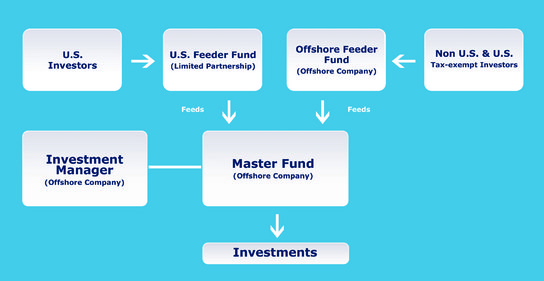
If you wish to raise capital for your offshore lending business, you will need a master-feeder offshore fund or similar structure. This is because your lending license does not allow you to  take deposits from people other than partners in the business. Nor does it allow you to solicit investors.

With an offshore master-feeder fund, accredited or super accredited investors (as defined by the US SEC) may invest in your US entity and non-US persons and US tax exempt investors (IRAs, etc.) may invest in your foreign entity. Both of these feed into the master fund, which in turn invests in to your offshore lending company.

international money lending license

By linking a master-feeder fund to an international lending license, you can raise unlimited amounts of capital while minimizing compliance costs and regulatory oversight. You might find it advantageous to operate a fund in a jurisdiction separate from the lending company. For example, the fund could be in Cayman or Belize with the lender domiciled in BVI.

Raising capital through a fund allows you to earn a commission on the appreciation in the fund and from the primary lending business. Typical master-feeder funds earn 2% of the money under management and 20% of the appreciation after a hurdle rate ( LIBOR+2 or some similar published rate).

Conclusion

In 2015, the world of offshore licensed entities is as complex as it is diverse. Careful consideration of the available licenses and your business model must be undertaken before selecting a jurisdiction. Each country and license type is intended for a specific use and capital ratios and regulations vary widely.

Add to this FATCA, IRS reporting, tax compliance, SEC issues, and anti-money laundering statutes, and you will find that going offshore with a licensed lending company requires the support of a professional experienced in both US and international regulations.

I hope this article has beens helpful. For more information on an international money lending license, an international banking license, or an offshore master-feeder fund, please phone me at  (619) 483-1708 or email Christian Reeves at info@premieroffshore.com.

Offshore Banking License

Best Offshore Bank License Jurisdictions

The offshore banking license industry was knocked down by FATCA, but it’s back on its feet and carrying on. Below are my best offshore banking license jurisdictions for 2015. You might also like to read my 5 Best Offshore Bank Licenses for 2017.

Please let me start with a little history.

International Banking is Still Alive

From 2012 through 2014, the offshore banking license industry was on life support. To be honest, I pronounced it dead in mid 2012 in an article titled Offshore Bank Licenses Go the Way of the Dodo. Fortunately I was wrong and international banking making a comeback.

Beginning in 2012, the US IRS declared war on offshore banks, shutting the small ones down and extracting millions in tribute from those large enough to pay.

Fines are still being levied on those with unreported US accounts. For example, the US and UK authorities announced plans to hit HSBC Switzerland in February of 2015.

Piling on, the US Congress passed the Foreign Account and Tax Compliance Act (FATCA) that requires all international banks to report US account holders each year. Basically, this law turned offshore bankers in to unpaid IRS agents.

Well, FATCA was delayed for years and no one had any idea how it would be implemented. This uncertainty made it nearly impossible to acquire a new offshore banking license and, if one was granted, you had little chance of getting a correspondent account.

Bottom line, no one was willing to take a chance on a new bank. They were busy cleaning up (or hiding) past sins and did not want to deal with a startup.

Now, in 2015, the war is over, the smoke has cleared, and the bodies of those unable to pay the ransom have been removed from the battlefield. The IRS came out victorious and just about every bank in the world has signed on to FATCA.

With uncertainty behind us, new formations are beginning to pick up. Of course, these new banks will find it a very different world… one where they must be responsible global citizens.

Note: This article is from 2015. You might also like to read my 5 Best Offshore Bank Licenses for 2017.

Best Offshore Banking License Jurisdictions

In my experience, the best offshore banking license jurisdictions are:

  • Andorra
  • Anguilla
  • Bahamas
  • Barbados
  • Bermuda
  • Belize
  • Cayman
  • Dominica
  • Lebanon
  • Luxembourg
  • Montserrat
  • Seychelles
  • St. Kitts & Nevis
  • St. Vincent & the Grenadines
  • Vanuatu (Republic of)

Each of these countries specializes in a different form of international banking license… is focused on a specific target market. Here are a few tips on selecting the best offshore banking jurisdiction.

When I analyze a jurisdiction, and compare it with a client’s objectives, I often start with the reserve capital. Some statutes require $500,000 to $3 million for a captive bank license and $1 million to $7 million in capital is standard for a small international bank. Jurisdictions like Panama and Luxembourg may require $30 million for a general license .

To further narrow down your choices, here are a few things to consider:

  • Andorra and Luxembourg issue licenses to large private banks.
  • The Cayman Islands prefers investment advisory and captive banks.
  • Vanuatu is a common jurisdiction for captives with on European parent companies.
  • St. Kitts and Dominica licenses link the bank in to the Eastern Caribbean region, which means they operate under a regional central bank.
  • Belize might be the preferred jurisdiction for a deposit taking bank, but it’s high capital ratios need to be accounted for.
  • Many international banks are domiciled in Panama because of the lower labor costs, top tier connectivity, availability of executive visas, and the world class reputation.

Types of Offshore Banking Licenses

Captive Bank: A bank with a captive license may only do business with those named in the license. So, each client / owner of the bank must be approved by the central bank. Captive offshore banks are typically used by large family offices, groups of wealthy individuals (say 10 to 15 partners), or multinational corporations, to manage their lending and worldwide tax obligations. A captive bank may not market its services to the general public.

International Bank: The license we most commonly associated with the offshore industry is the international banking license. This allows you to conduct all types of banking business with cutomers outside of your country of issuance. For example, if you operate an international bank in Belize, you may do business with anyone except Belize citizens and residents.

General Bank: A general license allows you to conduct business with both local and international clients. Of course, central banks want to protect their citizens first, thus capital requirements and regulation of generally licensed banks are tighter than international banks.

Purchase of an Existing Offshore Banking License

From time to time, captive and international banking licenses become available. Usually licenses are sold by operators who went through the process and lost their funding somewhere along the way.

I would like to point out that each owner of a bank must be approved by the regulatory authority. That is to say, you don’t just take over a license and begin operating. The new ownership group will need to go through an extensive background check, a new business plan approved, and personal financial statements must be provided. Expect this process to take several months.

To account for this delay and potential risk, you need to run the purchase of an existing offshore banking license through an escrow agent. Condition a portion of the purchase price (usually 25% to 50%) on the approval of the central bank

Services Offered

Note that the usual formation and licensing costs for an international bank are $175,000 to $650,000 depending on the jurisdiction, the quality of your business plan, whether you already have a license from another jurisdiction, and the bonafides of the partners..

To apply, a detailed business plan, KYC and anti money laundering docs, and a well qualified board of directors will be required… all of which we can assist with.

I hope you have found this post on international banking licenses helpful. If you would like assistance in identifying a jurisdiction, searching for a new license, negotiating the takeover of an operating bank, or forming a new offshore bank, please phone me at (619) 483-1708 or send an email to Christian Reeves at info@premieroffshore.com.

My other recent articles on the topic are:

finance real estate overseas

How to Finance Real Estate Overseas

To finance real estate overseas you must jump through all kinds of hoops and apply to multiple lenders in hopes of getting a decent rate. Compared to applying for a mortgage in the U.S., the battle to finance real estate overseas can seem confusing at best and silly at worst.

First, lets talk about why it’s so challenging for us to finance real estate overseas. When you’re an American investing in a foreign land, you have two strikes against you. We’re persona non grata in many countries around the world. The U.S. IRS has made it nearly impossible for us to open bank, brokerage, or escrow account. All institutions and firms that handle money are wary and weary of doing business with Americans.

And, we rarely have significant ties to the country where we want to purchase property. We have no credit history, nothing for a bank to latch on to if we default, and are as such considered a high credit risk. The only asset the lender is likely to have access to is the property.

Financing real estate overseas is like borrowing in the U.S. with a zero credit score and on a nonrecourse loan. If you are lucky enough to find a bank and escrow agent willing to take on American clients, the due diligence will be stringent and the interest rate high.

How high you ask? In most parts of Latin America, you’re looking at 6% to 12%, with the average being closer to 10%. And that’s the rate you might expect on a 50% loan to value. If you want to borrow 75% of the value of the property, that last quarter of the purchase price might cost you 20% or more.

Still Want to Finance Real Estate Overseas?

Ok, I bet many stopped reading a while back. Those of you still with me probably have had some experience offshore and knew going in that it can be expensive to finance real estate overseas. Here is what you’ve been waiting for. Some of these ideas are obvious, and some require a bit more planning.

  1. Pull equity from your U.S. home. Your most friendly partner will always be your U.S. real estate. You might get a second mortgage at 2.8% APR, just a fraction of what you will pay overseas. If you have equity in your home, this might be your first best hope to buy real estate overseas. Of course, the days of no document loans are gone, but this is still a viable option for many.
  1. Some banks lend to Americans no matter where the property is located. There are a few U.S. banks, and even fewer offshore banks, that will lend to Americans investing overseas. The international bank I recommend is Caye Bank in Belize. They offer financing for overseas real estate in a number of markets.

Another bank that finances offshore real estate, and is just a bit bigger than Caye, is HSBC. Their international division will lend against real estate in many countries, especially in Asia. Click here for more information on the international division of HSBC.

  1. Use a private lender to finance your overseas dreams. There are private or hard money lenders focused on overseas real estate. If you’ve opened an offshore company, have a foreign trustee for your asset protection trust, or have a relationship with an offshore bank, ask about private financing. You’ll be surprised how many lenders want to diversify into these markets.

Please note that this is for information purposes only. Premier Offshore is not a lender nor do we provide introductions to lenders.

  1. Negotiate with the seller. Seller financed real estate is rare in the U.S. but common offshore. Because credit ratings and the MLS system are nonexistent in most countries, mortgages are hard to come by for foreigners and locals alike. For this reason, seller financing is common.

Seller financed overseas real estate might mean you are paying the owner directly, in a rent-to-own situation, or taking over the existing mortgage with the original owner as co-signor. If you pay off the debt, the property reverts to you. If you default, the seller steps in and makes payments, taking back the home.

  1. Developer or builder financing on new overseas real estate. Just about every major new development, including condos, single family homes, and resort investments, offer financing. Many of these options are funded by the builder and offer better terms than local banks. They want you to buy in to their project so they’ve worked the market to offer the most competitive rates available.

One of my favorite developers is ECI. They have great financing options along with unique projects in some cool areas. For more information, see ECI Development.

  1. Buy offshore real estate in your IRA. Yes, you can buy overseas real estate in your U.S. retirement account. The most efficient way to do this is to form an offshore IRA LLC or Foundation (if buying in Panama), transferring your retirement account into that entity, and then making the investment.

More on Overseas Real Estate in Your IRA

And here is some good news. You don’t need to report offshore bank accounts or investments to the IRS if they are within your retirement account. IRA investments are exempt from FBAR, Form 5471, and related offshore reporting requirements. You need only inform your U.S. custodian of their value at the end of they year and he or she will handle any filings.

Of course, there are rules for buying overseas real estate in your retirement account.

First, you can’t live in the property…even for one day. It must be an investment or rental property. You can’t rent it from your IRA and may not have any personal gain from the property. All benefit are to accrue to the IRA and not you personally.

Second, if you borrow money to buy the property, you can’t pledge your IRA assets, or sign a personal guarantee, to secure the loan. That is to say, if you buy overseas real estate in your retirement account with a mortgage, you must use an unsecured loan…a mortgage backed only by the property. Such arrangements are more common overseas than they are in the U.S. and typically mean you won’t get more than a 50% LTV.

Also, if you use a mortgage, you might benefit from an advanced structure called a UBIT Blocker. See: Eliminate UBIT in Your IRA by Investing Offshore.

To peruse my various articles on buying foreign real estate in your IRA, or the tax consequences of investing in overseas real estate, please click here.

Please note that we at Premier Offshore do not offer loans. Since the posting of this article, it has become very difficult to get loans outside of the Untied States. If you would like to finance property in Belize, Costa Rica, Panama, or Nicaragua, I suggest you contact Caye Bank in Belize. This is the only lender we are working with in 2016.

Offshore Investment

Aged Population to Stress the Economy

Aged populations will be the norm by 2020, placing a great deal of stress on world wide economic systems, especially those founded on government backed treasuries and bonds. Other areas of weakness will be Social Security and Medicare. As our population ages, we can expect higher taxes on our IRA and passive investments. Here’s why the average age of our population matters and how to protect yourself.

Definition: An aged population is a country where 7% or more of the population is 65 or older. A super-aged society has 20% or more of its citizens over 65. We assume people will retire at 65.

Over the next 6 years, the number of super-aged societies will increase from 3 to 20. According to an August 6th report from Moody’s, this nearly seven fold increase will place a great deal of stress on our economy and the United States dollar.

Here’s Why Aged Population Matters

Studies have shown that, as a population ages, the demand for treasuries and bonds increase. The higher the average age, the higher the reliance on fixed income government backed instruments. The bottom line is that pensioners go for fixed income instruments as “safer” than stocks and real estate.

Large changes in behavior move markets. Higher demand for fixed income investments will push prices down. But, the U.S. is now returning about 2%, and 45% of the world markets are returning 1% or less on their government backed fixed income instruments. There’s just no where for these markets to go.

But I’m getting ahead of myself. Let me take a step back and explain.

Of the developed nations, most of the European Union is aged. Also, the United States, Canada, and Australia have aged populations. The super-aged nations are Germany (with returns on bonds of 1% or less), Italy, and Japan. Japan has the oldest average population in the world.

By 2015, Finland and Greece (a model of financial stability) will join the group of super-aged nations. The Netherlands, Portugal, Slovenia and Sweden will arrive at the party by 2020. Eleven more countries will pile on by 2025.

Of the developing nations, or the BRICS, Russia, Brazil, and China are all aged. None are at risk of becoming super-aged.

These changes have a profound effect on our economy. For example, Moodys found that world savings declines by .5% to 1.2% for each 1% increase in the aged population. That is to say, for every 1% increase in those 65 or older, we see a .5% to 1.2% decrease in total savings.

As retirees begin to deplete their IRA accounts, and live on their savings rather than saving and spending their salaries, the average level of savings decreases. When countries become aged or super-aged, the result can stress the market.

When you combine this with lower returns on treasures and fixed income instruments (bonds for example), we can expect the level of savings to decrease at a faster rate. As returns decrease, retirees will need to reduce their expenses (quality of life) and increase their rate of withdrawal.

Let’s look at another statistic…yes, I’m in a numbered state of mind today.

The “support ratio” is the number of eligible adults expected to be working. These working adults are paying in to the system and keeping the system afloat. As the average age of the population increases, the number of workers paying in to the system decreases, further straining an already dire situation.

The lowest support ratio is found in Japan. This country has 48.7 persons aged 65 or over for every 100 eligible worker in the 15 to 65 age range. By 2020 the burden of 1 retiree will be carried by only 2 workers. A ratio that many believe to be unsustainable.

Thirteen European countries, including Sweden and Germany, will have ratios between 2.7 to 1 and 3.3 to 1 by 2020. Canada is currently at 3.6 to 1 and the United States is at 3.9 to 1. In Asia, South Korea is 4.6 to 1 and China is 6:1.

Note that these numbers count eligible workers, not the actual number of people in the workforce. The higher a country’s unemployment rate, the greater the threat.

Nations in current financial crisis with extremely high unemployment rates are under more immediate pressure than those with lower unemployment. Greece and Portugal have more pressing concerns with their aged populations than does Germany or Japan.

The United States is hiding the truth in its unemployment  statistics. While the rate seems to be improving, we don’t know how many workers have simply stopped looking for work and therefore are no longer considered unemployed. We do know the U.S. has a 62% labor participation rate. If applied to our support ratio, it could move from 3.9 to 1 to 2.2 to 1 (though, this is a mixed bag and like comparing apples to mangos).

What does all this mean to you?

  • We can expect even higher taxes on capital gains and retirement account distributions.
  • The nationalizing of the retirement account system to cover debts from Social Security becomes more likely.
  • The age of retirement may be increased.
  • The assets within your IRA will become targets of the IRS and other cash strapped agencies. Remember that the IRS may seize your retirement account and State laws, such as homestead exemptions, don’t protect you.
  • As the government continues to focus on controlling capital, limitations on IRAs will increase. Most believe the right to take your IRA offshore will be eliminated.

The bottom line is that retirees will be required to make even greater sacrifices to keep the U.S. financial system afloat. It will fall upon you to keep the economy together. We don’t know exactly what form these forced contributions will take, but we know they are coming.

I hope you have found this post on our aged population thought provoking. For information on how to take your IRA offshore, or for questions on any article on this site, please send an email at info@premieroffshore.com

IRS Data Collection

The IRS Data Collection Machine

Much like the NSA, the IRS data collection machine is building a file on all Americans. It’s online now and will be ready to use in all audits within one year.

The IRS collects more useful data on you than does the NSA and will begin making it available to auditors shortly. Some IRS data collection methods, such as grabbing Facebook posts and bank records before beginning an audit are already common practice.

Historically, the IRS relied on Americans to self report, and matched those tax returns to forms from U.S. employers, mortgage companies, and banks. If your 1040 tax return didn’t match your W-2 wage statement, or 1099a (stock trades and independent contractors), bank interest income, property tax and mortgage interest reports, sale of real estate, K-1s from partnerships, etc., then you would receive a letter from the IRS. You would either be told to send in more money because your tax return didn’t match what the IRS computers say you owe (called a change report), or you would be audited.

Beginning in 2014, the IRS will get much of this same information from foreign banks and brokerages. If you have a bank account or investments offshore, expect that your institution will be reporting to the IRS. (Search FATCA for more information).

In addition, the IRS has been building backdoors in to most email systems and social media companies. The great collector is amassing enormous amounts of data on you, your friends, your income and assets, and your travel. You can be certain that these IRS data collection tools will be used against you in future audits.

I also believe this IRS data collection system will be used to target individuals and companies. Maybe groups will be selected for audit because their online activities show they are likely to have unreported income, or maybe individuals and charities will be selected based on political affiliation. No matter how it’s used, these new IRS data collection tools put you at a significant disadvantage.

Of course, the IRS says they don’t use “big data” to target or select individuals for audit. They claim it’s used in micro analysis only. IRS data collection is used to “estimate the U.S. tax gap, predict identity theft, and find refund fraud” (according to the IRS data collection office).

* The tax gap is the difference between how much is owed and how much is collected by the IRS.

Whether or not you believe the IRS, they are hoovering up data on Americans like the NSA. Though, the IRS is going after more actionable data. Information that can be used against individuals in an audit. So far, it has been shown that the IRS is collecting the following:

  • Phone bills,
  • Credit card statements,
  • Bank statements (not just interest income or 1099s, but complete copies of your bank statements),
  • Hotel, air and other travel information,
  • Copies of contracts,
  • Facebook, Twitter, eBay, Google, and all social media accounts,
  • Skype history, including chat and location data, and
  • All email systems including Google.

No matter what you may hear in the press, the IRS often comes armed with one or more of these items in large audits. I have personally been involved in cases where travel records, bank statements, Facebook and Skype activity, and email hacking have been used by the IRS against the taxpayer.

One tip you might find helpful for email: Google and others backup messages for about 9 months after you delete them. If you use a U.S. email service, deleting messages right before the hammer comes down is not helpful.

As for Skype, it’s often used to track your phone calls and chats. I have also see it used to track you. When you login, Skype keeps a record of your IP address. With this, the IRS knows where you are in the world. For example, I have seen Skype records used to prove someone was in Panama.

This is all to say that the IRS is currently collecting massive amounts of data on U.S. persons and putting it to use far more effectively than the NSA. Expect IRS data collection to be used to find targets and during the audit process. If you are currently being audited, assume the IRS has access to all of your emails and social media accounts.

Have you been making calls to offshore banks? Then you might become a target. Have you traveled to St. Kitts and Nevis recently? What about Hong Kong? Your travel logs may soon be compared to your U.S. tax return and your FBAR. If you’ve been to Hong Kong on business, but never disclosed any assets, banks, or income from there, you may be a prime audit candidate.

I believe these IRS data collection tools are an egregious breach of our personal privacy. A government agency is collecting data to be used in civil or criminal cases without court oversight or a warrant. Add to this the fact that the IRS has been hacked on multiple occasions and frequently shares its data with 3rd party contractors and collection agencies, and you see the risk of identity theft or harassment.

And these IRS data collection systems are unnecessary. 98% of the revenues collected by the IRS come in from voluntary filings. Does plugging a 2% gap warrant such draconian measures?

Offshore IRS Audit

Prepare for an Offshore IRS Audit

There’s no worse feeling in the world than coming home to a letter from the IRS telling you that you are being audited … until you get notice of an offshore IRS audit. No matter how organized you are, you should fear the great IRS. If you have unreported accounts or become the subject of an offshore IRS audit, you need to take steps to protect yourself.

In this article, I’ll explain what you can do to prepare for an offshore IRS audit. If the collector is closing in, you have options. If the government isn’t at your door today, use these tips to structure your offshore affairs before trouble finds you.

First, you need to figure out how scared you should be. If you have an unreported offshore account or offshore company, you should be very afraid … a 10 out of 10. If you had more than $10,000 in an offshore account, even for one day, you face serious risk if you didn’t file an FBAR.

If you used an offshore incorporator to form your offshore company that doesn’t provide U.S. tax compliance, you should be concerned … anywhere from a 5 to 8 out of 10. This is because you might have failed to file a form or two. Even if you submitted the Foreign Bank Account Report (FBAR) and paid tax, you could be facing hundreds of thousands of dollars in penalties for not reporting the structure.

Second, you need to determine your risks. Are there any unfiled returns or forms? Any unreported income the auditor might find? Have you underrated your income or overstated your expenses? Are your records well organized and ready for an offshore IRS audit? If they are all stuffed in to the shoebox under your bed, the answer is no!

Finally, I strongly recommend you get help when facing offshore IRS audit. Only an experienced professional is capable of identifying these risks and determining how likely they are to come to light in the exam.

While I certainly appreciate your perusing this site, and my many articles on offshore filing, I am writing on their general use. When facing someone from the government whose only mission in life is to take what you have, you should hire a professional, even a tax attorney, to represent you. He or she will analyze your specific situation, identify weaknesses, and develop a comprehensive plan to deal with the offshore IRS audit.

Even if you think your risks are minimal, or you don’t have the money to hire a tax lawyer, at least consult a professional. Let them review the audit request, and consider your situation. Find out if they believe you can handle the agent on your own. This might cost a few hundred dollars, but will give you peace of mind. Be honest and tell them all the good or bad during the consultation.

Prepare for an Offshore IRS Audit

Whether you’re going in to battle alone, or with a tax lawyer by your side, here are my recommendations on how to prepare for an IRS audit that includes offshore transactions or international investments.

Don’t be a snitch! Never volunteer information in an IRS audit and this goes double in an offshore IRS audit. The agent is NOT your friend. He’s there to find errors and extract a penalty for those mistakes. While you must always be honest, only answer questions that are asked. Never volunteer new information or expand on a subject beyond the question. You might think you are helping, but you’re just making things worse.

The same goes for documents. Never give more paper than is requested. You might think it shows good faith, and you’d be wrong again. More documentation just gives them more ammunition. More chances to find an error or a discrepancy.

If you take my message to heart and hire a tax professional to do battle with the IRS, you might never speak to the agent. When I was representing clients in offshore IRS audits, I never let the agent get near them. All communications went through me and me alone. I minimized the information exchanged and did my best to keep the auditor focused on areas that were our strengths … and away from those that were of concern.

Review your bank statements. Go through your bank statements and understand each and every deposit. Those that are income should be identified as such. Those that are nontaxable, such as loans and gifts, should have supporting documents. The first line of attack in an offshore IRS audit is the bank statement, so be ready to prove up all nontaxable items.

At the same time, identify and find documentation for all business expenses. If you deducted it, have an invoice or receipt ready to go. Never be caught off guard when the agent asks, “What’s this payment for?” Have an answer with proof ready.

Remember that, so long as you are a U.S. citizen, the IRS has a right to audit your offshore company and international business activities. Therefore, you must maintain records of income and expenses for offshore transactions just as you would for a U.S. based business.

I understand that sometimes practices in foreign countries conflict with your desire to document expenses. For example, it is common to pay employees in cash in South America, but it’s hard to prove this as an expense to the IRS.

What I’ve found successful in offshore IRS audits is a log book. Keep a book of each cash payment including the date, employee (independent contractor), brief job description, amount, and their signature. So long as you keep a signed log, cash payments will usually be accepted by the IRS.

Don’t file a tax return during an offshore IRS audit. If you file new or delinquent returns during an exam, the audit will usually expand to add those years. If you file a return claiming foreign sourced income during an audit, you might be admitting to a crime … something you should never do. If your audit is going on around April 15, get an extension for last year’s return until October 15.

If you have unfiled returns, the agent will probably ask you to file them with him. Assume they’ll be audited and be prepared to prove each item. If you have unfiled returns and offshore issues, see Rule 1: Hire a Professional Immediately.

Foreign Earned Income Exclusion (FEIE): If you are living and working abroad, and qualify for the FEIE, you can earn nearly $100,000 per year tax free in a salary. However, if you don’t file a return, and get mixed up in to an offshore IRS audit, you can lose the FEIE entirely. That’s right, if you don’t take the FEIE you can lose it if you’re audited. If the IRS hasn’t contacted you yet, remember, use it or lose it and file as soon as possible.

Get your records in order. Begin to get your documents and supporting proof together the day you receive the IRS letter. Don’t delay and don’t put it off. I can’t tell you how many people hide their heads in the sand for weeks after receiving an offshore IRS audit notice. Don’t waste a minute. Get ready to meet the enemy in combat as soon as possible. The day of reckoning is coming and you are well behind in the count. You need every second to get ready.

It will take longer to organize your paperwork than you expect. Also, being proactive will give you time to develop a plan of defense and order any missing documents from banks, brokerages, etc. Remember that you never want to answer a question with “I don’t know.” You need to be ready and organized on day 1 to show you’re not the easy target the auditor is looking for … not a pushover who’ll go quietly, but rather someone who’s prepared and knows his rights.

* Note that all records must be printed. The IRS auditor won’t accept electronic files.

Try to be nice. Even if you have to fake it, be nice and courteous. Most IRS auditors are just doing their jobs … which, unfortunately, is to separate you from your money. They view you as one of their 100+ cases. Don’t be rude or do anything to get on their bad side. Remain one of 100. There is no reason to draw their ire or special attention.

If you are unable to deal professionally with an offshore IRS audit, don’t get involved and see rule 1 again. Hire a professional and stay out of the room. One of a tax lawyer’s more important skills is to treat the auditor with respect and direct them away from areas of concern.

Have a payment plan in mind. If you think the auditor will find your undocumented expenses or unreported income, have a plan to deal with the resulting tax bill. If offshore IRS audit will result in a balance due, you need to be ready to pay up. If you can’t pay now, have installment agreement ready.

For more information on setting up a payment plan, I suggest you read through www.taxdebtrelief247.com. This blog has quite a bit of quality information on how to deal with the collection division of the IRS.

I also recommend How to Settle with the IRS by Goldstein and Ofstein, and Stand Up to the IRS by Frederick Daily. Both of these books are available on Amazon.

You can find my book on international tax and business for American expats on this site (see the bookstore). It includes detailed information on battling the IRS in an offshore audit and settling with collections.

I hope you have found this post on offshore IRS audits helpful. Feel free to email me at info@premieroffshore.com with any questions or suggestions. If you require a tax attorney experienced in these matters, I will be happy to provide you with a referral.

IRS Data Collection

How to Close an Offshore Company

Did you form an offshore company but the business didn’t go as planned? Do you need to close an offshore company? There are two ways to go about this.

To close an offshore company that’s never done any business and has not yet opened a bank account, “allow it to die a natural death.” This is what we in the business call it when you stop paying the annual fees (usually about $800 per year).

An offshore company dies a natural death and is struck from the register of companies when you don’t pay the annual fee for two years. After 12 months, the company is listed as inactive. After 24 months it is usually deactivated.

Remember that you have no personal liability for the annual fee of an offshore company. While your incorporator (including Premier) will send you bills, you are under no legal obligation to pay them. If you have no other considerations, this is the best way to close an offshore company.

Though, let’s look at some of those “other considerations.”

You must continue to file your U.S. offshore company tax returns (usually IRS Form 5471) so long as you have a bank account or conduct any type of business. When you are ready to close an offshore company that was active, or one with a bank account but no business, you need to file a final U.S. return.

This requirement doesn’t affect your ability to allow the offshore company to die a natural death once your filing obligations are over. You can still close the offshore company by not paying the annual fee so long as you file your US forms.

The same goes for the Foreign Bank Account Form (FBAR). If you have $10,000 in an offshore bank account, even if it’s only for one day, you must file an FBAR. I suggest that anyone required to file an FBAR must also file their corporate tax returns.

Also, while you are obligated to file these forms, you should not close an offshore company. Your entity should always be in good standing in years you are obligated to file U.S. tax returns and/or FBAR forms.

So, if you have any bank accounts or assets outside of the United States held by the offshore company, it should remain in good standing. Once you liquidate those assets, keep the company active through the end of that calendar year. When you have no more U.S. filing or reporting obligations, go ahead and close the offshore company.

Of course there are exceptions to this general advice. If your business or offshore company has a carry-forward loss, or there are shareholders who demand you formally close, you need to file forms to close the offshore company. In this case, you should expect to spend $1,500 to $2,500 to dissolve the company. Additional fees may apply if your shareholders require certified documents.

Panama Tax

Panama Tax Review

If you’re an American living, working, or investing in Panama, the Panama tax system is your friend. The Panama tax code may allow you to live tax free in Panama and, possibly, in the United States. This Panama Tax Review will explain how to reduce your worldwide tax bill.

Before getting in to specifics, it’s important to note that Panama, like all civilized nations (not the U.S.), taxes you on your local income. Only America taxes its citizens on their worldwide income.

So, if you move to Panama and open a restaurant, you pay income tax on your profits. You will also be subject to payroll and social security taxes. This is the same result you get in the United States.

However, if you move to Panama, and structure your business properly, you won’t pay Panama tax on foreign incomes. If your business is selling a product to clients in the United States, all income earned in Panama is foreign source (from the U.S.) and not taxable in Panama. If you are selling to individuals in Panama and the United States, only those sales to Panamanians are taxable.

This is the opposite result you get with a U.S.-based business. When you operate from America, and sell to people outside of the country, 100% of the income earned by your company is taxable here. Even if you move abroad Uncle wants his cut. Though, this article will help you minimize that tax bill.

This article is focused on the Panama tax rules for those living, working, or investing in Panama. If you retire to Panama, but don’t buy real estate there, then you should have no Panama tax issues.

Introduction to Panama Tax

Panama taxes its citizens and residents on income earned within its borders. You, the American citizen, become a Panama tax resident if you live in Panama for more than 183 days within a calendar year. If you don’t operate a business in Panama, or purchase real estate there, it’s unlikely their tax laws will affect you.

Panama has no wealth, inheritance or gift taxes. Therefore, it’s an excellent jurisdiction in which to form an international trust (called a Panama Foundation, but it functions under U.S. laws as a foreign or grantor trust). Such a structure will allow you to protect your savings and minimize U.S. estate taxes by facilitating transfers to heirs and moving assets out of your taxable U.S. estate.

Also, interest from bank accounts, Certification of Deposits, and most forms of investments are tax free. If you buy and then sell stock on the Panama exchange, no tax will be charged. No tax is due when you sell stock on a foreign exchange either, but the point here is that buying and selling stock within Panama, even on their exchange, does not bring you in to their tax system.

At this point, you might be wondering how Panama earns money. Well, residents pay tax on local income, corporations pay tax on gains derived from business transactions within Panama, and just about everything sold in Panama is subject to a 7% Value Added Tax (VAT). And, of course, they make buckets of money from the Panama Canal.

Taxation of Real Estate Transactions in Panama

Real estate transactions within Panama are taxed as capital gains. There is only one rate for such gains, 10%. No differentiation is made between long term and short term capital gains.

This Panama tax rate of 10% on the net profit from the sale is the general rule for real estate. You can also elect a 3% rate on the gross sale price. Here’s how it works.

Just like in the United States, you pay capital gains in Panama on net profit earned when you sell real estate. If you buy a condo for $250,000, put $25,000 of improvements in to it, and sell it for $300,000, your gain is $25,000 and your tax due is about $2,500 … simple enough.

* You will also pay a 2% transfer tax at the time of sale. This is based on the sale price or the assessed value, whichever is higher. Your transfer tax is increased by 5% for each full calendar year you hold the property.

The government ensures compliance with its tax laws by requiring the buyer to withhold 3% of the purchase price and pay that over to the tax authorities. You, the seller, file a return to claim a refund the next year. In the example above, the buyer would withhold 3% of $300,000, or $4,000, and you will file a refund for $9,000 – $2,500 = $6,600.

If this 3% on the gross sale price is lower than the 10% capital gains tax on the net profit, you may elect to not file a return. You have the choice of paying the 3% or 10% rate on the sale of real estate.

So, in the example above, if you bought the property many years ago for $20,000, didn’t make any improvements, and sold it for $300, 00, you would choose to pay the 3% tax of $9,000. The 10% tax on the net gain would result in a bill of $28,000.

VAT in Real Estate: I will conclude this section on Panama tax by noting that VAT applies to short term rental income. If you rent out your condo for a term of six months or less, you will pay 7% VAT, VAT doesn’t apply to rental contracts longer than six months.

Personal Income Tax in Panama

If you operate a business in Panama, work for a local company, have employees in the country, or draw a salary, you need to understand their personal income tax rules.

Panama’s tax code is much more efficient than that of the United States. They have only three tax brackets:

  • If you earn $0 to $11,000, you pay zero tax.
  • If you earn $11,000 to $50,000, you pay 15% on the amount owner $11,000 (that is to say, the first $11,000 is tax free).
  • If you earn over $50,000, you pay $5,850 on the first $50,000 plus 25% on the amount over $50,000. So, your Panama tax rate on a salary of $150,000 would be $5,850 + $25,000 = $30,850 less any deductions.

Each person is allowed a standard deduction of $800. Other allowed reductions include mortgage interest, charitable and political contributions, and unreimbursed medical expenses.

You’re not required to file a return if your only income is from salary (you have no capital gains, etc.) and you don’t wish to take any deductions other than the standard at $800. In that case, the employer withholds the required amount from each paycheck and no return need be filed.

If you wish to file a personal income tax return in Panama, it is due March 15. You may request an extension until May 15.

Employment Taxes in Panama

If you have employees in Panama, be ready to pay significant employment taxes. Social Security and employment taxes are a primary revenue sources for Panama and a reason they are willing to offer corporate tax deals … to increase employment and employment taxes.

* Employment taxes in Panama are about 30% higher than United States. However, the cost of labor is less than 25% of major cities in America, so the employment tax expense is relatively minimal.

As the employer, you pay employment tax of 12% on wages. Also, you must withhold 9% from the employee. Therefore, total employment tax in Panama is 21%. This compares to 15% (self-employed) to 17% (with Obamacare) in the United States.

Also, you are obligated to pay a one month bonus to each employee each year. So, when you calculate costs per employee, you will take the base salary times 13 (not 12 months) and add 21% for employment taxes.

For example, if your employee earns $1,200 per month, they’ll cost you $1,200 x 13 months = $15,600 in salary and $1,872 in employment taxes.

Corporate Tax in Panama

The Panama tax rate on corporations is 25% compared to 35% in the United States. Panama taxes only local source income. There is no Panama tax on income from outside the territory, even if that money is deposited in to a Panama corporation and account.

Most of my readers will avoid corporate tax in Panama all together. It should only apply if you are selling goods or services to Panamanians. If all of your sales are done through the internet to persons in the U.S. and Europe, you may have no Panama source income.

Also like the United States, corporate income tax usually applies to money you leave in the company … retained earnings held by the Panama Corporation. If you do have Panama source income, you may be able to eliminate corporate level tax by withdrawing your net profits as salary. You will pay personal income taxes but avoid double taxation.

However, if you operate a “large” business within Panama, and your Panama source gross income is $1.5 million or more, you may be subject to alternate minimum corporate tax.

First, I note that corporations are taxed on their net business income. You may deduct salaries, as well as all “ordinary and necessary” business expenses … just as you do in the United States.

However, if you gross more than $1.5 million in Panama source sales, you will be required to pay minimum corporate income tax of 4.5% on those gross sales.

* Another way to express Alt Min tax in Panama is that your large business pays tax on local sales minus 95.5%. If your local sales are less than $1.5 million, you are exempt from Alt Min tax in Panama.

Let’s say your Panama Corporation earns $2 million in local income. It’s your first or second year of operation and your deductible expenses are more than $2 million … so you have a tax loss for the year. Panama Alt Min tax comes in and requires you to pay 4.5% on $2 million, or about $90,000 in corporate taxes.

That means you’ll pay at least 4.5% on local sales in a large business. If 25% on net profits results in more tax being due than 4.5% on gross sales, then you pay Panama tax at the 25% rate.

In order to deter untaxed transfers between Panama corporations and any other tax shenanigans to minimize tax on local source income, Panama taxes/dividends, loans and advances. A 10% withholding tax applies to dividends between corporations on income derived from local sources. Also, a 10% tax is levied on loans or advances to corporate shareholders. If these transfers are done in a structure involving bearer shares, a 20% withholding tax (rather than 10%) applies.

If you can prove that the income being transferred is foreign source (earned in transactions outside of Panama), these taxes do not apply. In that case, there is no withholding on dividends, loans or advances.

* These corporate tax laws apply to companies operating within Panama City. Special rules apply to businesses within the Colon Free Zone, City of Knowledge, Panama Pacifico (my favorite tax free region), or any of the other free zones within the country.

* Special rates may apply to corporations with local gross sales of less than $200,000. These “small” businesses pay a lower blended personal/corporate rate.

Taxation of Americans in Panama

There is no Panama tax on bank interest, CDs, U.S. retirement distributions, or income derived from sources outside of Panama. Therefore, most of you won’t be subject to Panama tax unless you invest in local real estate.

Unfortunately, Uncle Sam wants his cut no matter where you live and/or invest. Though, you do have tools at your disposal to reduce your U.S. tax bill.

First, you can make investments in Panama through your U.S. retirement account. By forming an offshore IRA LLC, you can defer U.S. tax in a traditional IRA or eliminate it all together in a ROTH IRA.

Next, if you live in Panama, and will qualify for the Foreign Earned Income Exclusion (FEIE), you can draw a salary from your active business of about $100,000 per year ($200,000 husband and wife), retain the balance in your Panama Corporation, and pay no U.S. tax. You will find a number of articles here on the FEIE and operating through an offshore corporation to reduce or eliminate U.S. tax.

If you are living in Panama, you might bill your customers through an offshore company formed in another jurisdiction. When your sales are to persons in America and you are living in Panama, bill through a corporation in Belize. Then, draw a salary of up to the FEIE from that Belize Corporation to eliminate Panama employment taxes.

* This only works for you, the U.S. person living in Panama. Don’t try it with Panamanians or you might find yourself in trouble with the local authorities.

I hope you’ve found this Panama Tax Review helpful. If you have any questions, or would like assistance moving you or your business to Panama, please give us a call or send me an email to info@premieroffshore.com.


Panama 2015

Panama 2015 and Beyond

Panama 2015 looks to be a great investment  with continued growth of 7%.  While the tiny economy will face a number of challenges, chief among them is competition to its canal, expect solid returns to continue.

First, a brief mention of Panama’s 2015 banking sector.  Significant amounts of wealth will continue to flow in to Panama as crisis hit and Venezuelans look for investments, work, shopping, and a safe haven for their cash.  In fact, I expect wealth will continue to be transferred from a number of Latin American nations in the coming years.  Venezuela, Colombia, and Mexico all seek safety and security in Panama.

Basically these investors are wanting the stability of a U.S. dollar based economy without the risk of putting their money in the United States.  Where it was once easy for foreigners to open accounts here, FATCA has made it more risky.  While information flow has been one way (in to the United States), expect that to change as our neighbors to the south get tired of the hypocrisy.  Beware of this concern; capital will leave Miami for Panama in 2015.  Expect this to continue in 2016.

In 2014, public investment of $19 billion was made in Panama.  This is an enormous amount considering their GDP for this year will be $24 billion.  Of this amount, $5.2 billion was put in to the Panama Canal.

As a result, we’ve seen an average growth rate of 8% over the last few years.  It has brought about a new metro rail, a giant causeway (one of my favorite areas to hang out in Panama), and hundreds of new skyscrapers.

Now, here’s the bad news.  The Panama Canal has been fraught with disputes.  First, a billing problem slowed down the project by one year.  The European firms were billions of dollars over budget and Panama refused to pay for the overages.  Once this was settled, the workers went on strike.  At the time of this writing, it is expected the project will resume within the week.

Next, there has been no urban planning in Panama.  The building boom in Panama City is all about speed and graft.  As a result, traffic is out of control and no parking was allotted in many areas.  Just try going near the banking district on a workday.

Another urban planning issue is that many of the buildings have water flow problems.  When it rains, they flood.  For example, when the center piece of Trump Towers opened, rain stranded the President and those attending the grand opening festivities.

I would like to note that Panama is not a desert climate!  They have two seasons:  rainy and rainier.  So, when urban planning fails to account for the daily downpours, there’s a problem.

Panama will continue spending big on development and improvements.  For 2015, Panama will invest $3 billion and should see growth of about 7% (1% less than in previous years).

Wile I expect the economy to remain strong, I bet some real estate will lag behind.  While it’s true that many international persons are flowing in to Panama, there is also a lot of capacity coming online.  I look for appreciation of 5% to 8% depending on where you invest in Panama City.  Focus on San Francisco (a region of Panama City) and the like for the best returns.  Avoid Trump and Punta Pacifica.

I also believe the long term outlook for Panama is strong.  The primary limiting factor in business growth is a lack of educated workers and English speakers.  All of the new shiny towers need workers that speak English.  If schools begin turning out a quality work force even faster than they do today, the sky’s the limit for Panama.

In addition to the need for more workers, there are issues surrounding politics and the Canal.  The current administration, which came in to office a few months ago, is proposing price fixing for groceries.  The influx of high net-worth individuals is pushing prices beyond the reach of average Panamanians and the government is considering Venezuelan type price controls.

A longer term risk factor is the Panama Canal… the pride of this nation which was returned by President Carter and signed over by President Clinton.

The current expansion is the first in over a century.  The Canal opened August 15, 1914 and might be finished this year or in 2015.

Panama has upgraded its locks to allow ships carrying up to 13,000 containers.  Before the upgrade, size was limited to 5,000 containers.  However, the largest ships today are at 18,000 containers, and expected to reach 22,000 in the years to come.

And there is now competition to the Panama Canal.  The Suez Canal in Egypt completed its expansion (the first in 145 years) and can handle ships of all sizes.  Piling on, Nicaragua plans a $40 billion canal of its own.  This one, funded (of course) by China, could put significant pressure on Panama’s margins because it would not be limited by locks or ship size.

The Suez Canal was a more costly route because it’s a longer journey from Circe (further south), times are changing.  Significant manufacturing has moved out of China to its southern neighbors.  From these ports, the Suez Canal is either more efficient, or just as long a journey, as Panama.

Like Nicaragua, the Suez Canal is at sea level.  Therefore, no locks are required and any future expansion (widening) can be done more efficiently than in Panama.  Expect Suez to allow for any and all cargo ships while Panama is limited to those holding 13,000 or fewer containers for decades to come.

All of this is to say that the Panama Canal will need to compete on price in the years to come.  Though, I remain strong in my short term and long term outlook.  I expect education to keep pace with demand and for this to push businesses like mine and your forward.

For information on moving to or incorporating in Panama, please give us a call or send an email to info@premieroffshore.com.

IRS Criminal Investigation

IRS Criminal Investigations on the Rise

If you thought an IRS audit was bad news, just wait until the IRS agents with guns come and take you down.  The IRS Criminal Investigation Division, or CID, can seize your records, tap your phone, spy on your emails, and treat you like a major criminal – all for failing to pay up.  The IRS CID has the ability to take everything from you… including your freedom.

Once indicted, you have a 98.5% probability of going to jail.  The average sentence is 27 months.  And these weapons of mass destruction are being turned on all high net worth Americans, not just those with offshore accounts.

Under President Obama, the wealthy are more likely to come under criminal investigation.  The IRS Criminal Investigation Division (CID) has increased referrals for prosecution by nearly 40% under this President and I expect this number will double (to an 80 – 100% increase) before his term is over.

Just as the IRS targeted conservative fund raising organizations, they are now being accused of hitting wealthy Americans that “fit the mold” of Republican donors.  Many, such as Grover Norquest of Americans for Tax Reform, claim that some of these attacks are political assassinations meant to cut off money flow to rivals.  That the IRS is targeting Republican donors for criminal prosecution.  Others have suggested that its wealthy conservatives who are the big fish each IRS CID agent wants to mount on his wall.  That it’s open season on the wealthy in America.

Here are the stats:  The IRS CID recommended criminal prosecution in 4,201 cases last year, an increase of 38% from 2012.  The Department of Justice indicted 2,010 of these referrals.  Expect these numbers to increase during the remainder of Obama’s term as the IRS CID and DOJ are hiring as quickly as possible.

Let me give you a little background.  Just 10 years ago, no one other than drug dealers and money launderers were charged with offshore tax crimes.  These laws, and their draconian penalties, were intended to target dangerous individuals who couldn’t be taken down otherwise.  Think Al Capone and that ilk.

Tax preparers and lawyers had never heard of what is now the IRS’s primary weapon: the Foreign Bank Account Report (FBAR), though it had been a law on the books for decades.  There was no effort to criminalize most forms of tax planning and offshore tax matters were civil cases, just like traditional IRS audits.

That is, until the IRS learned how profitable putting Americans in jail could be!

From 2006 though 2008, the IRS Criminal Investigation Division waged an all out war on offshore accounts.  The Swiss bank UBS eventually fell and released the names of 3,000 of its clients, who immediately became targets of the CID.  So far, the IRS prosecuted about 550 of these individuals.  They selected one or two from each state to maximize the news cycle impact…to make sure their press releases got on every news cast and in every paper in the country.

* Eighty percent of the press releases just happen to come out in the weeks before April 15. Are they criminals or pawns in the Government’s marketing campaign?

This strategy worked great for the IRS…maybe not as well for the pawns.  It brought in about $10 billion in new revenue from taxes, interest and penalties.  Thousands of high net worth individuals, as well as average citizens living abroad and those with extended families in foreign countries, all lined up to pay to avoid jail.

Very little of these payments came from actual targets of the IRS CID.  Those with offshore account went broke defending themselves and while in jail.  Most of the revenues came from expats and others with accounts that the IRS did not know of..which was the purpose of the campaign.

NOTE: If you have an offshore account and don’t want to become one of the pawns, please take a read through my post on the IRS’s Voluntary Disclosure Program.

After maximize returns on their attack on the Swiss banks, , the IRS Criminal Investigation Division and other government agencies turned their sights of fining just about any international bank they could find. They quickly learned that they could fine banks just about any amount of money and get paid.  This brought in a few more billion and the free for all was on.  See my post on the $9 billion extorted from the French bank BNP Paribas.

IRS criminal investigations have been so profitable that the government is doubling down and hiring new gunslingers as fast as they can sign them up.  This also means that they will need to expand their number of targets and their case selection criteria.

As a result, the IRS is now targeting all wealthy Americans, not just those with offshore accounts.  Just because you have no international exposure, don’t think you’re safe from the new and more aggressive IRS CID.  Many tax matters that were once civil cases are turning criminal.  The IRS has found its targets are much more pliable, and willing to pay big fines, when they are at risk of going to jail for a few years.

It is possible that these cases are targeting high net worth Republican donors.  At least, that’s how it appears to lawyers and targets in the fight.  And, considering the IRS’s track record on targeting political rivals (Republican foundations and Gov. Perry to name two), it doesn’t seem to far fetched that they would use the criminal system to cut the purse strings of Republicans.

* The IRS Director Doug Sholman paid nearly 150 visits to the Obama White House from 2010 to 2012, far more than any other IRS director.

To put your mind at ease, or to increase the pressure, depending on where you land on the financial spectrum, here is a summary of your IRS audit risks.

For most working families, the probability of going before the great collector is slim.  If you earn $50,000 to $100,000 per year, you have only a .06% chance of being audited.

For those with incomes of $100,000 to $1 million, it varies from 1% to about 5%.  If you are self-employed and filing a Schedule C, you are at the higher end.  A W-2 with no charitable contributions or capital gains and you are near the bottom.

Now for the bad news.  If you earn over $1 million, your audit risk jumps to 12%.  If you reach the top of the heap and have an income of over $10 million, you have a 25% chance of facing down a very aggressive IRS agent.

Note that a 25% chance of being audited means you will likely be under the microscope three out of every four years.  An IRS exam typically covers three tax years.  So, you have a one in four chance of being audited and, once selected, they will analyze three years of returns.

It’s these higher net worth individuals who have the highest likelihood of criminal persecution.  Of those earning less than $250,000, the risk of a criminal charge is minimal.  Eighty-five percent of the cases brought are filed against those earning $1 million or more.  Though, the UBS cases were an exception because the government needed targets in each state.

Once you’re targeted by the IRS Criminal Investigation Division, you have a nearly 50% chance of going to jail.  The DOJ prosecutes about 50% of the cases referred by IRS CID (at least until they hire more staff) and 95% of these settle.  Also, the average time to complete a tax fraud case is 2 years and the average jail sentence is 27 months.  That’s followed by 3 to 5 years of probation.

While the case is going on, you must report all of your comings and goings to Pretrial Services and submit financial statements each month.  Most find it near impossible to work while on Pretrial release…especially those with small businesses or the self-employed.

As a result of their finances and businesses being destroyed in this process, many families don’t survive.  About 1/3rd are divorced by the time the target gets out of jail.

The U.S. government is going all in on criminal prosecutions by the IRS CID.  It is by far the best returning division of the IRS and you can expect it to continue bringing in the cash in the years to come.

Will Anyone Stand Up?

The government fired the first shots in the war on financial privacy with the Patriot Act in 2001.  As we all cowered under our desks in fear of another terrorist attack, our freedoms went out the back door…and no one said a word.

The U.S. extorted billions from Swiss banks and ruined the lives of 550 of its citizens, all in the name of increased revenue.  Americas were used as pawns in the tax game and no one stood up.

Then the U.S. turned offshore bankers in to unpaid IRS agents with FACTA.  As a result, Americans are persona non grata at most banks around the world.  Yet, no one said enough is enough.

Now that the IRS CID is targeting the wealthy, possible for political gain, will anyone step up and say enough is enough?

When the IRS knocks down your door with men in military style clothes and weaponry, will anyone resist?

When it’s you handcuffed on the floor with your wife crying and your kids screaming in the corner, being restrained by wanna-be commandos in flack jackets and guns drawn, will anyone come to your aid?

If you have unreported offshore accounts and would like to know your options, please email us at info@premieroffshore.com. We can review your situation and refer you to an experienced attorney if necessary.
If you are thinking of living, investing, or doing business offshore, and need an international tax and business consultant who will keep you in compliance with the US government, give is a call at (619) 483-1708.

U.S. Passport

Should I Give My Son a U.S. Passport?

My son Timothy is nearing his first birthday and our household is filled with debate and discord.  Should I give him a U.S. passport?  Is a U.S. passport his birthright or a curse?  Should my son identify as a U.S. citizen, a Panamanian, or both?

Allow me to give you a bit of background.  I am an expat American living and working in Panama.  I spent 15 years in the U.S. as a tax lawyer and now call Panama home.  Timothy was born in Panama, his mother is Panamanian, and he holds a passport from Panama.  By filling out a few forms he can become a U.S. citizen and become subject to the laws of my home country.

As a Panamanian, he has no trouble visiting the U.S.  We travel to San Diego often to see his grandparents.  He and his mother both have 10 year U.S. visas and I don’t expect travel to become an issue.

A Panamanian passport is a solid travel document that gives him access to most countries.  Had his mother been Cuban or Venezuelan we wouldn’t be having this debate…he’d have a U.S. passport.  Likewise, if his mother was from the U.K. or an EU country, we wouldn’t have an issue…I wouldn’t burden him with U.S. citizenship.

My position on second passports for U.S. persons is that they provide wealth and lifestyle insurance.  If you hold a second passport, you have the ability to give up your U.S. citizenship, stop paying U.S. taxes, stop reporting your income and assets as an expat, and become a more complete part of whichever country you have decided to make your home.  You might pay a significant “exit tax” but you will be free and international banks will no longer report your transactions under the Foreign Account Tax Compliance Act (FATCA).

While that’s all fine and good for adults, what about a child who’s just starting out in life?  Do I have a right to impose my biased worldview (all be it based on experience) by refusing him U.S. citizenship?  Is U.S. citizenship something to be valued or a burden that he will have to carry in the years to come?  Am I helping him to walk in my footsteps and to benefit from my experience?

Being the logical sort I made a list of pros and cons of giving little Timothy a blue passport:

For

  • Easy access to U.S. schools,
  • Can live in the U.S., as I did,
  • College scholarships and aid are available to U.S. citizens
  • Work in the United States during and after college,
  • Right to renounce U.S. citizenship if he chooses… gives him the right to decide when he’s of age,
  • Gives him a choice in where to live, go to school, and in the lifestyle he finds to his liking.  My choice is to live in Panama and vacation in Colombia, but I spent 35 years in the United States.  Without citizenship, Timothy wouldn’t have that opportunity.

Against

  • The U.S. could prevent Americans from renouncing their citizenships or make it more difficult.  Since FATCA, expatriations have quadrupled and are expected to double again in 2015.
  • U.S. citizens are taxed on their worldwide income, no matter where they live.
  • U.S. citizens are a part of the U.S. tax, legal, and court system.  He will always be subject to the whims of U.S. judges and politicians.
  • U.S. citizens can be forced to return at any time for any reason.
  • A risk of falling in to the U.S. inheritance and estate tax system if parents were to pass away unexpectedly.
  • Costs of compliance with U.S. tax laws of about $2,500 per year on average.
  • Costs of $10,000+ to expatriate.

* If you can think of arguments on either side, please post them as comments.  This is obviously an area near and dear to my heart.

As I write them out, it seems most of the benefits apply through Timothy’s college days and then come the risks and costs of being an American.  It becomes time to pay the piper, as it were.

As long as the laws don’t change, one might come to the conclusion that he should hold U.S. citizenship through college and then renounce if he so chooses before making any real money.

Of course, the risks of a law change are significant.  Also, the risk that we as a family put off expatriation too long and he gets caught up in legal troubles or tax problems with the great collector is a concern thousands of expats, especially Canadians with U.S. parents, are dealing with today.

Let me take a minute to explain my thought process.  We American expats wear a scarlet letter A on our chests, which is now stamped on any financial transaction or bank account application we touch. The majority of international banks, brokerages, insurance providers, and mortgage lenders don’t want to have anything to do with us.  Since FATCA turned foreign banks tellers into unpaid IRS agents, we are persona non grata in many corners of the world.

And this will impact Timothy’s early life.  It will limit his ability to get a “starter” job at most companies in Latin America.  Almost no one is willing to hire an American citizen these days.

* Of course, as his mother points out, he can always work here at Premier!

Also, being an American means that the U.S. government will collect massive amounts of information on his life and financial history.  Is it right to allow the American authorities to invade his privacy from day one?  Is it preferable to keep him away from his unscrupulous and nosy Uncle?

And these issues extend to Timothy’s mother.  Spouses of U.S. citizens with shared ownership of assets are subject to FATCA’s disclosure requirements.  Because she chose an American (me), all of her personal data and banking information are likely to be shared with the United States.  This may currently applies to joint accounts, but I expect Panama to take the conservative or CYA approach of sending all data.  They will report on their own citizens if there is any risk of running afoul of the U.S. authorities.

Finally, if I don’t give Timothy a U.S. passport, is he at risk of being caught up in the U.S. tax system anyway?  Will banks only consider clients with U.S. addresses or passports and send them to the IRS?  Will they take the extra step of doing a forensic analysis of everyone’s account activity, legal status, and ancestry?

When you look at FATCA, a complete analysis of all customer data is what the law requires.  How far the banks will go is to be seen.

So, there’s my dilemma.  Do I give my son a U.S. passport?  Our household is greatly divided on the issue.  Your comments or suggestions are welcome.

foreign earned income exclusion 2015

The Foreign Earned Income Exclusion 2015

The Foreign Earned Income Exclusion 2015 has finally hit six figures. The FEIE for 2015 is $100,800, up from $99,200 for 2014. The FEIE is the best way to minimize your US taxes as an Expat and the most important tool in your tax kit.

This means that each American living and working abroad, who qualifies for the Foreign Earned Income Exclusion in 2015, can earn up to $100,800 in salary without paying personal income tax. If that salary comes from a US employer, then you still pay social and employment taxes (7% deducted from your check and 7% paid by your employer). If you are self employed and don’t have a corporation, then you pay self employment tax at 15%.

Basically, if you have a US structure, or are self employed without a foreign corporation, you pay 15% tax + Obamacare and other charges on your 2015 salary. The FEIE only cuts out your personal income taxes.

If you work for a foreign employer, or you operate your business through an offshore corporation, then you can avoid this 15%+ tax. It is possible to use the Foreign Earned Income Exclusion 2015 with an offshore corporation and pay zero to Uncle Sam on income of $100,800. If a husband and wife both operate the business and qualify for the FEIE, you can take out $201,600 in salaries tax free!

Next, if your profit exceeds $100,000 or $200,000, you can retain earnings in the offshore company and defer US taxes on that income. This tax deferal is a major benefit of living and working abroad for high net worth business owners.

Let’s say your net profit is $300,000 in 2015. You and your wife take out $200,000 in salary using the FEIE. This leaves $100,000 in untaxed profits. If you hold this money in the offshore corporation, you can defer US tax until you take a distribution. If you draw it out as salary, commissions, dividends, or in any other form in 2015, you will pay US taxes at about 32% (Federal).

For a 100+ page book on expat tax issues and how to maximize the FEIE 2015, please join my mailing list.

My posts on the Foreign Earned Income Exclusion for entrepreneurs include:

Finally, if you’re a glutton for punishment, I recorded a 3 hour dissertation on the Foreign Earned Income Exclusion for the Overseas Radio Network. See my ORN page.

I hope this post has been helpful. Please send an email to info@premieroffshore.com if you have questions about forming an offshore corporation or maximizing the FEIE as an entrepreneur.